Monitoring the Caldera
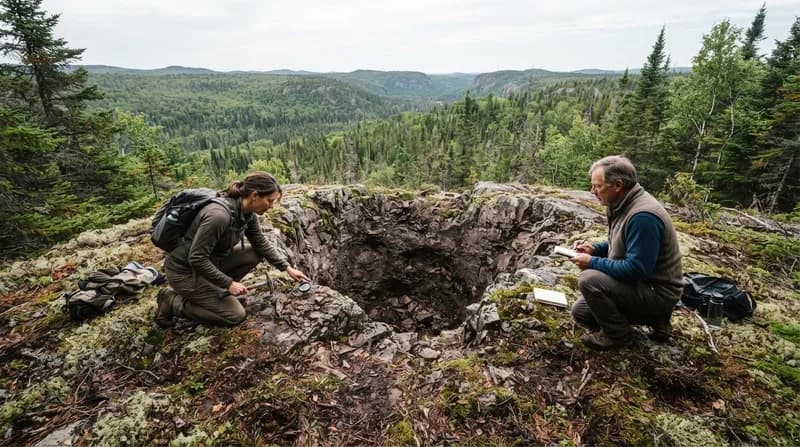
Yellowstone National Park sits atop one of the most monitored volcanic systems on Earth. Contrary to popular belief, the caldera is not a dormant pit but a dynamic geological feature constantly shifting under pressure. The Yellowstone Volcano Observatory (YVO) employs a sophisticated network of seismometers, GPS stations, strainmeters, and gas sensors to track subsurface movement. These tools are designed to catch minute shifts in the Earth's crust, providing real-time data on the migration of magma and pressurized hydrothermal fluids.
Geologists look for specific triggers—the 'unholy trinity' of earthquake swarms, rapid ground uplift, and chemical shifts in gas emissions. While Yellowstone experiences thousands of minor tremors annually, these events are only considered warning signs when they exhibit distinct patterns, such as moving shallower through the crust or showing synchronized spikes across multiple sensor arrays. A typical advisory level only changes when these signals converge into a clear, upward-migrating trend that defies historical norms.
The Timeline of Escalation
The progression toward a catastrophic eruption is rarely instantaneous; it is typically marked by a tense, weeks-long period of instability. Two months out, early seismographic anomalies often appear as concentrated swarms. By one month, these indicators typically include accelerating ground uplift detected by satellite radar, as magma forces its way into the upper crust. This stage involves complex coordination between the YVO, the National Park Service, and emergency management agencies to establish evacuation protocols while carefully managing public information to prevent mass panic.
As the 'T-minus two weeks' mark approaches, the probability of a cataclysmic event sharpens significantly. At this stage, seismic data often reveals long-period tremors—a sign of magma and fluids forcing fractures through solid rock. When professional confidence in an eruption reaches a high percentage, international protocols are triggered. This presents a massive geopolitical challenge, requiring global cooperation to manage the displacement of hundreds of thousands of individuals, as local infrastructure would likely be incapable of handling the sudden influx of 'volcano refugees' without substantial external aid.
The Mechanics of T=0
When the system reaches its breaking point, the eruption begins not as a singular explosion, but as a series of violent phreatomagmatic events. As rising magma contacts Yellowstone's extensive hydrothermal systems, water trapped underground is flash-vaporized. Because water expands up to 1,700 times in volume when turning to steam under pressure, these interactions create explosive ruptures, sending columns of mud, superheated steam, and pulverized rock kilometers into the atmosphere.
The aftermath of such a VEI 8 eruption would be catastrophic for the North American continent. Beyond the immediate devastation of pyroclastic flows, the fallout would include massive ash distribution across the mid-continent, crippling electrical grids, water supplies, and global communication networks. The long-term implications involve a significant cooling effect on the global climate due to volcanic aerosols lingering in the stratosphere, potentially altering weather patterns for years and impacting global food security.