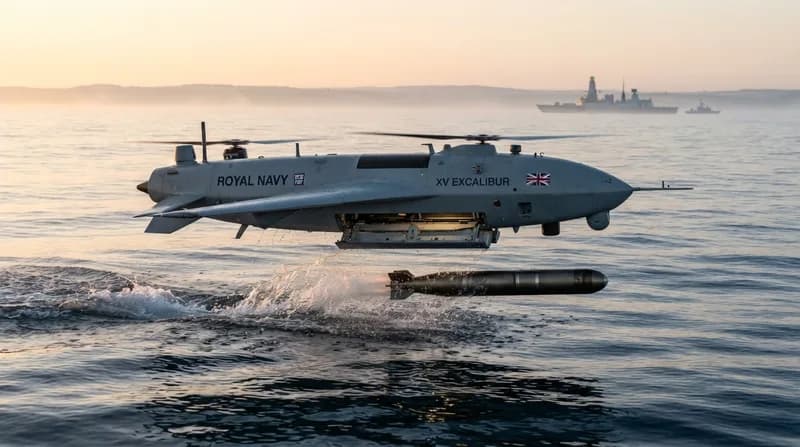
The XV Excalibur Milestone
In a significant breakthrough for naval warfare, the United Kingdom’s experimental uncrewed underwater vehicle (UUV), the XV Excalibur, has successfully test-fired a heavyweight torpedo. This event marks a historic first for both the UK and the United States, proving that autonomous drones can transition from simple surveillance and reconnaissance tools into active offensive platforms. The 12-meter (40-foot) vessel, a core component of the Royal Navy’s Project CETUS, represents the next generation of maritime technology designed to operate without human intervention in high-stakes environments.
The test utilized a heavyweight torpedo, widely identified as the Mk 48, which is currently the primary weapon system for US Navy submarines. The operation was conducted under the auspices of the AUKUS security partnership, highlighting the deep integration between the UK, Australia, and the US in developing cutting-edge defense technologies. While the Excalibur navigated and performed the launch sequence entirely on its own, it relied on external systems for target acquisition and tracking data, illustrating a sophisticated "human-in-the-loop" or "system-aided" approach to autonomous strikes.
Design and Strategic Implications
The XV Excalibur, developed by Plymouth-based MSubs Ltd, is currently an experimental platform, but its potential roles are vast. Observers note that the vehicle lacks traditional internal torpedo tubes; instead, it is believed to utilize an external cradle system mounted to its midships section. This design choice suggests a flexible, modular approach to payload delivery, allowing the drone to carry a variety of munitions or sensors depending on the mission profile. The UK Ministry of Defence recently awarded MSubs a £6.7 million contract to further evaluate the drone's capabilities, signaling a clear path toward operational integration.
Why It Matters
- Strategic Deterrence: The drone is intended to patrol the North Atlantic, specifically tasked with protecting critical subsea infrastructure, such as internet cables, from foreign sabotage.
- Force Multiplier: By moving offensive capabilities to uncrewed vehicles, the Royal Navy can increase its reach and presence without putting personnel at direct risk in hostile zones.
- AI and Autonomy: The test is part of a broader UK-US partnership focused on integrating AI into defense, ensuring that Britain can detect and deter adversaries through rapid data processing and automated response.
As the Royal Navy pivots toward a "Hybrid Navy" concept, the success of the Excalibur serves as a proof-of-concept for the future of maritime security. As these UUVs become more reliable, the ability to monitor and defend vast ocean stretches against emerging threats will rely increasingly on these autonomous sentinels. With further trials expected, the Excalibur is set to refine the requirements for a new fleet of underwater drones, fundamentally changing how the UK asserts its naval presence in the coming decades.