The Engineering Reality of Gigawatt-Scale AI
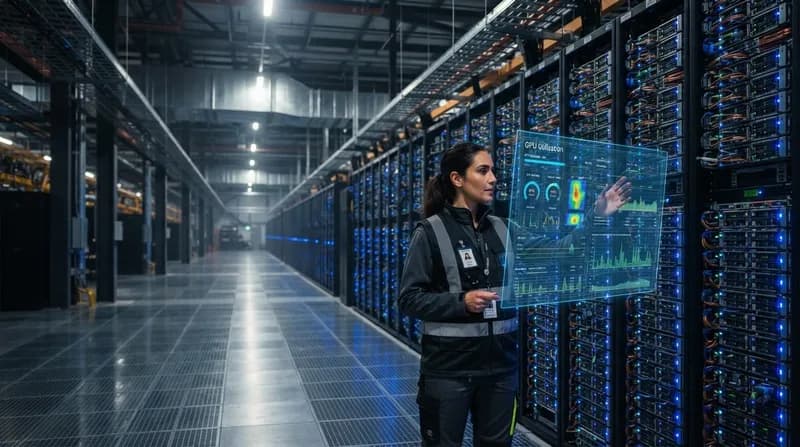
In the race to develop the next generation of foundational models, the bottleneck is no longer just the scarcity of silicon; it is the reliability of the infrastructure required to harness it. Meta’s Prometheus supercluster, located in New Albany, Ohio, stands as a testament to this reality. Designed to eventually scale to a massive gigawatt of capacity, the facility is currently transitioning through Nvidia’s latest hardware cycles, incorporating Grace Blackwell and Vera Rubin rack systems. However, managing such an immense array of accelerators—nearing one million GPUs—requires a radical shift in how engineers approach uptime and system maintenance.
When operating at this scale, the traditional concept of a "failure rate" becomes a daily operational metric. Meta has disclosed that more than 11 percent of its GPUs are either non-functional or held in a state of idle readiness, serving as hot spares that stand by to replace failing hardware instantly. This proactive stance is essential for preventing catastrophic system stalls during lengthy training runs.
The Cost of Continuity: Hot Spares and Parallel Resiliency
The core of Meta’s strategy revolves around minimizing the impact of the inevitable crashes that occur when thousands of chips are tethered together. Currently, within each 72-GPU NVLink domain, eight GPUs are kept strictly in reserve. This "hot spare" strategy ensures that when a component falters, the system does not need to pause for a physical component swap. Instead, a spare slot is immediately activated, allowing the training process to bypass the damaged hardware with minimal latency.
Beyond physical hardware redundancy, Meta has architected "parallel resiliency" into its software stack. By utilizing data parallelism, the company can isolate hardware faults to specific model replicas. When a failure occurs, the system offlines the faulty slice, continues training with the remaining replicas, and allows the compromised slice to resynchronize once it has migrated to a healthy host. This transformation of a potential full-cluster halt into a negligible, temporary dip in throughput is crucial for keeping development timelines on track for models like Muse Wonder.
Why it Matters: The Physics of NVLink and Power
The technical hurdles Meta faces extend far beyond basic unit failure. As the company scales its use of Nvidia’s NVLink fabric, it has had to contend with the realities of signal integrity at a massive scale. With over 600,000 NVLink connections active in the cluster, even the slightest signal degradation can trigger frequent recovery cycles. To manage this, Meta implemented rigorous continuous telemetry and L11 diagnostic protocols, essentially performing "stress tests" on every link to catch weak points before they destabilize a live training run.
Power management represents another significant engineering challenge. Bringing tens of thousands of GPUs into a full-power state simultaneously creates immense power transients—spikes that could potentially blow out power supply equipment. By carefully managing the ramp-up and power distribution across its Ohio datacenter, Meta has stabilized its operational environment, achieving over 85 percent "goodput" during pretraining. As Meta pushes toward its goal of a million-GPU cluster, it is targeting an interruption rate of just two events per day for every 8,000 GPUs, aiming for an unprecedented 100,000 GPU-hours of uptime between failures.