A Frontier Without Consensus
For decades, the public image of physics has been one of slow, steady progress toward a unified "Theory of Everything." However, a landmark global survey conducted by the University of Waterloo and the Perimeter Institute has shattered that perception. By polling the world's leading physicists, researchers have uncovered a landscape defined not by agreement, but by healthy, vigorous scientific disagreement. The results demonstrate that many of the core tenets we once considered settled are actually subjects of intense intellectual friction.
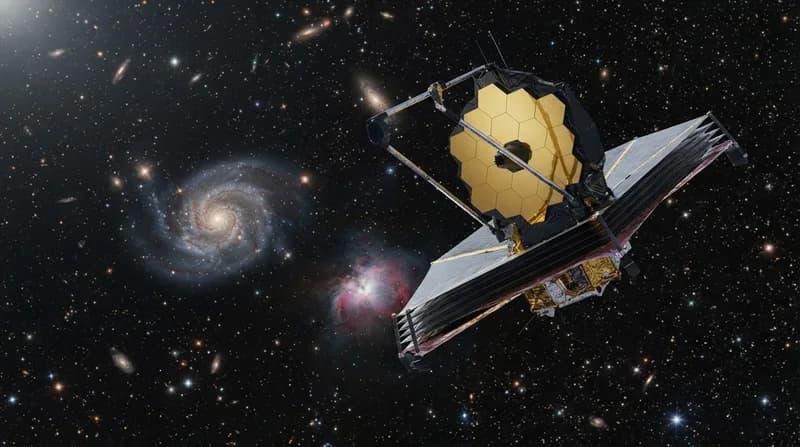
The study, which appeared in Physics Magazine, highlights that even the standard model of cosmology, known as Lambda Cold Dark Matter (ΛCDM), has failed to garner a majority vote from the expert community. This instability may be fueled by recent data, such as observations from the Dark Energy Spectroscopic Instrument (DESI), which hint that dark energy might not be the constant, unchanging force scientists once assumed. When the bedrock of a theory begins to wobble, the entire scientific community is forced to re-evaluate its foundations.
The Big Bang and the Nature of Time
One of the few areas to reach a majority consensus is the interpretation of the Big Bang. Popular media often treats this event as the absolute "start" of time, but 68% of the physicists surveyed rejected this simplification. Instead, the consensus among these experts is that the Big Bang marks a transition from an incredibly dense, hot state, rather than a definitive ticking of the first cosmic clock. This distinction is critical: it suggests that our current understanding of time is likely an incomplete map of a much larger, more mysterious territory.
Meanwhile, cosmic inflation—the theory that the universe underwent an exponential expansion in its infancy—barely cleared the bar for majority support, with 51% agreement. This slim margin underscores how contentious early-universe theories remain, even among those whose careers are dedicated to studying them.
The Dark Matter and Quantum Gravity Impasse
The survey further highlights profound divisions regarding two of physics' most elusive phenomena: dark matter and quantum gravity. When asked about the composition of dark matter, the responses were scattered. Only 17% of participants pointed to low-mass particles as the culprit, while 12% favored modifications to the laws of gravity themselves. The most popular answer—at just 21%—was simply "a combination of theories," suggesting that the scientific community is waiting for a paradigm shift that has yet to arrive.
Quantum gravity, the holy grail of physical theory, faces a similar struggle. While string theory maintains a plurality of support at 19%, it is far from being the definitive answer. With 18% of respondents suggesting that gravity may not be quantizable at all, and loop quantum gravity trailing with 12%, it is clear that no single framework has managed to bridge the gap between Einstein’s general relativity and quantum mechanics.
Why It Matters
- Identifying Knowledge Gaps: A lack of consensus identifies exactly where current data is failing to provide a clear path forward, signaling to researchers where new experiments are most needed.
- Scientific Vitality: Rather than a sign of failure, experts like Niayesh Afshordi view this disagreement as a mark of a "genuinely alive" field where radical new ideas still have the space to flourish.
- Data-Driven Shifts: Recent, high-precision astronomical data is directly challenging long-held assumptions, forcing theorists to reconcile established models with new, anomalous findings.
Ultimately, this lack of agreement is not a crisis—it is an invitation. As history has shown, the most significant breakthroughs often arise from these periods of intellectual "cracks" in our current understanding. By mapping exactly where physicists disagree, the scientific community can better prioritize the next generation of experiments and theories, ensuring that the light of discovery continues to shine through the gaps in our knowledge.