E-BUZZ ME Logo
ScienceTechnical Deep Dive

The Evolutionary and Physical Science Behind Super-Long Fingernails

Published
The Evolutionary and Physical Science Behind Super-Long Fingernails
1 min read145 words

The Gist

A new scientific inquiry explores the mechanics and motivations behind 'artificially elongated fingernails,' moving beyond mere aesthetics to understand their physical impact.

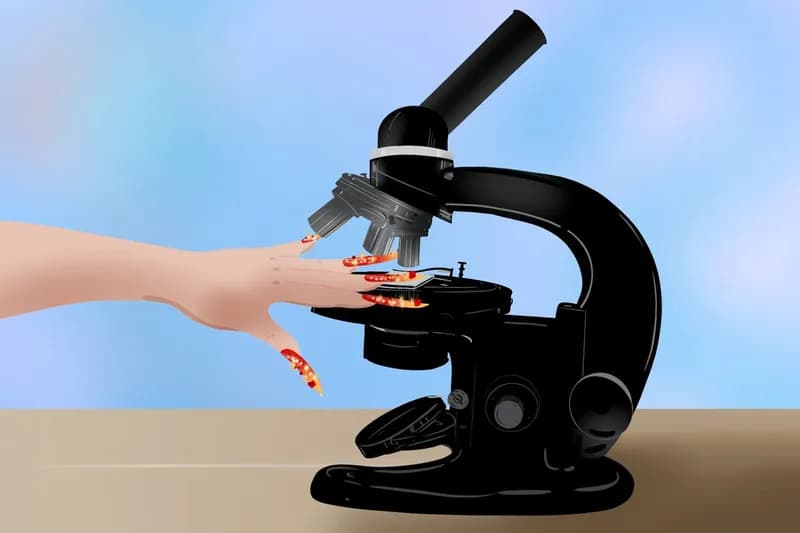
In a recent scientific exploration, researchers have taken a deep dive into the phenomenon of super-long fingernails, technically referred to as 'artificially elongated fingernails.' While often viewed through a purely cosmetic lens, the study aims to uncover the underlying physics and biological implications of maintaining such extreme extensions.

Understanding the Mechanics

The research investigates how these extensions affect daily biomechanics and the structural integrity of the natural nail bed. By analyzing the leverage and pressure distribution associated with extreme lengths, scientists are gaining a clearer picture of how the human hand adapts to significant physical alterations.

Beyond the Surface

While the aesthetic appeal of long nails is well-documented in fashion and culture, this scientific perspective seeks to determine if these modifications serve deeper functional or evolutionary psychological roles. The study examines the trade-offs between manual dexterity and the social signaling provided by these elaborate displays.

Related Stories

Semantically matched articles, ranked by topic overlap and freshness.

New Scientist Book Club Applauds Claire North’s Space Opera 'Slow Gods'
Science68%

New Scientist Book Club Applauds Claire North’s Space Opera 'Slow Gods'

Claire North’s latest space opera, 'Slow Gods', has received rare unanimous praise from the New Scientist Book Club for its ambitious conceptual depth.

Dog Behavior Mystery: Why Some Canines Ignore Low-Flying Aircraft
Science66%

Dog Behavior Mystery: Why Some Canines Ignore Low-Flying Aircraft

New observations challenge the common perception that dogs ignore objects in the sky, sparking a debate on canine intelligence and sensory focus.

The Science of Persistence: Why Flies Repeatedly Strike Windows
Science63%

The Science of Persistence: Why Flies Repeatedly Strike Windows

A deep dive into the behavioral patterns of flies explores whether their tendency to hit glass panes is a deliberate strategy or a biological limitation.

Solar Disappearance and the Psychology of Fiction: Exploring Life's Limits
Science62%

Solar Disappearance and the Psychology of Fiction: Exploring Life's Limits

New scientific inquiries delve into how long life on Earth would persist without the sun and why humans form deep emotional bonds with fictional characters.

The Long Goodbye: How the Moon’s Gradual Recession Will Change Earth
Science62%

The Long Goodbye: How the Moon’s Gradual Recession Will Change Earth

As the Moon slowly drifts away from our planet, the long-term consequences range from altered tidal patterns to the eventual disappearance of total solar eclipses.

Ferrari Luce: Maranello's Bold Super Sedan Silences Critics
Electric Vehicles62%

Ferrari Luce: Maranello's Bold Super Sedan Silences Critics

Early reviews for the Ferrari Luce suggest that despite its unconventional design, the Italian automaker has delivered another performance masterpiece.

Painless Liquid Treatment Could Replace Drilling for Childhood Cavities
Science61%

Painless Liquid Treatment Could Replace Drilling for Childhood Cavities

A major U.S. clinical trial reveals that silver diamine fluoride can stop tooth decay in children without the need for needles or drills.

Earth’s Subterranean 'Gold Kitchen' Discovered Beneath the Seafloor
Science60%

Earth’s Subterranean 'Gold Kitchen' Discovered Beneath the Seafloor

New research reveals how submarine volcanoes act as natural refineries, concentrating gold through intense mantle melting processes.