Strategic Infrastructure Rollout
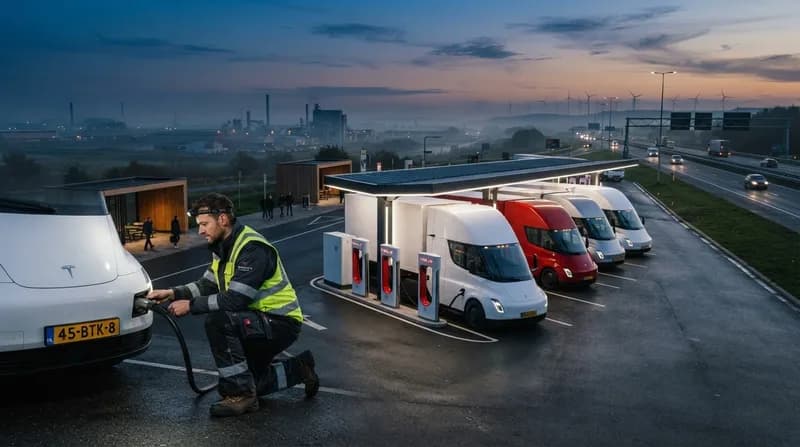
Tesla has officially confirmed its aggressive plan to bring its dedicated electric trucking ecosystem to European soil. Following the announcement of the European Tesla Semi, the company is set to launch a specialized Megawatt Charging System (MCS) network designed to support heavy-duty logistics. The initial phase will consist of 21 public locations, distributed strategically across key transport corridors in Germany, France, the Benelux region, the United Kingdom, and Sweden. This network will host over 100 high-power charging points, averaging approximately five dispensers per site to ensure sufficient throughput for commercial operators.
This initiative mirrors Tesla’s successful approach to passenger vehicle charging, as the company intends to keep the network open to other brands, fostering broader EV adoption within the heavy trucking sector. By choosing these specific regions, Tesla is targeting the most high-traffic logistics hubs, ensuring that the infrastructure is available precisely where the demand for efficient, rapid turnarounds is highest.
Technical Power Dynamics
The core of this infrastructure is the Megacharger, capable of delivering up to 1.2 MW of power. While the initial European version of the Tesla Semi is expected to draw up to 800 kW, this over-specification of the hardware suggests that Tesla is future-proofing its network to accommodate larger battery variants and potentially future-generation heavy-duty vehicles that require higher energy density and faster replenishment rates.
The architecture relies on a modular setup. Each Megacharger consists of a centralized, remote power cabinet measuring roughly 1.1 tonnes that houses the necessary electronics, distributing power to two charging satellites that can be positioned up to 60 meters apart. This design offers flexibility in tight depot or service station layouts, allowing for a cleaner and more organized footprint compared to traditional charging hardware.
The Dual-Charger Ecosystem
Tesla is introducing a two-pronged strategy for commercial charging, providing options for both rapid en-route top-ups and overnight logistics depot charging. The system is built around the MCS 3.2 protocol, ensuring wide interoperability and future compliance with industry standards.
- Tesla Megacharger: This flagship solution is designed for rapid turnarounds. It delivers a massive 1.2 MW of power at 1,500 Amps. It is engineered for heavy usage scenarios where minimizing downtime is critical for the profitability of transport fleets. The hardware setup includes two satellites fed by a single power cabinet, priced at €163,000 for the full system.
- Tesla Basecharger: Catering to fleet operators who prioritize overnight charging or lower-intensity duty cycles, the Basecharger provides an all-in-one column solution. It offers 120 kW DC or 125 kW AC charging capabilities. Priced at €17,000, these units are designed to be easily deployed in existing private parking and logistics warehouses, offering a cost-effective entry point into electric fleet management.
The European Semi Vision
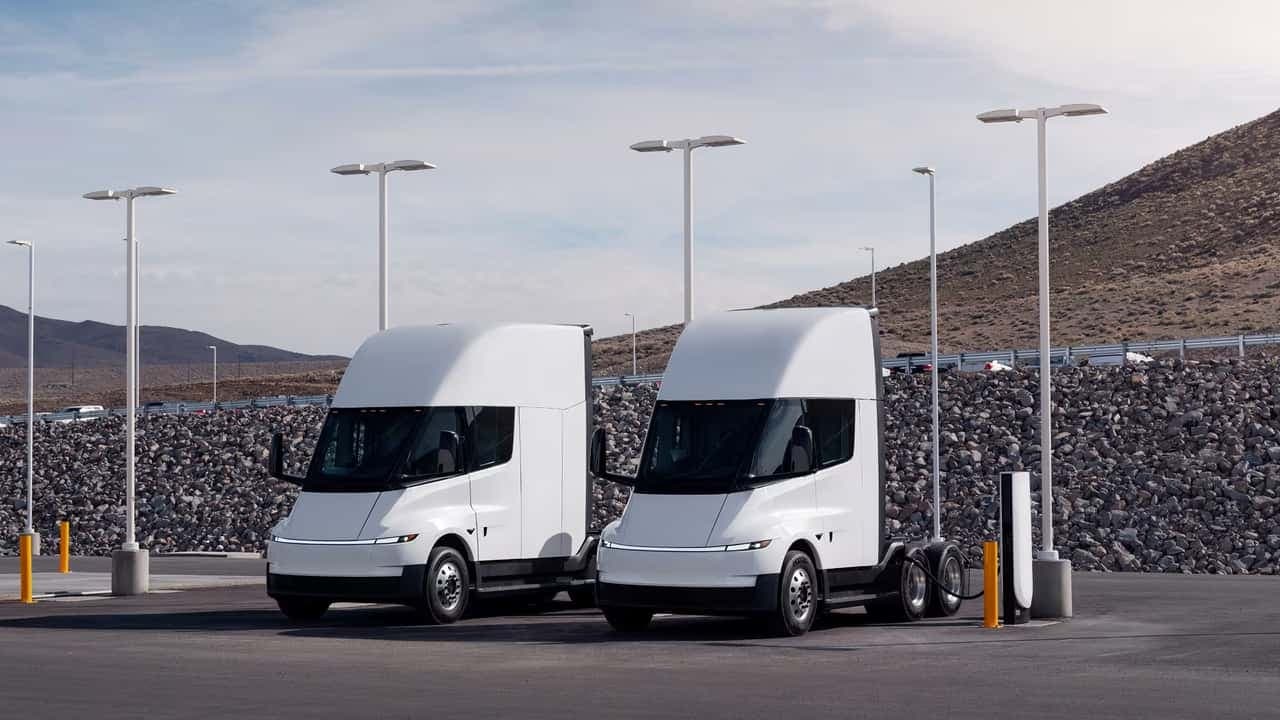
Beyond the charging infrastructure, the Tesla Semi itself is poised to change the European logistics landscape. Equipped with a three-motor powertrain, the truck is designed to provide high efficiency on motorways by utilizing its main drive unit for cruising, while the two additional units engage automatically to provide torque when the vehicle is heavily loaded or climbing gradients. Tesla emphasizes that despite its 6x4 axle configuration, the Semi maintains the maneuverability of a two-axle vehicle, a critical factor for navigating cramped European urban loading bays.
The company has confirmed that these units will roll off the production line in Nevada, following the North American standard with a central driving position and a minimalist cabin design. With deliveries slated for mid-2027 and a pricing strategy described as highly competitive, Tesla is positioning itself not just as a vehicle manufacturer, but as a comprehensive infrastructure provider aimed at accelerating the transition to sustainable heavy-duty transport across the European Union.