The European Road Test
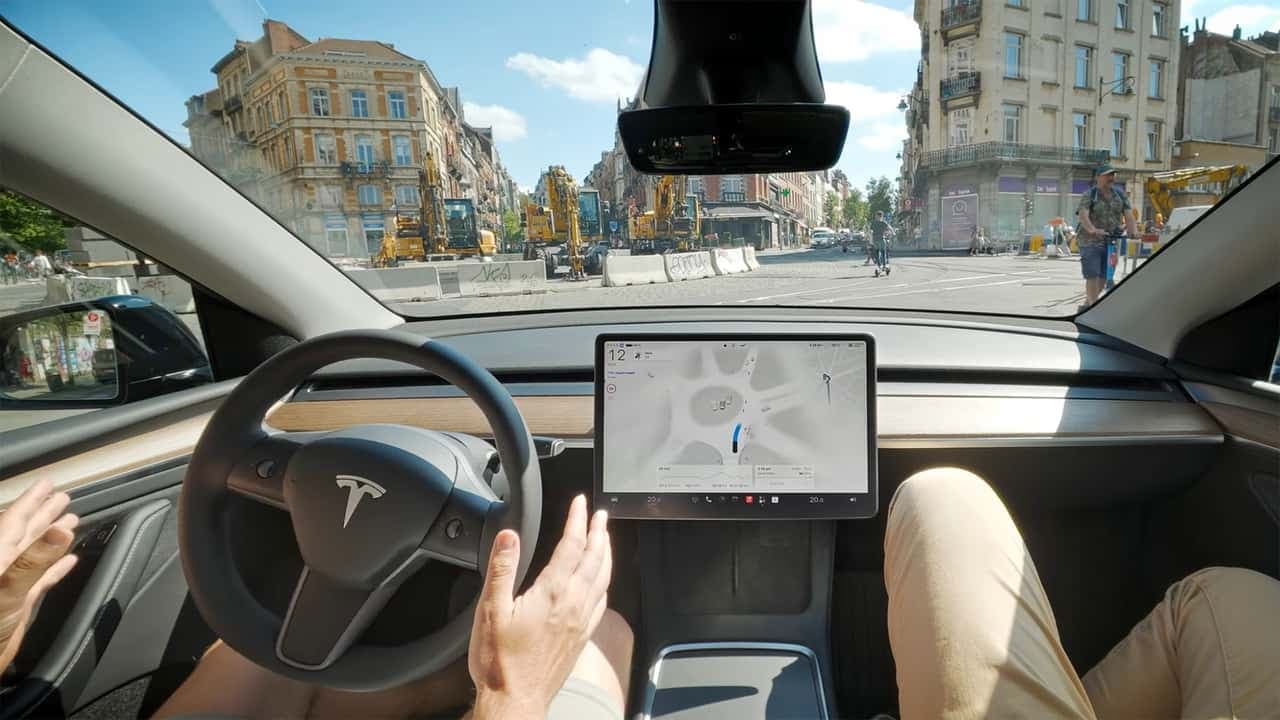
Tesla’s Full Self-Driving (FSD) Supervised system is increasingly stepping out of its North American comfort zone, venturing into the labyrinthine urban environments of Europe. A recent, highly detailed test conducted in Brussels, Belgium, provides a compelling snapshot of how this software handles the unique challenges of historic city layouts. Unlike the grid-based streets common in many U.S. cities, Brussels offers a gauntlet of narrow lanes, unpredictable tram tracks, and chaotic junctions that test the limits of modern driver-assistance technology.
The test, which saw a vehicle navigate a lengthy journey through both the heart of the city and toward Charleroi Airport, showcased the system's evolving decision-making processes. From identifying static hazards to acknowledging emergency vehicles, the software demonstrated a nuanced ability to react to its surroundings in real-time. Yet, the experience also served as a stark reminder that even with advanced machine learning, the software operates as a high-level driver-assistance suite—not a replacement for human judgment.
Navigating the Urban Maze
The Brussels drive revealed both the impressive agility and the occasional fallibility of FSD. One notable success involved the system's interaction with a reversing vehicle; the Tesla accurately identified the hazard and slowed down gracefully without resorting to jarring, abrupt braking. Furthermore, when faced with an emergency vehicle, the car maneuvered aside to allow the police to pass, demonstrating an awareness of high-priority traffic participants.
However, the complexity of European road markings and infrastructure occasionally caused confusion. At one particularly intricate junction, the car struggled to interpret the right-of-way among a mix of roadworks and tram tracks, resulting in a circling maneuver that required patient interpretation by the passengers. In another instance, the system selected an incorrect lane, resulting in a technically illegal maneuver that it executed smoothly, yet without the correction one would expect from a human driver. These moments underscore that while the system is highly capable, it is still learning to bridge the gap between U.S.-centric training data and the diverse, unwritten rules of European traffic.
Why it Matters: The Path to European Adoption
- Regulatory Hurdles: Countries like Sweden have raised concerns regarding speed-limit compliance, as FSD’s current implementation allows for speed offsets that may clash with local enforcement standards.
- Infrastructure Diversity: European roads often lack the standardized lane markings that Tesla’s computer vision relies on heavily, making the expansion into cities like Brussels a critical stress test for the software’s reliability.
- The Supervision Mandate: Despite the progress shown in this test, Tesla remains clear that FSD is a supervised system. The incident at the airport, where the car attempted to enter a restricted staff-only zone, illustrates exactly why the driver must remain in the loop at all times.
The rollout of FSD in nations like Belgium, Denmark, and the Netherlands marks a significant shift in Tesla’s global strategy. As the company continues to refine its algorithms to account for Old-World infrastructure, the focus remains on closing the gap between 'impressive performance' and the absolute consistency required for regulatory approval. While the car successfully navigated the vast majority of its trip, the final human intervention at the airport serves as the ultimate proof that the current generation of autonomous software still requires a watchful eye on the wheel.