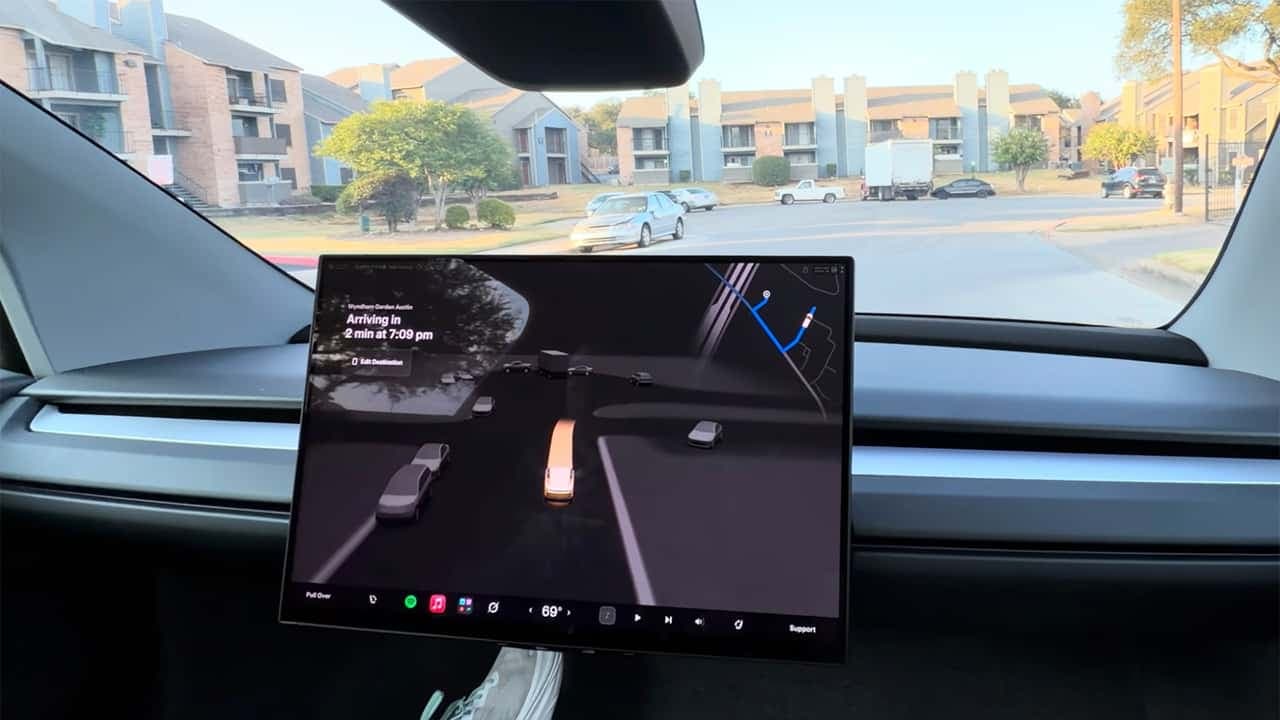
Tesla's Full Self-Driving (FSD) Lite version 14.1 is currently facing significant challenges in obstacle detection, particularly with larger items like downed trees and logs. Videos shared by users highlight failures of this version to halt in the presence of such obstacles, prompting drivers to intervene to avoid potential collisions. These concerns are particularly critical as the system is designed to enhance safety and driving convenience.
The FSD Lite operates on Tesla's older Hardware 3 platform, which lacks the processing power and sensor capabilities of newer Hardware 4 systems. Released in 2019, Hardware 3 uses lower-resolution 1.2 MP cameras compared to the 5 MP cameras found in Hardware 4. Additionally, Hardware 3 is constrained by 8 GB of RAM per chip, while Hardware 4 boasts 16 GB, impacting its ability to process driving data effectively.
Key Findings
- Drivers have reported repetitive issues with FSD Lite v14.1, especially concerning the failure to detect fallen trees, indicating a gap in the system's safety parameters.
- Despite its goal of providing advanced features to lower-performance vehicles, many users have voiced frustrations regarding overheating and tracking inaccuracies.
- CEO Elon Musk has publicly acknowledged the limitations of Hardware 3, noting that it will not support the true self-driving functionalities Tesla envisions for the future.
The situation comes at a time when Tesla aims to solidify its position in the autonomous driving market. The limitations of the current FSD Lite version underscore the crucial role that hardware upgrades play in safeguarding users' experiences. Given the widespread complaints and the recent emphasis from Tesla leadership on these shortcomings, the pressure is on for the company to deliver more reliable hardware and software solutions.
Implications
The detection issues associated with FSD Lite may have broader implications for Tesla’s future offerings and reputation. As autonomous driving technology progresses, ensuring the safety and reliability of such systems will be essential not just for regulatory compliance but also for maintaining consumer trust. Without addressing these challenges, Tesla risks undermining the fundamental value proposition of its FSD capabilities.