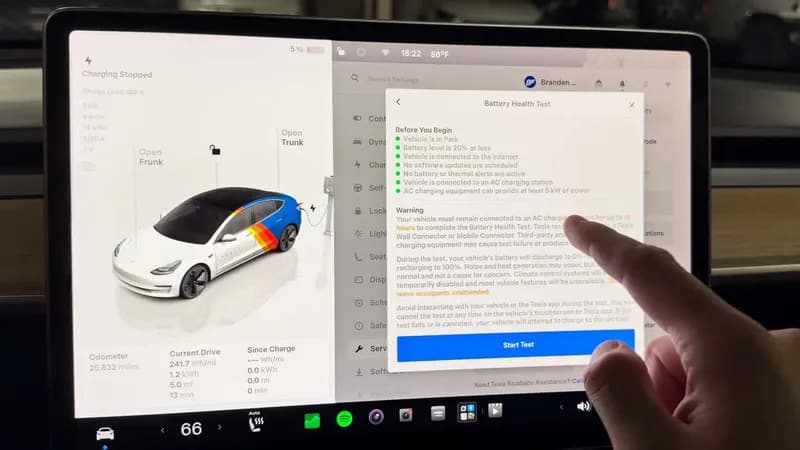
Recent data regarding a 2023 Tesla Model 3 equipped with Lithium Iron Phosphate (LFP) battery technology has sparked a conversation about long-term EV durability. Despite the LFP chemistry being marketed for its longevity and ability to be charged to 100% regularly, this specific unit showed a 10% drop in battery health after just 26,000 miles.
Understanding LFP Degradation
LFP batteries are widely regarded as the 'workhorse' of the EV industry, praised for their stability and lower cost compared to Nickel Cobalt Aluminum (NCA) or Nickel Manganese Cobalt (NMC) cells. However, finding that a pack has reached 90% health within its first two years of operation challenges the narrative of near-zero early degradation.
While a 10% loss is not considered a catastrophic failure and the vehicle remains well within its warranty parameters, the figures are higher than many enthusiasts expected for this specific chemistry. Factors such as charging habits, climate, and high-speed driving can all influence these metrics, but the case serves as a reminder that all lithium-ion batteries remain susceptible to capacity loss over time.