E-BUZZ ME Logo
ScienceTechnical Deep Dive

Strange Metals Challenge Traditional Understanding of Electrical Conductivity

Published
Strange Metals Challenge Traditional Understanding of Electrical Conductivity
1 min read159 words

The Gist

Physicists are uncovering new clues about 'strange metals' that defy standard electrical laws, potentially reshaping our fundamental understanding of physics.

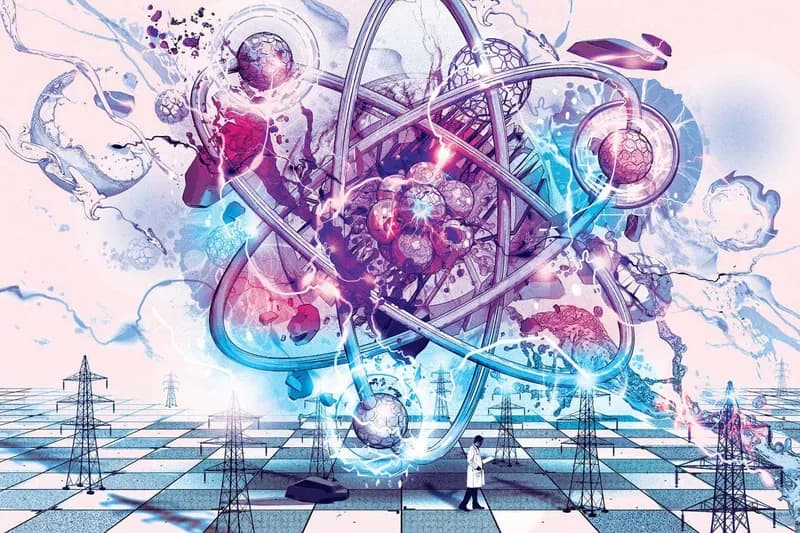
For nearly four decades, the scientific community has been puzzled by a class of materials known as 'strange metals.' First observed approximately 40 years ago, these substances conduct electricity in a manner that contradicts the established rules of condensed matter physics.

Defying the Landau Theory

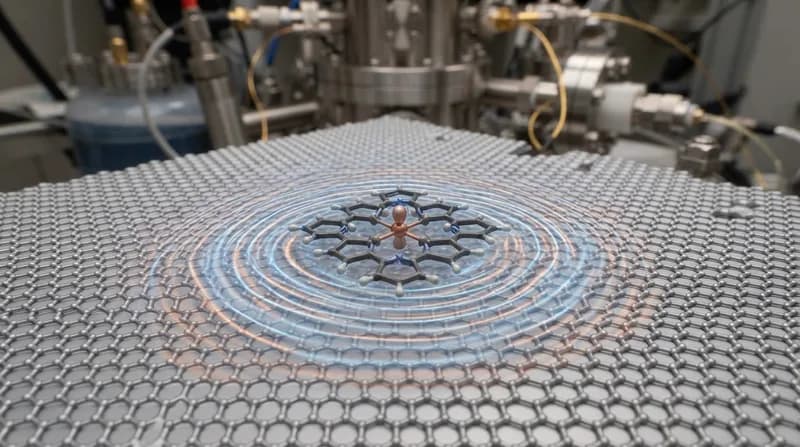
In conventional metals, electrical resistance is typically understood through the movement of individual electrons. However, strange metals exhibit a linear relationship between resistance and temperature that persists even at extreme scales, a phenomenon that the standard Landau Fermi-liquid theory fails to account for.

A New Paradigm for Electricity

Recent research into how and why these materials behave this way is forcing physicists to rethink the very nature of electrical flow. Unlike traditional conductors, the movement of charge in strange metals appears to be a collective, entangled process rather than the work of independent particles. These findings could lead to breakthroughs in our understanding of high-temperature superconductivity and the fundamental laws of the quantum universe.


Related Stories

Semantically matched articles, ranked by topic overlap and freshness.

New Class of Magnons Exhibits Hundred-Fold Increase in Lifespan
Science67%

New Class of Magnons Exhibits Hundred-Fold Increase in Lifespan

A breakthrough discovery of long-lived magnons could pave the way for scalable, nanoscale quantum information technologies on-chip.

Sweden Explores Rare Earth Deposits to Challenge Global Supply Dominance
Science66%

Sweden Explores Rare Earth Deposits to Challenge Global Supply Dominance

Researchers are mapping Sweden's mineral wealth to create magnets from natural element combinations, aiming to reduce reliance on Chinese exports.

Unprecedented Warming: Earth's Current Climate Shift Outpaces Geological History
Science64%

Unprecedented Warming: Earth's Current Climate Shift Outpaces Geological History

New analysis of Earth's climate history reveals that the current rate of global warming is faster than any previously recorded geological event.

Self-Repairing Bio-Textiles: Scientists Create Clothing From Living Fungi
Science62%

Self-Repairing Bio-Textiles: Scientists Create Clothing From Living Fungi

Researchers have developed a revolutionary biodegradable textile using the parasitic fungus Cordyceps militaris that can clean and repair itself.

The Future of Open Access: Navigating Structural Challenges and AI Integration
Science62%

The Future of Open Access: Navigating Structural Challenges and AI Integration

As the scientific community pushes for an open-access future, experts warn that systemic issues and the rise of AI must be addressed to ensure sustainability.

John Bell and the Legacy of the Journal 'Physics'
Science62%

John Bell and the Legacy of the Journal 'Physics'

A look back at the short-lived journal where John Bell published his ground-breaking theorem, forever changing our understanding of quantum mechanics.

The Physics Behind the Snap: Understanding the Venus Flytrap
Science62%

The Physics Behind the Snap: Understanding the Venus Flytrap

New research delves into the complex physics that allows the Venus flytrap to snap shut with incredible speed to capture its prey.

Sulfur-Based Compound Identified as Potential Breakthrough for Aging Muscle Repair
Science61%

Sulfur-Based Compound Identified as Potential Breakthrough for Aging Muscle Repair

Researchers have discovered a compound named LASSS that protects proteins essential for muscle recovery, offering hope for combating age-related muscle loss.