The Rise of Transcranial Ultrasound Stimulation
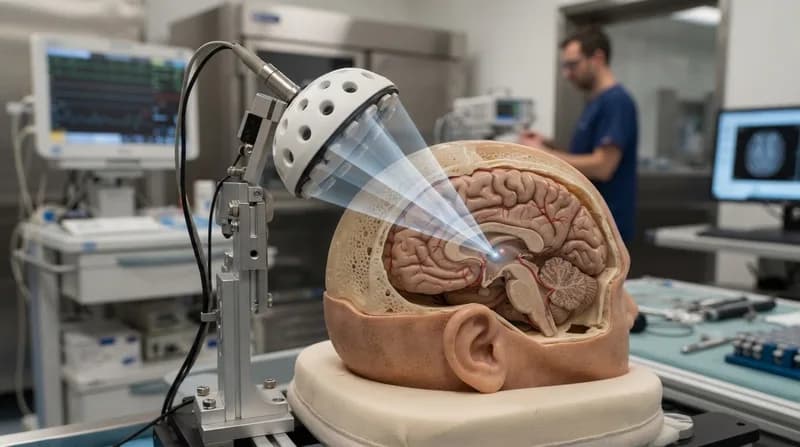
In a significant leap for neuro-psychiatric treatment, researchers at NYU Langone Health have successfully utilized transcranial ultrasound stimulation (TUS) to mitigate the severity of delusions in patients suffering from schizophrenia and schizoaffective disorder. This innovative study marks the first time this non-invasive technology has been applied to a psychiatric condition historically resistant to standard pharmaceutical intervention. By employing focused sound waves, scientists were able to precisely target deep-seated brain regions without the need for surgery or invasive procedures.
The study, published in the journal npj Acoustics, involved 10 participants who continued to experience persistent symptoms despite being on conventional drug regimens. During the 10-minute treatment sessions, engineers and psychiatrists collaborated to focus ultrasound energy on the globus pallidus internus—a critical hub in the brain's circuitry responsible for regulating complex processes, including movement, emotional response, and cognitive thought patterns. This area has long been identified as a potential hotspot for the neurological imbalances that contribute to the development of persistent, firm beliefs that are not grounded in reality.
The Efficacy and Safety Profile
The clinical results were notably positive, demonstrating a clear neurological response to the stimulation. Patients who received the active ultrasound treatment showed an average decrease of 1.2 points on standard clinical scales used to measure the severity of delusions. In a direct comparison, those who underwent a 'sham' session—where the device was active but acoustic waves were physically blocked from penetrating the skull—actually saw their scores rise by 0.4 points. Perhaps most compellingly, the reduction in symptoms observed in the active group remained measurable for up to seven days following the single session.
Safety remained a primary concern throughout the trial, and the findings suggest that the technique is exceptionally well-tolerated. Reported side effects, which included mild headaches, general fatigue, and transient fluctuations in symptoms, were consistent across both the treatment and sham groups. Because the procedure is non-invasive and does not involve ionizing radiation, researchers view this as a potential long-term solution for patients who have exhausted traditional pharmacological options.
Why This Matters
- Non-Invasive Precision: Unlike deep brain stimulation that requires surgical implantation of electrodes, TUS is entirely external.
- Circuit Targeting: By focusing on the globus pallidus internus, researchers can 'tune' specific brain circuits linked to psychosis.
- Durability: The study indicates that the therapeutic impact of a single session can persist for at least one week, suggesting the potential for sustained relief.
- Future Outlook: The success of this pilot study opens the door for larger clinical trials that will test the efficacy of repeated, long-term stimulation cycles.
Looking ahead, the team at the NYU Langone Schizophrenia Research Group plans to refine the protocol by integrating advanced MRI-guided imaging. This will allow clinicians to personalize the ultrasound intensity for each patient’s unique brain architecture. As researchers move toward testing larger cohorts, the prospect of ultrasound therapy evolving from an experimental technique into a viable clinical supplement—or even a replacement—for current medications offers a promising new frontier for psychiatric care.