A New Frontier in Brain Maintenance
Researchers at the Massachusetts Institute of Technology (MIT) have uncovered a groundbreaking method to enhance the brain’s self-cleaning mechanism during sleep. By utilizing precisely timed bursts of "pink noise," the team successfully amplified the rhythmic, natural waves of cerebrospinal fluid (CSF) that flush metabolic waste from the brain. This discovery could redefine our approach to neurological health, potentially offering a non-invasive intervention for age-related cognitive decline and neurodegenerative disorders such as Alzheimer’s disease.
The brain’s waste-clearing system, which relies on the circulation of cerebrospinal fluid, is most active during deep, non-REM sleep. The MIT team’s discovery builds on earlier research confirming that this fluid movement is tightly synchronized with slow electrical brain waves. By utilizing auditory stimulation to bolster these electrical signals, researchers have effectively created a "pump" that increases the volume of fluid washing through the brain’s architecture.
The Mechanics of Auditory Enhancement
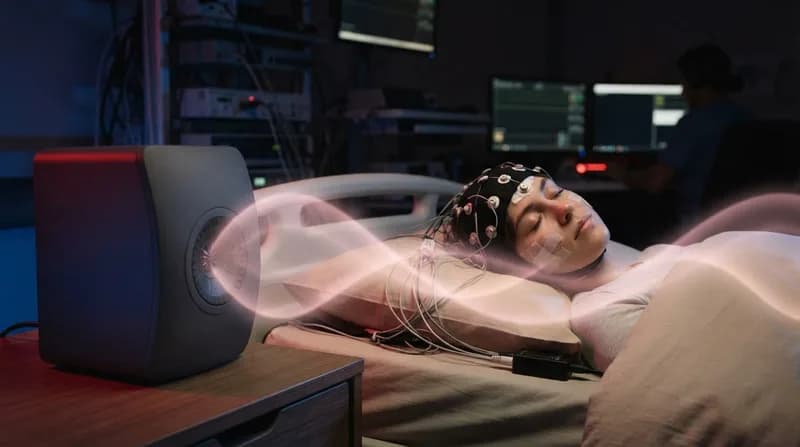
The study, recently published in Science Translational Medicine, employed 50-millisecond bursts of pink noise—a sound spectrum featuring lower frequencies that mimics the soothing nature of steady rain. The key to the technique lies in the precision of the delivery. Using advanced EEG-fMRI synchronization, the researchers identified the exact peak of a participant’s natural slow brain wave and triggered a sound pulse to align perfectly with that cycle. Similar to giving a push to a child on a swing at the exact right moment, the auditory stimulus effectively extends and strengthens the brain's existing wave.
To overcome the massive technological hurdle of magnetic interference—where the powerful magnets of an fMRI scanner typically disrupt the electrical signals captured by an EEG—the team developed a sophisticated signal-processing algorithm. This innovation allowed the team to filter out magnetic noise in under 100 milliseconds, enabling the real-time, closed-loop stimulation of the brain required to make the technique effective and safe.
Why It Matters
- Waste Management: Enhancing CSF flow may lead to more efficient clearance of amyloid-beta and tau proteins, which are known precursors to Alzheimer’s and dementia.
- Non-Invasive Potential: Unlike pharmacological interventions, this method relies on auditory cues, minimizing side effects and physical risks to the patient.
- Accessibility: The research serves as a proof-of-concept for wearable devices, such as smart headbands, that could eventually provide this therapeutic cleansing effect in the comfort of a home environment.
- Memory and Restoration: By deepening the efficiency of sleep, this technique could potentially sharpen cognitive function and memory consolidation, addressing common sleep disorders like insomnia.
The Road to Clinical Reality
While the initial study involved 14 healthy volunteers and confirmed that the stimuli did not wake participants or disrupt their sleep architecture, the long-term implications are what drive the research forward. The team is now pivoting toward clinical populations to determine if these enhanced "cleaning waves" can tangibly slow the buildup of harmful proteins or provide restorative benefits for those suffering from chronic sleep deprivation and neurodegeneration.
Joshua Levitt, the study’s lead author, has already taken steps toward commercializing this discovery. The goal is to evolve the laboratory-based fMRI setup into a consumer-grade wearable. If successful, this technology could transform how we view sleep—moving it from a passive state of rest to an active, optimized period of biological maintenance and neurological protection.