E-BUZZ ME Logo
ScienceTechnical Deep Dive

Rosalind Franklin Rover Instrument Passes Crucial Test in Search for Martian Life

Published
Rosalind Franklin Rover Instrument Passes Crucial Test in Search for Martian Life
1 min read193 words

The Gist

Scientists confirm the Rosalind Franklin rover can detect molecular signatures of ancient life, though a recent study also highlights the risks of Earth-based contamination.

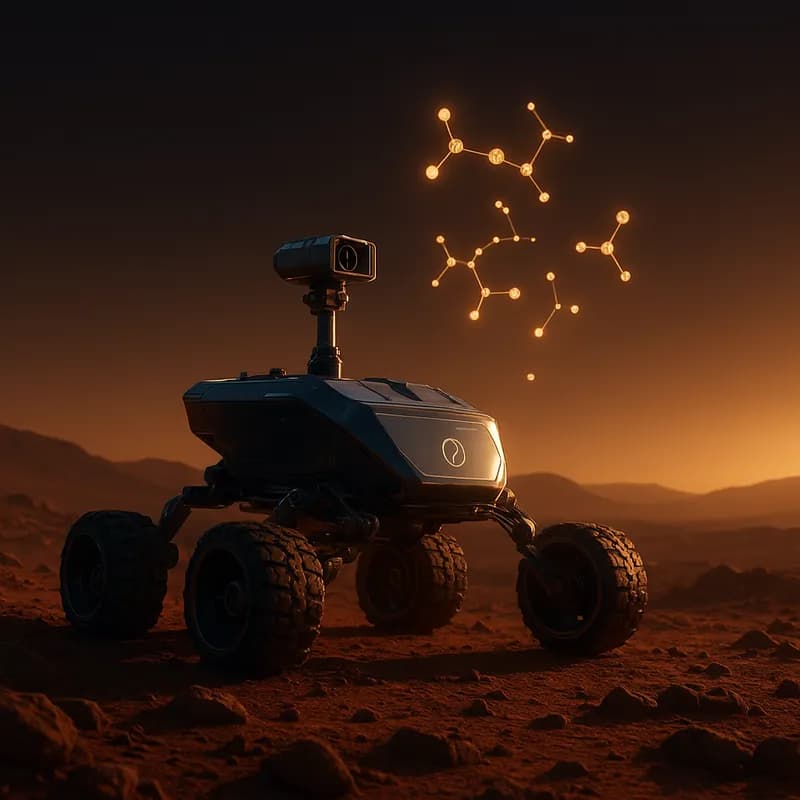
The search for extraterrestrial life on the Red Planet has reached a significant milestone. Researchers have confirmed that the sophisticated instrumentation aboard the Rosalind Franklin rover is capable of identifying subtle differences in stable molecules that may have preserved evidence of biological activity for billions of years.

A Breakthrough in Detection Capabilities

The mission's primary objective is to determine whether life ever existed on Mars. By focusing on molecular structures that remain stable over geological timescales, the rover's sensors can distinguish between organic matter of biological origin and those formed through abiotic processes. This precision is vital for the upcoming mission, which aims to drill deep into the Martian subsurface where ancient biosignatures are most likely to be protected from harsh surface radiation.

The Challenge of Earthly Contamination

Despite the technological success, the team encountered an unexpected complication during testing. Analysis of the Murchison meteorite revealed that organic molecules within the sample had been contaminated by fossil fuel pollution during its transit through Earth’s atmosphere. This discovery serves as a cautionary tale for scientists, emphasizing the extreme sensitivity required to differentiate between genuine cosmic organic matter and pollutants introduced after landing on Earth.

Related Stories

Semantically matched articles, ranked by topic overlap and freshness.

China’s Tianwen-1 Orbiter Captures Rare Footage of Interstellar Comet 3I/ATLAS
Science72%

China’s Tianwen-1 Orbiter Captures Rare Footage of Interstellar Comet 3I/ATLAS

The Tianwen-1 Mars orbiter has successfully imaged the interstellar visitor 3I/ATLAS, providing a rare look at material originating from outside our solar system.

NASA’s Deep Space Network Threatened by Wildfire
Science70%

NASA’s Deep Space Network Threatened by Wildfire

One of the three critical communication stations enabling NASA to talk to deep space missions is currently facing a direct threat from an active wildfire.

New Giant Salamander Species Identified from 3.5-Million-Year-Old Japanese Fossils
Science67%

New Giant Salamander Species Identified from 3.5-Million-Year-Old Japanese Fossils

Researchers have identified a new genus and species of giant salamander, Limnospondylus ajimuensis, from fossils originally discovered over two decades ago.

Self-Repairing Bio-Textiles: Scientists Create Clothing From Living Fungi
Science67%

Self-Repairing Bio-Textiles: Scientists Create Clothing From Living Fungi

Researchers have developed a revolutionary biodegradable textile using the parasitic fungus Cordyceps militaris that can clean and repair itself.

New Experimental Antiviral Pill Shows Promise in Halting Measles Transmission
Science66%

New Experimental Antiviral Pill Shows Promise in Halting Measles Transmission

A breakthrough antiviral treatment has successfully prevented the spread of a measles-like virus in animal trials, offering a potential new tool to contain future outbreaks.

Sweden Explores Rare Earth Deposits to Challenge Global Supply Dominance
Science65%

Sweden Explores Rare Earth Deposits to Challenge Global Supply Dominance

Researchers are mapping Sweden's mineral wealth to create magnets from natural element combinations, aiming to reduce reliance on Chinese exports.

Ancient Egyptian Ape Fossil Challenges Established Human Evolutionary Timeline
Science65%

Ancient Egyptian Ape Fossil Challenges Established Human Evolutionary Timeline

A newly discovered fossil in northern Egypt suggests the ancestors of modern apes and humans may have emerged in North Africa rather than East Africa.

Sulfur-Based Compound Identified as Potential Breakthrough for Aging Muscle Repair
Science64%

Sulfur-Based Compound Identified as Potential Breakthrough for Aging Muscle Repair

Researchers have discovered a compound named LASSS that protects proteins essential for muscle recovery, offering hope for combating age-related muscle loss.