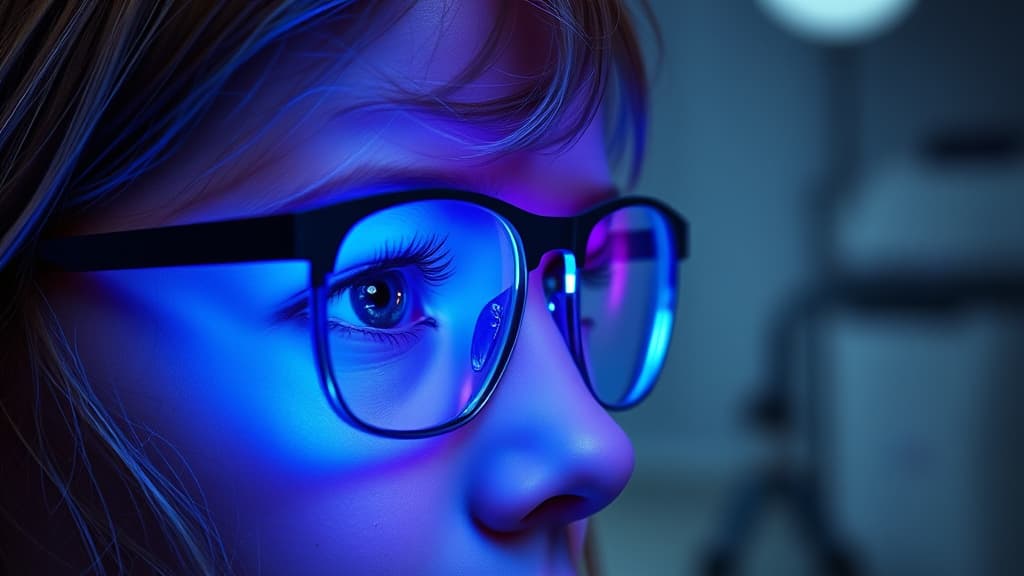
Researchers at Cincinnati Children's Hospital have made a significant discovery regarding myopia (nearsightedness) prevention. Their study, published in Cell Reports Medicine, reveals that exposure to indigo light (wavelengths 419-446 nm) completely prevents myopia in tree shrews, which serve as effective models for human eye anatomy.
The study highlights a concerning gap in standard indoor lighting. Conventional LED lights typically peak at around 450 nm, missing the crucial indigo wavelengths. This deficiency could contribute to the rising rates of nearsightedness, which is expected to impact nearly 50% of the global population by 2050. This epidemic is largely attributed to increased screen time and reduced outdoor exposure, which restrict the light spectrum developing eyes receive.
Key Findings
- Complete prevention of myopia in tree shrews through indigo light exposure.
- Standard LED lighting lacks crucial indigo wavelengths.
- Projected global myopia cases could reach 5 billion by 2050.
- Modern indoor environments limit the light spectrum available to children.
- Future research will explore indigo lighting effectiveness in daycare settings.
These findings suggest a need for a re-evaluation of indoor lighting design. By incorporating a broader spectrum of light similar to natural sunlight, it may be possible to curb the accelerating rates of myopia in developing populations. Future studies aim to assess the impact of indigo-enriched lighting over extended periods in environments frequented by children, such as daycare centers.
Why It Matters
The implications of this research extend beyond academic interest. As myopia rates continue to climb, redesigning interior spaces for healthier eye development could have lasting benefits. By adapting our approach to indoor lighting, we may be able to mitigate one of the most pressing public health concerns of our time.