The Enigma of Time
For decades, the standard understanding of time has been bifurcated: Albert Einstein’s theory of relativity describes time as a fluid dimension dictated by gravity and velocity, while quantum mechanics suggests a world governed by probabilities and superpositions. Now, an international team of researchers, led by Kyushu University, has proposed a groundbreaking experimental framework that could finally reconcile these two pillars of physics by observing a "quantum superposition of times."
The concept suggests that if a clock exists in a quantum state, its motion might follow multiple trajectories simultaneously. Because relativity dictates that motion and gravity alter the rate at which time passes, a single clock in superposition could theoretically experience multiple "flows" of time at once. Until now, this remained a purely speculative bridge between realms; however, the new research published in Physical Review Letters offers a tangible path toward verification.
Leveraging Atomic Clock Precision
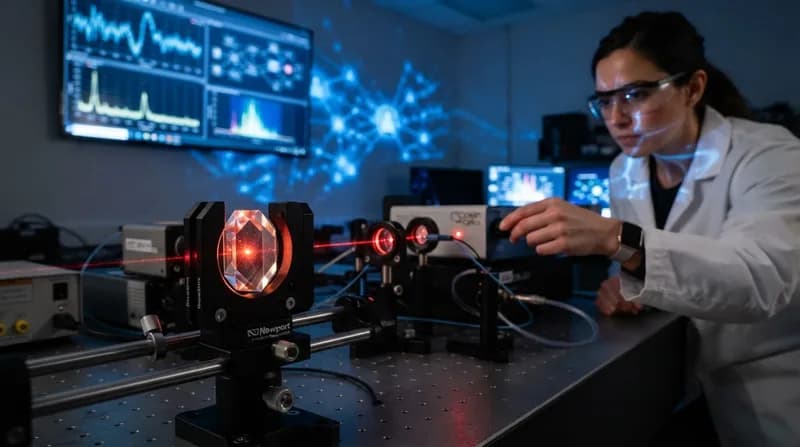
Atomic clocks, the gold standard of timekeeping, rely on the oscillation frequencies of atoms rather than mechanical gears. Their extreme sensitivity is already used to track gravitational time dilation—the phenomenon where time moves slower closer to Earth’s surface compared to higher altitudes. The research team intends to harness this precision to detect the signature of quantum entanglement within these clocks.
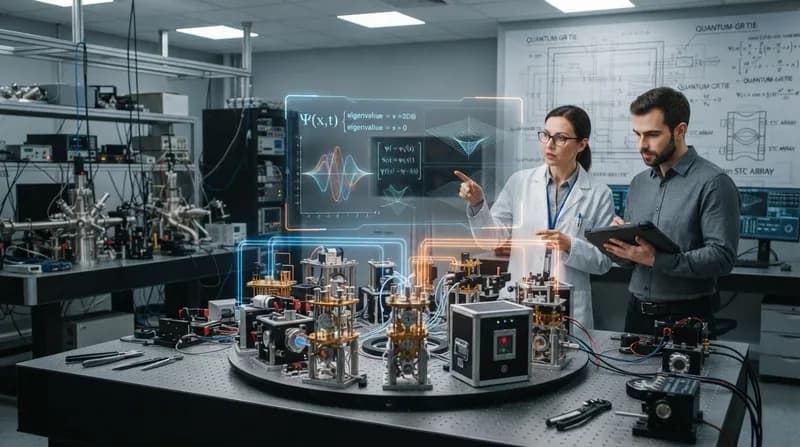
By linking the internal energy of the clock to its physical motion, the researchers have developed a model where the clock's quantum state becomes entangled with its temporal output. This entanglement leads to a measurable loss of quantum properties, which acts as a "smoking gun" for the coexistence of different time states. The team has engineered a control technique for the clock's motion that reportedly increases experimental sensitivity by a factor of 100 to 1,000.
Why it Matters: Toward Quantum Gravity
This research is more than just a quest for a more accurate watch; it is a fundamental probe into the fabric of the universe. The implications include:
- Bridging Physics: Providing an experimental pathway to see how quantum mechanics and Einsteinian relativity intersect.
- Unlocking Quantum Gravity: Potentially offering the first empirical clues toward a theory of quantum gravity, which describes how gravity operates at the smallest possible scales.
- Next-Gen Metrology: The methodologies developed for this experiment could lead to a new generation of ultra-precise sensors that redefine our measurement of time and spatial orientation.
The transition from a theoretical model to a laboratory experiment is the next significant hurdle. The team, which includes experts from the National Institute of Standards and Technology and the University of Waterloo, must now contend with the "noise" of real-world environments. Successfully observing this phenomenon would mark one of the most significant shifts in physics since the early 20th century, confirming that time, much like a subatomic particle, may be far more versatile than our daily experience suggests.