The Neutrino Laser Hypothesis
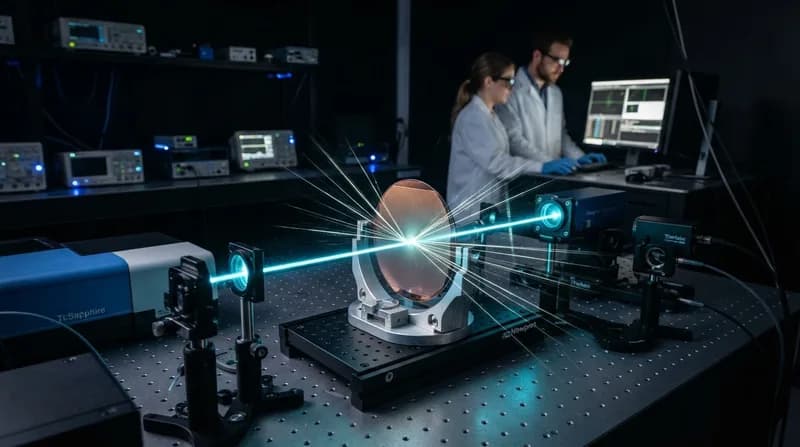
In the world of high-energy physics, the concept of superradiance has long been a fascination. It occurs when a dense ensemble of atoms transitions from an excited state to a ground state, emitting radiation in a coherent, intense burst. Typically, this process is observed with photons, where the emission rate scales with the square of the number of atoms involved—a massive jump compared to standard independent decay. Last year, physicists Benjamin Jones and Joseph Formaggio proposed a radical extension of this principle: a 'superradiant neutrino laser' fueled by a Bose–Einstein condensate (BEC) of radioactive atoms.
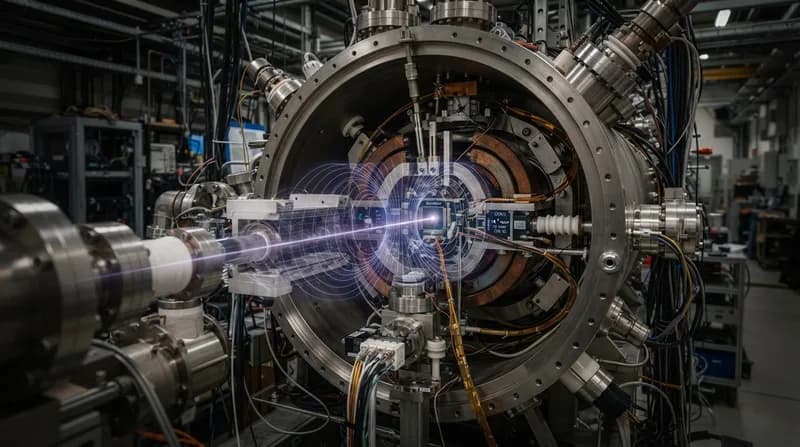
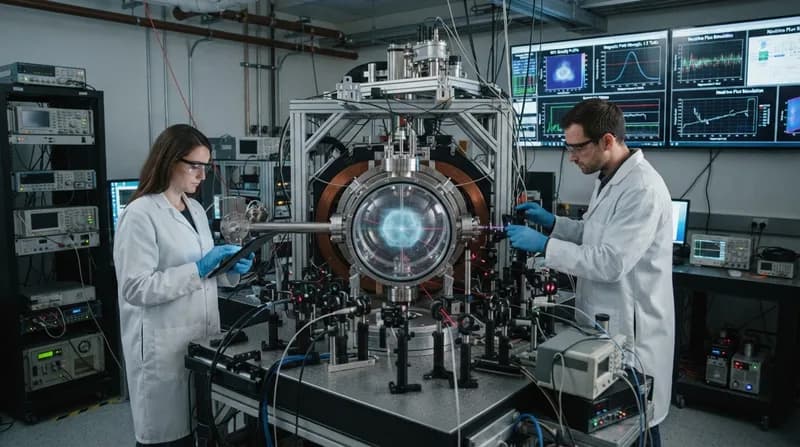
By cooling these radioactive atoms to near absolute zero, the researchers aimed to force the ensemble into a macroscopic quantum state. Under these extreme conditions, the proposal suggested that the atoms would decay collectively, releasing neutrinos in a synchronized, coherent pulse. If feasible, such a device would represent a revolutionary leap in particle physics, offering a way to generate intense neutrino beams that could unlock new avenues for studying these notoriously elusive, nearly massless particles.
Scientific Skepticism Mounts
Despite the excitement surrounding the theoretical framework, the proposal has encountered significant resistance from experts in quantum matter. James Thompson, a specialist in BECs at JILA and the University of Colorado, Boulder, highlighted a critical physical limitation: the de Broglie wavelength of the emitted neutrinos. For superradiance to occur, the wavelength of the radiation must be significantly larger than the distance between the atoms in the condensate. Because neutrino wavelengths are exceptionally short, Thompson argues that the coherent synchronization required for superradiance simply cannot be achieved under the proposed conditions.
This skepticism has gained momentum with the intervention of Nobel laureate Wolfgang Ketterle. A pioneer in the field of Bose–Einstein condensates, Ketterle has published two detailed papers that further dismantle the feasibility of the Jones and Formaggio model. By formalizing the mathematical contradictions in the original proposal, these critiques suggest that the quantum mechanical requirements for such a laser are not currently met by known physical laws. The debate remains a prominent topic in peer-reviewed literature, illustrating the rigorous nature of modern experimental and theoretical physics.
Why it Matters
- Particle Frontiers: Neutrinos are notoriously difficult to study; a coherent source would transform our ability to probe the fundamental nature of matter.
- Quantum Limits: The debate challenges our understanding of how collective quantum effects like superradiance transition from optical regimes to the subatomic scale.
- Peer Review in Action: The public clash between top-tier researchers highlights the essential role of scrutiny in preventing theoretical errors from becoming accepted dogma.
The Future of Coherent Emission
While the prospect of a neutrino laser currently appears dim, the discourse itself is a victory for the scientific process. Determining the hard boundaries of where superradiance ends and independent decay begins allows physicists to refine models for other types of coherent emission. Whether or not this specific technology proves viable, the investigation into radioactive BECs forces a deeper look at the intersection of nuclear physics and quantum thermodynamics.