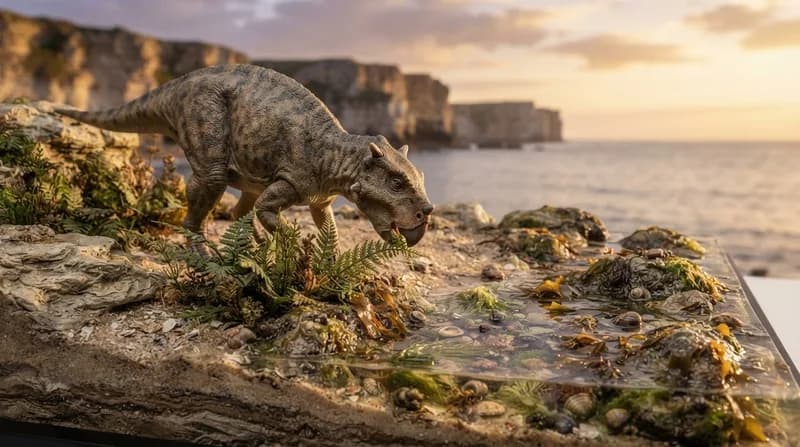
The Cretaceous Coastal Connection
For decades, paleontologists have viewed land-based dinosaurs as strictly terrestrial consumers. However, groundbreaking new research suggests that the boundary between land and sea was far more porous for these prehistoric giants than previously imagined. By analyzing chemical signatures in the fossilized teeth of creatures from the Cretaceous Period, researchers have uncovered evidence of what scientists call 'marine subsidization'—a process where coastal ecosystems are nourished by nutrients washing up from the ocean.
This study, published in Frontiers in Ecology and Evolution, points to a sophisticated dietary habit similar to that of modern herbivores. Just as deer or other animals today graze on seaweed washed up on beaches, it appears that dinosaurs roaming the ancient coastlines of North America were intentionally or opportunistically incorporating marine resources into their daily intake. This discovery shifts our understanding of prehistoric food webs, suggesting that nutrients were circulating through complex, interlinked cycles that bridged the terrestrial and marine worlds.
Decoding the Chemical Fingerprints of Teeth
The core of this revelation lies in carbon isotopes. Researchers focused on the ratio of light (C-12) to heavy (C-13) carbon isotopes, measured as δ13C. These values act as a biological diary, recording the dietary sources of an organism as they become permanently etched into the mineral structure of tooth enamel during an animal's lifetime. Because marine plants possess a distinct carbon signature compared to terrestrial vegetation, these values provide a reliable proxy for determining where an animal’s calories originated.
The study analyzed fossils recovered from the Western Interior Seaway and the Gulf of Mexico, comparing them against inland specimens. The results were striking: coastal fossils consistently displayed elevated δ13C levels that could not be explained by terrestrial plant life alone. This chemical spike was present across a diverse array of species, including fish, crocodiles, and various dinosaurs. Because this signature appeared across different species and different geological timeframes, the researchers concluded that the source of these nutrients had to be something ubiquitous to the coastline: marine macroalgae, or seaweed.
The Exception to the Rule
While the chemical evidence suggests a broad trend, the research also highlights the diversity of dinosaur behavior. Not every creature in the coastal environment participated in this marine buffet. The study specifically identified the large herbivore Tenontosaurus tilletti as a notable outlier. When analyzed, its dental remains showed carbon isotope values consistent with a strictly land-based diet.
This contrast is critical for the study's validity. If the elevated carbon levels in other dinosaurs were simply the result of geological contamination or environmental factors affecting the fossils over millions of years, Tenontosaurus tilletti would have exhibited the same high signatures. The fact that this specific species maintained a distinct, terrestrial-only chemical profile provides robust evidence that the consumption of marine resources was a genuine, selective behavioral choice made by specific dinosaurs, rather than a fluke of fossilization.
Why it Matters
This research underscores the profound interconnectedness of Earth's ecosystems throughout history. By demonstrating that coastal dinosaurs were not merely 'land animals' but participants in a larger marine-land nutrient cycle, the study changes how we conceptualize the Cretaceous environment. It reinforces the importance of protecting modern environmental corridors where land and sea interact. As researchers continue to expand this analysis to other periods, like the Jurassic, we may find that this marine-to-terrestrial dietary bridge was a fundamental feature of dinosaur survival for millions of years.