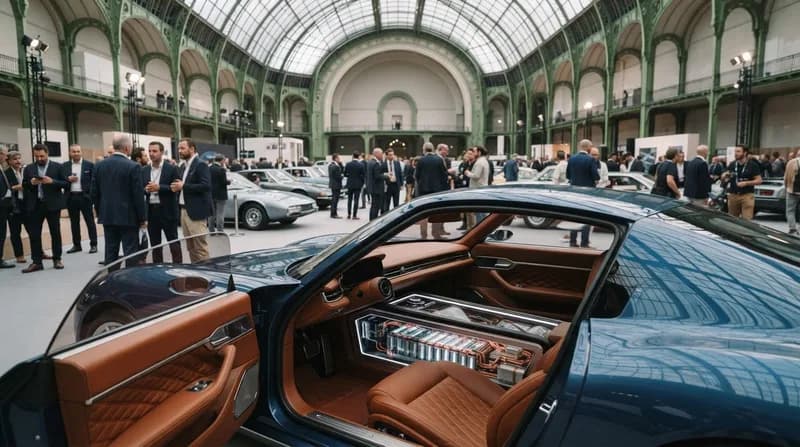
A Shift in Momentum
The automotive landscape has undergone a seismic shift over the last two years. Following the decline of major traditional trade shows like Geneva and the identity crises facing other European expos, the Paris Motor Show has emerged as the definitive stage for a European comeback. Where the 2024 edition was dominated by the rapid influx of Chinese manufacturers, the 2026 show marks a distinct pivot. Legacy brands are no longer merely reacting to global pressure; they are leaning into their heritage while refining their electric strategies to reclaim their territory.
The Stellantis Retro Renaissance
Stellantis is betting heavily on nostalgia to differentiate its electric portfolio from a crowded market of generic, tech-heavy vehicles. Leading the charge is the revival of the iconic Citroën 2CV. While currently a concept, the automaker has confirmed that the production version will weigh under one tonne, keeping true to the ethos of the original. With a target production start date of 2028 and a price point of approximately €15,000, Citroën is aiming to solve the industry-wide problem of electric vehicle affordability.
Fiat is taking a similarly spirited approach, reviving the Multipla nameplate. While technical specifications remain scarce, the brand’s presentation, styled after an Italian piazza, emphasizes character and lifestyle over pure spec-sheet dominance. These efforts are complemented by the Opel Corsa GSE, a performance-oriented compact that prioritizes handling and distinct styling over massive, inefficient battery packs. By leveraging its strategic partnership with Leapmotor for underlying architecture, Stellantis is successfully balancing deep-rooted brand identity with modern, scalable EV technology.
The 'True Volkswagen' Strategy
Volkswagen has spent the last year refining its core brand identity with a focus on intuitive usability and familiar design, ensuring its EVs feel like 'true' Volkswagens. This strategy is now physically manifesting in the form of the ID.Polo, ID.Cross, and the recently premiered ID.Tiguan. By aligning the aesthetics of these electric vehicles with their internal combustion engine predecessors, VW is addressing customer concerns regarding excessive complexity in modern cabin design. Under the hood, these models utilize the reliable MEB platform, proving that refined execution and approachable design are often more effective than radical departures.
The New Wave of Compact Electric Icons
Beyond the core VW brand, the group is aggressively expanding its 'Urban Electric Car Family' to include the Škoda Epiq and the Cupra Raval. A particular highlight for enthusiasts is the debut of the Audi A2 e-tron. By faithfully reproducing the design language of the original A2 and pairing it with the modern MEB platform, Audi has successfully introduced a vehicle that feels both nostalgic and future-proof. This design-led approach to electrification demonstrates how the VW Group is using retro cues to lower the barrier for consumers hesitant to embrace the electric transition.
The Outlook for European Manufacturing
The message from Paris is clear: the European automotive industry is no longer in retreat. The event proved that the concept of a dedicated motor show remains vital for the industry, countering the narrative that automakers would retreat exclusively to digital launches or general electronics trade fairs. With strong political backing from French leadership, there is a renewed push for 'reindustrialization' and local battery production. As the industry moves into the next phase of electrification, the combination of cultural heritage, localized supply chains, and improved affordability suggests that European manufacturers are ready to defend their market share with renewed vigor.