The Production Bottleneck
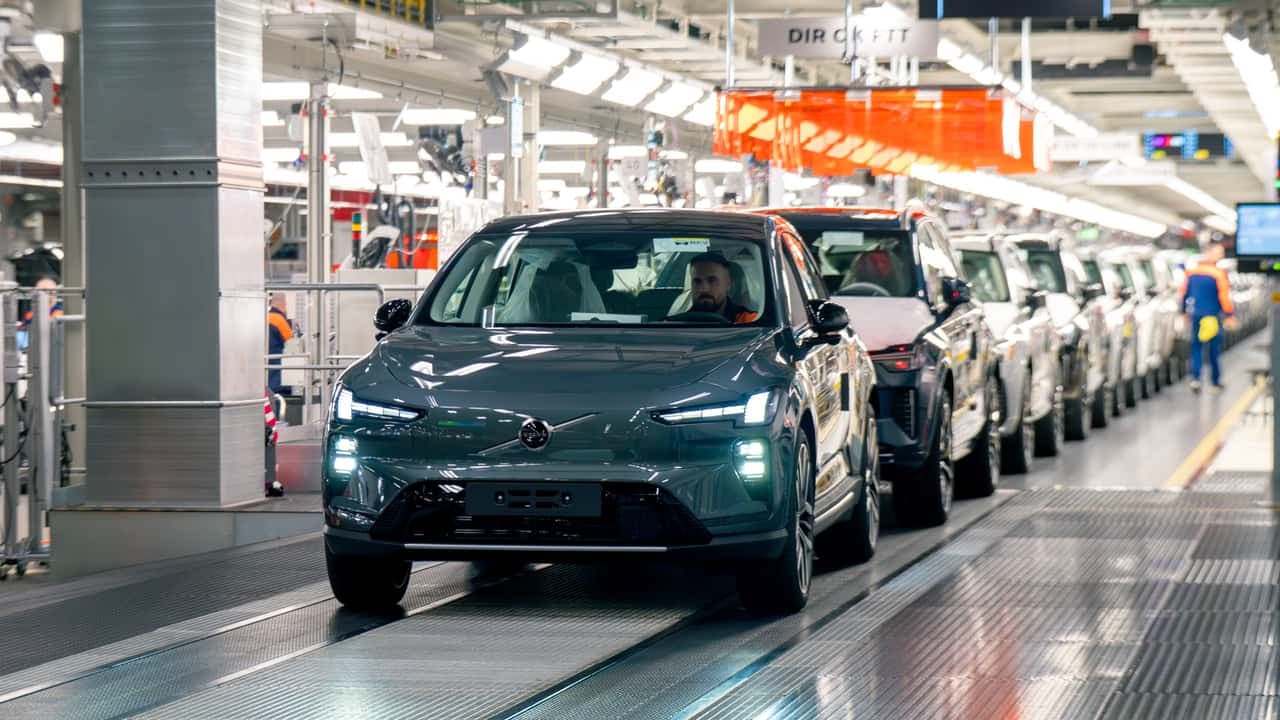
Volvo’s high-stakes transition to an all-electric lineup has hit a significant snag with its most critical vehicle, the EX60. Originally positioned to anchor the Swedish automaker’s portfolio and reverse a recent slide in global sales, the EX60 is currently failing to reach the production volumes required to meet international demand. The manufacturer had initially targeted a robust output of approximately 2,000 units per week at its Torslanda facility in Sweden. However, reality has fallen far short of those projections, with output currently hovering at only ten percent of that ambitious target.
Reports indicate that the primary obstacles are rooted in complex assembly processes. Specifically, the integration of the high-voltage battery pack into the vehicle’s body has proven to be a difficult engineering puzzle. Furthermore, the specialized production required for the vehicle’s electric motors is causing additional delays. These manufacturing setbacks have forced Volvo to reevaluate its global supply strategy, leading the company to prioritize the European market where EV adoption remains consistently strong, while the United States market faces a frustrating postponement.
The Impact on the American Market
For American consumers, the delay is particularly sharp. Volvo had projected sales of roughly 7,000 units within the U.S. this year alone; however, only a nominal number of vehicles have arrived at stateside dealerships thus far. With the discontinuation of other entry-level options like the EX30 and EX40 in the region, the EX60 was meant to serve as a cornerstone for Volvo’s domestic electric strategy. Instead, U.S. customers now face a long wait, with the first significant shipments not expected to arrive until early next year.
Volvo spokesperson Jacquelyn Johnson acknowledged the difficulty of the ramp-up phase, attributing the friction to the advanced nature of the vehicle's design. The use of innovative, industry-first concepts like megacasting and cell-to-body architectures means that there are no existing blueprints for assembly line staff to follow. While these technologies promise superior structural efficiency and performance, they also introduce a steep learning curve that the company is currently working to overcome through refined manufacturing workflows.
Why It Matters
- Strategic Setback: The EX60 is essential for Volvo’s financial recovery following an 11 percent slump in third-quarter global sales.
- Technological Complexity: The delay highlights the growing pains associated with cutting-edge manufacturing techniques like cell-to-body integration and large-scale megacasting.
- Competitive Landscape: While Volvo struggles with logistics, rivals like BMW and Mercedes-Benz are successfully pushing their competing electric crossovers into the U.S. market, potentially capturing the segment’s early adopters.
- Market Prioritization: Volvo is opting to stabilize its European distribution first, leaving U.S. dealers with limited stock for the immediate future.
Looking ahead, Volvo maintains that it is steadily working through these production challenges. As the Torslanda plant gains experience with the new assembly processes, the company expects to see a more consistent flow of vehicles. For the time being, however, the American rollout remains a slow-motion effort, serving as a reminder that even for established automakers, the leap to next-generation electric vehicle architecture is rarely a smooth transition.