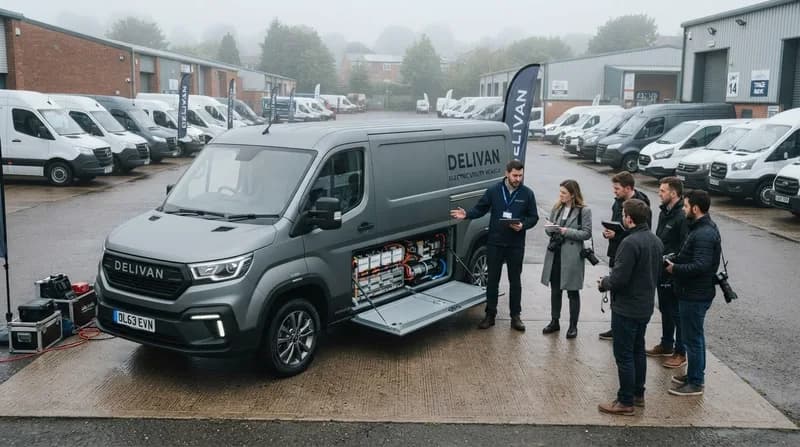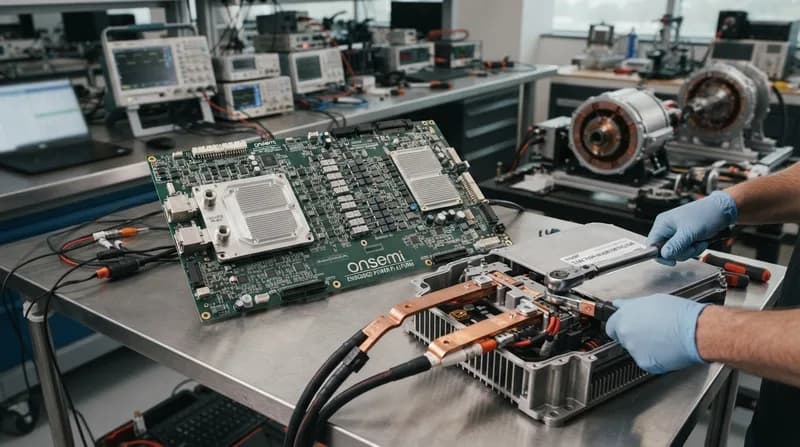
A New Frontier in Power Electronics
Semiconductor leader Onsemi has officially unveiled its new Embedded Power Platform (EPP), a transformative architecture designed to redefine how power electronics function within electric vehicles and beyond. By fundamentally rethinking the packaging of power components, the company is aiming to solve the perennial engineering challenge of maximizing output while minimizing the physical footprint of the traction inverter. The EPP architecture is not just an incremental improvement; it represents a major structural shift in how power modules are built.
The innovation centers on using the silicon wafer itself as the actual foundation of the package. This allows engineers to integrate a variety of semiconductor technologies—including silicon, silicon carbide (SiC), and gallium nitride (GaN)—alongside essential components like controllers, drivers, and FETs within a singular, unified package. By integrating these elements at the foundational level, Onsemi can optimize the electrical, thermal, and mechanical properties simultaneously during the manufacturing process, rather than attempting to harmonize disparate parts later in the assembly chain.
Key Performance Gains and Technical Advantages
The primary benefit of this platform for the automotive industry is a dramatic leap in performance metrics. Onsemi claims that the EPP can achieve up to four times higher power density in traction inverters compared to traditional methods. Furthermore, the architecture is expected to reduce power losses by approximately 15 percent. These improvements directly translate to smaller, lighter, and more efficient inverters, which are crucial for extending the range and performance of next-generation electric vehicles.
- Reduced Parasitic Inductance: The unified packaging design minimizes internal resistance and interference, allowing for higher switching frequencies and better overall efficiency.
- Manufacturing Synergy: The platform leverages Onsemi’s existing 12-inch silicon wafer production lines, allowing key integration steps to occur directly during the semiconductor fabrication process.
- Scalability: By utilizing a common base design, automotive manufacturers can deploy the EPP across various vehicle power classes, significantly reducing the complexity of development and qualification.
Why It Matters
The potential for the EPP extends far beyond simple performance stats. For automakers like Subaru—the first partner to evaluate the platform—the promise lies in the agility of the design process. Onsemi estimates that development cycles for these power systems could be slashed to as little as four months. In an industry where time-to-market is a critical competitive edge, this level of efficiency is a game changer. Moreover, because the architecture is highly scalable, it can be repurposed for industrial applications and the surging power demands of AI data centers, proving its utility as a foundational technology for the electrification era.
Outlook and Industry Implications
While the Embedded Power Platform is currently in its early stages, the implications for the future of mobility are profound. Onsemi plans to deliver initial engineering samples to select automotive and industrial partners later this year. While the platform has not yet been confirmed for a specific production vehicle, its arrival signals a shift toward highly integrated, modular, and cost-effective power electronics. As manufacturers look to cut costs and simplify their supply chains, an architecture that allows for cross-platform integration and reduced development overhead is likely to find a permanent home in the garages of the future.