Revolutionizing the PHEV Segment
Volvo is making a bold statement in the automotive industry with its 2027 model year update for its flagship SUVs, the XC60 and XC90. By integrating significantly larger battery packs, the manufacturer is effectively shifting the utility of its plug-in hybrid (PHEV) fleet, aiming to allow drivers to complete the vast majority of their daily commutes without relying on a drop of gasoline. This leap in capacity marks a transition from supplementary electric power to a truly primary electric experience for most urban and suburban users.
1. Volvo XC60: The New Range Benchmark
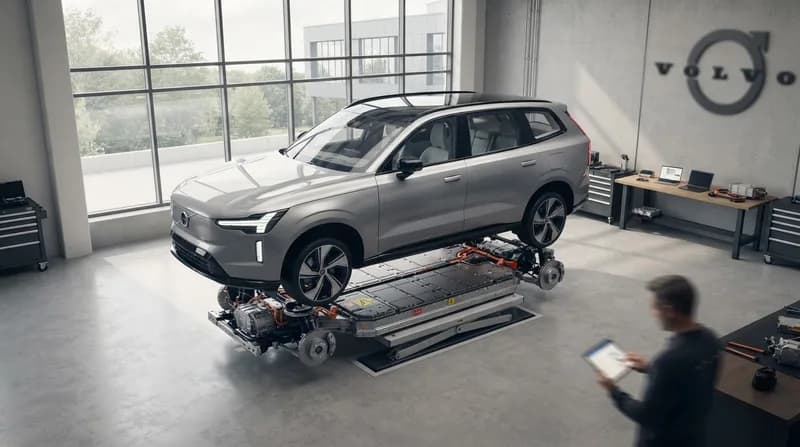
The updated Volvo XC60 arrives with an impressive 200 km of purely electric range, a figure that sits at the top of the current plug-in hybrid market. This feat is achieved through a significant overhaul of the vehicle’s floor-mounted energy storage system, which has been expanded from 18.8 kWh to a substantial 41.2 kWh. For context, this battery is larger than those found in some dedicated entry-level battery-electric hatchbacks, highlighting Volvo's commitment to prioritizing electric-only operations.
Beyond the raw battery capacity, the XC60 benefits from an upgraded electric motor, now pushing 130 kW. With a starting price of 69,990 euros, Volvo is positioning this vehicle as a versatile, premium solution for customers who are not yet ready to transition to a fully battery-electric vehicle but wish to dramatically lower their operational carbon footprint through regular charging habits.
2. Volvo XC90: Luxury with Extended Reach
Sharing the same technological backbone as its smaller sibling, the 2027 Volvo XC90 brings newfound electric efficiency to the large SUV segment. While its heavier frame results in a slightly lower pure-electric range compared to the XC60, it still achieves an impressive 163 km on a single charge. This upgrade is transformative for a vehicle of this size, ensuring that school runs, errands, and regional commutes can be handled entirely via electric power.
The combination of the 41.2 kWh battery and the refined 130 kW electric motor ensures that the XC90 maintains its status as a comfortable, powerful SUV while drastically reducing its reliance on the internal combustion engine. By bridging the gap between traditional luxury and modern electrification, Volvo is providing a seamless pathway for legacy customers to adopt high-voltage technology without sacrificing range security.
Why it Matters
The debate surrounding plug-in hybrids has often centered on "real-world" usage versus official emission testing. By offering a 200 km range, Volvo addresses the most significant hurdle: the incentive to charge. With such a substantial electric buffer, the practical use case for these vehicles aligns more closely with the reality of daily European driving patterns. This strategic pivot aims to lower average CO2 emissions significantly, proving that with enough capacity, the plug-in hybrid remains a relevant and potent tool in the global transition to sustainable mobility.