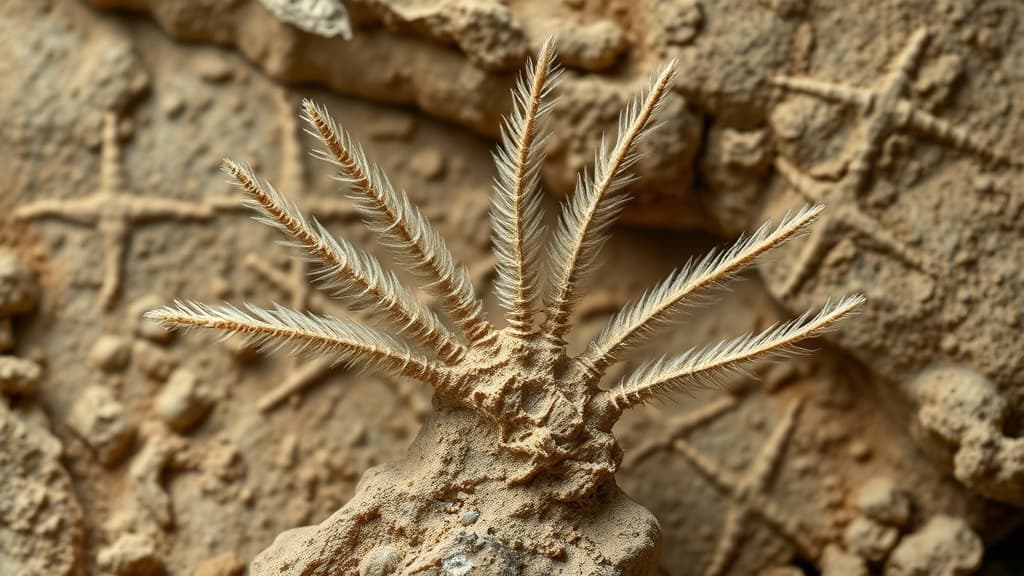
Scientists have made a groundbreaking discovery with the identification of a 450-million-year-old crinoid fossil that preserves exceptionally rare soft tissue. This find offers a new window into understanding how some of Earth's earliest reef animals lived, fed, and evolved.
Key Insights
The fossil, which is more than 200 million years older than the first dinosaurs, preserves its delicate tube feet, making it the oldest example of its kind discovered so far. The discovery provides new insights into how crinoids evolved and how their feeding strategies changed over hundreds of millions of years, highlighting the significance of this rare find in the field of paleontology.