Unlocking the Retina's Secret Defense
A collaborative research effort involving Scripps Research, UC San Diego, and the Lowy Medical Research Institute has identified a natural molecule that plays a critical role in the eye’s ability to defend itself against progressive diseases. The molecule, known as erucamide, acts as a chemical signal that coordinates the retina’s response to injury. This discovery offers a promising new pathway for medical interventions aimed at slowing conditions like age-related macular degeneration, diabetic retinopathy, and retinitis pigmentosa.
The research team, publishing their findings in Nature Neuroscience, observed that erucamide levels within the eye significantly drop as photoreceptors—the essential light-sensing cells—begin to degrade. By identifying this correlation, scientists were able to test whether restoring these levels could stabilize retinal tissue. The results suggest that rather than acting as a passive observer to cellular death, the retina maintains an active internal defense mechanism that can be bolstered by specific molecular signaling.
The Role of Myeloid Cells
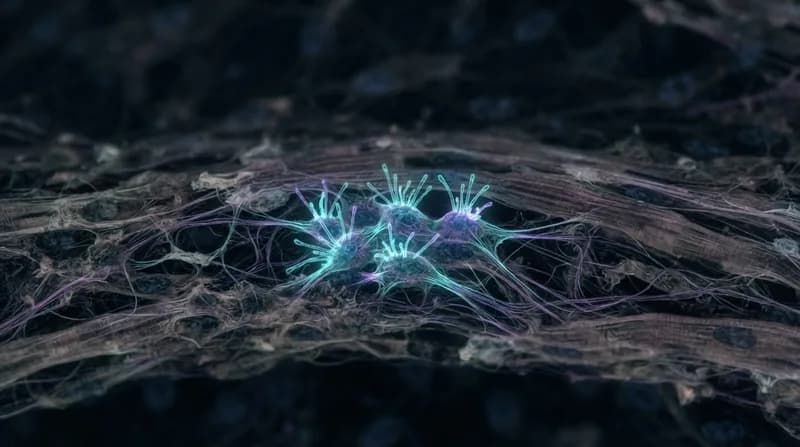
A surprising aspect of the study is how erucamide exerts its protective effects. It does not target photoreceptors directly; instead, it binds to a specific protein called TMEM19, which activates CD11b+ myeloid cells within the retina. These immune cells are specialized in tissue maintenance and injury response throughout the body. When activated by erucamide, these cells release signals that support the neurovascular unit, which encompasses the nerve cells and the blood vessels that supply them with oxygen and vital nutrients.
The study highlights that by engaging the surrounding cellular environment rather than just the damaged cells themselves, the body can better preserve its existing structural integrity. While erucamide does not outright reverse vision loss, it significantly slows the progression of degeneration, providing a broader window for therapeutic intervention. This shift in perspective—treating the environment surrounding the photoreceptors rather than just the dying cells—represents a paradigm shift in how ophthalmologists might approach degenerative retinal conditions in the future.
Overcoming Delivery Challenges
Translating this scientific breakthrough into a clinical treatment presents unique engineering challenges. Erucamide is a hydrophobic lipid, meaning it is notoriously difficult to formulate in the water-based solutions typically used for eye medications. To address this, the researchers utilized advanced, porous silicon nanoparticles as specialized delivery vehicles. These engineered carriers allow for the controlled, stable release of the molecule into the eye, preventing it from clumping and ensuring uniform distribution.
Looking ahead, the research team is focused on refining this delivery method and exploring modified versions of erucamide that might offer increased potency or longer-lasting effects. By focusing on enhancing natural signals already present in the human eye, this approach avoids the risks of introducing foreign, potentially harmful biological processes. The next phase of research will aim to determine if this protective pathway remains effective across diverse types of retinal disease and how it can be scaled for long-term patient care.