ScienceTechnical Deep Dive

New IASLC Grading System Predicts Survival and Treatment Response in Lung Cancer Patients

Published
EElectricBuzz Editorial Team
New IASLC Grading System Predicts Survival and Treatment Response in Lung Cancer Patients
3 min read411 wordsElectricBuzz Editorial Team

The Gist

A newly validated tumor-budding classification offers oncologists a more precise way to identify high-risk lung cancer patients and tailor adjuvant chemotherapy.

Revolutionizing Prognosis for Resected Lung SqCC

Researchers have unveiled a promising advancement in oncology that could fundamentally change how clinicians manage resected lung squamous cell carcinoma (SqCC). Presented at the IASLC 2026 World Conference on Lung Cancer, a new grading system based on tumor budding has demonstrated a robust ability to stratify patients by risk level, potentially serving as a critical biomarker for determining who stands to benefit most from adjuvant chemotherapy.

The system is built upon a two-tier framework established by the International Association for the Study of Lung Cancer (IASLC) in 2025. By evaluating tumor budding—the presence of isolated cancer cells or small clusters at the invasive front of a tumor—pathologists can categorize patients as either low-grade or high-grade. This simple yet highly effective distinction provides an independent prognostic indicator that transcends traditional staging metrics alone.

Validating the Clinical Impact

In a retrospective study of 585 patients who underwent curative-intent resection, the researchers found that 11.1% of participants presented with high-grade tumors. These patients were found to have a significantly worse prognosis, with lower rates of both overall and disease-free survival compared to their low-grade counterparts. Crucially, the study showed that while adjuvant chemotherapy showed no universal benefit for all stage IB–III patients, the treatment was specifically linked to improved outcomes within the high-grade group.

This suggests that tumor budding could act as a 'decision-support' tool, allowing oncologists to bypass aggressive treatments for low-grade patients who are unlikely to see a survival benefit, while concentrating therapeutic efforts on those at higher risk.

Why It Matters

  • Precision Oncology: The system shifts the focus from broad clinical staging to biological markers that reflect a tumor's aggressiveness.
  • Treatment Stratification: It provides a clear, actionable guide for clinicians when deciding whether to pursue adjuvant chemotherapy.
  • Biological Insight: Genomic profiling indicates that high-grade and low-grade tumors follow distinct oncogenic programs, such as specific TP53 mutation patterns in high-grade cases.

Looking Toward the Future

While these retrospective results are compelling, the research team emphasizes that the next step is prospective, multicenter validation. Confirming these findings in real-time, across diverse clinical environments, will be necessary before the grading system becomes a standard fixture in surgical pathology. If confirmed, this system could standardize how clinicians approach postoperative care, moving the industry toward a more personalized and evidence-based model of pulmonary oncology. By reducing unnecessary exposure to chemotherapy in low-risk cases and identifying high-risk candidates earlier, this grading system represents a significant leap forward in lung cancer management.


The 5 Best Over-Ear ANC Headphones of 2026, Tested & Ranked
Editor's Pick Guide
92/100
Tech & Gadgets12 min read

The 5 Best Over-Ear ANC Headphones of 2026, Tested & Ranked

We locked five over-ear ANC picks for 2026 — Sony WH-1000XM6, Bose QuietComfort Ultra 2, Soundcore Space One, Sennheiser Momentum 5, and Apple AirPods Max 2 — then stress-tested them on lab metrics, long-term owner truth, and live street prices.

Related Stories

Semantically matched articles, ranked by topic overlap and freshness.

NASA's Roman Space Telescope Set for Two Decades of Cosmic Discovery
Science

NASA's Roman Space Telescope Set for Two Decades of Cosmic Discovery

Thanks to exceptional launch precision and significant fuel savings, the Nancy Grace Roman Space Telescope is poised to more than double its mission life, potentially operating for over 22 years.

Unlocking Predictive Markers: How B Cells Could Forecast Immunotherapy-Induced Colitis
Science

Unlocking Predictive Markers: How B Cells Could Forecast Immunotherapy-Induced Colitis

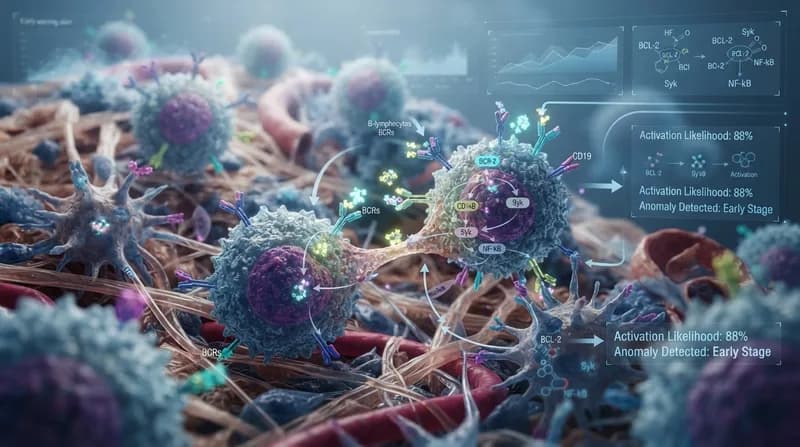
New research from MD Anderson Cancer Center suggests that B cell activity acts as a crucial early-warning system for identifying patients at risk of developing severe colitis during cancer treatment.

Could a Tiny Brain Protein Be the Master Switch for Aging?
Science

Could a Tiny Brain Protein Be the Master Switch for Aging?

Researchers have identified that declining levels of a brain protein called Menin may drive systemic aging, offering a potential new target for age-related health interventions.

Challenging Einstein: Scientists Pioneer Gravity Tests Using Exotic Muonium Atoms
Science

Challenging Einstein: Scientists Pioneer Gravity Tests Using Exotic Muonium Atoms

Researchers at ETH Zurich have developed a method to create controlled beams of muonium, potentially enabling the first-ever gravitational tests on second-generation particles.

Unlocking the Narrative: AI System Transforms Physician Notes into Actionable Medical Data
Science

Unlocking the Narrative: AI System Transforms Physician Notes into Actionable Medical Data

A groundbreaking study reveals how a new AI system can parse clinical prose at scale, converting hidden patient insights into verifiable, computer-readable data.

Caltech’s Femtosecond Breakthrough: Steering Light with Light
Science

Caltech’s Femtosecond Breakthrough: Steering Light with Light

Researchers have engineered a nanoscale silicon metasurface capable of redirecting light beams in just 74 quadrillionths of a second, shattering traditional speed barriers in photonic computing.

Beyond the Starch: Why Black and Green Rice Are Emerging as Metabolic Superfoods
Science

Beyond the Starch: Why Black and Green Rice Are Emerging as Metabolic Superfoods

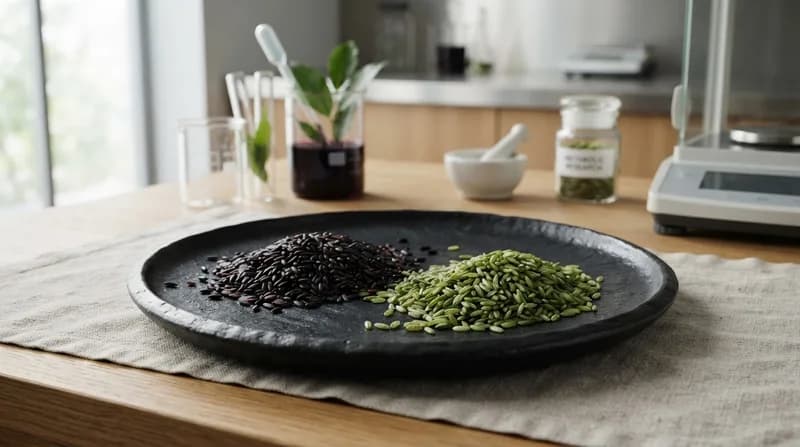
New research from Hokkaido University reveals that pigmented rice varieties contain unique, beneficial fats that could revolutionize dietary approaches to blood sugar management.

Biological Breakthrough: Scientists 3D-Print a Functional Human Gut-on-a-Chip
Science

Biological Breakthrough: Scientists 3D-Print a Functional Human Gut-on-a-Chip

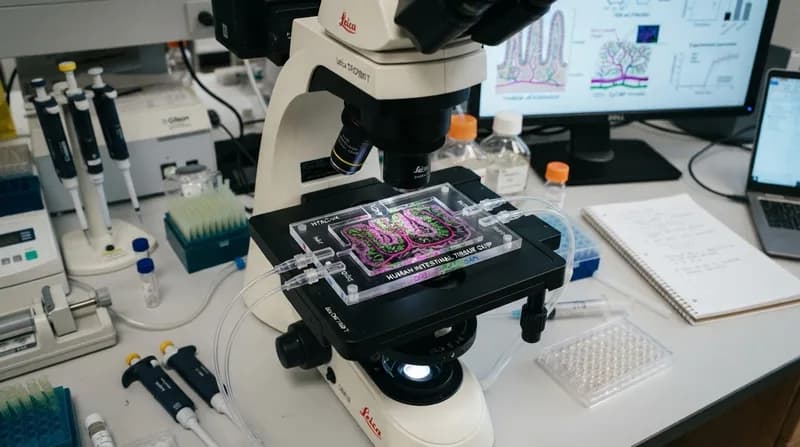
Researchers at Lawrence Livermore National Laboratory have successfully replicated the complex 3D architecture of the human small intestine on a compact, microfluidic device.