ScienceTechnical Deep Dive

Ancient Rituals Unearthed: 25,000 Years of History Found in Australian Cave

Published
EElectricBuzz Editorial Team
Ancient Rituals Unearthed: 25,000 Years of History Found in Australian Cave
3 min read499 wordsElectricBuzz Editorial Team

The Gist

A groundbreaking study of microscopic plant remains in Cloggs Cave reveals a 25,000-year continuity of spiritual ritual practices by the GunaiKurnai people.

A Legacy Written in Ash

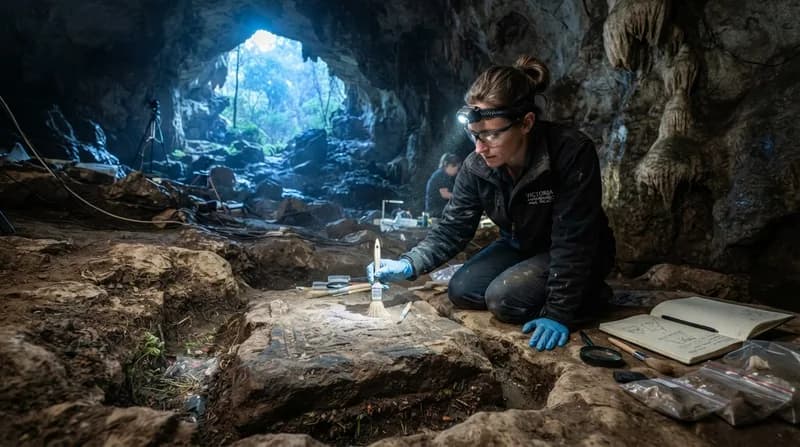
Deep within the traditional lands of the GunaiKurnai nation in southeastern Australia, Cloggs Cave has long been recognized as a site of profound spiritual significance. New archaeological research, published in the journal Frontiers in Environmental Archaeology, has now provided empirical evidence of just how deep those roots go. By analyzing microscopic plant remains, researchers have uncovered a 25,000-year history of intentional ritual activity, revealing a sophisticated and enduring tradition of spiritual practice that survived throughout millennia.

The study, which involved close collaboration with the GunaiKurnai Land and Waters Corporation, focused on analyzing sediment layers within the cave. Excavations led by a team from the Australian National University, Monash University, and international partners confirmed that ancestors of the GunaiKurnai intentionally carried specific grasses into the pitch-black environment of the cave to burn them in thin, deliberate layers. These findings align with traditional oral histories that describe the site as a space used by powerful spiritual practitioners, known as 'mulla-mullung,' for healing, magic, and other sacred rites.

The Science of Phytoliths

The core of this discovery relies on the study of phytoliths—microscopic silica structures that form within plant tissues. Because these structures are highly durable, they persist long after the organic matter of the plant has decayed. In the dark interior of Cloggs Cave, where no light reaches, plant matter cannot grow naturally. Therefore, the presence of these silica remnants provides definitive proof of human intervention.

Researchers examined thousands of phytoliths recovered from two deep excavation pits. The analysis revealed that the ancestors were not gathering random vegetation; they were highly selective. While the surrounding landscape featured diverse flora including riparian forests, the cave samples were overwhelmingly dominated by specific grasses. In some layers, grass phytoliths accounted for as much as 97% of the recovered samples, and many showed clear signs of intentional burning or melting. This confirms that these ancient communities transported whole grasses—including inedible stems and roots—into the cave to conduct sustained, repeated fire-based ceremonies.

A Standing Stone and Layers of History

Beyond the microscopic plant remains, the physical evidence inside the cave paints a vivid picture of human intent. The archaeological team identified 73 distinct layers of ash, which were dated using advanced techniques like optically stimulated luminescence and carbon dating. These layers suggest a consistent, rhythmic pattern of ritual activity spanning from approximately 4,400 to 1,600 years ago, layered atop a much longer foundation stretching back 25,000 years.

One of the most striking physical artifacts discovered was a 28-centimeter-tall standing stone. Detailed analysis concluded that this stone was deliberately placed in the cave for ritual purposes about 2,000 years ago. This discovery, when paired with the presence of fat-smeared, trimmed wooden sticks from Casuarina trees found in deeper strata, provides a tangible link to the complex spiritual life of the GunaiKurnai people. These materials serve as a testament to the continuity of cultural traditions and the enduring significance of ancestral sites in managing the spiritual and physical landscape of the Australian continent.

The 5 Best Over-Ear ANC Headphones of 2026, Tested & Ranked
Editor's Pick Guide
92/100
Tech & Gadgets12 min read

The 5 Best Over-Ear ANC Headphones of 2026, Tested & Ranked

We locked five over-ear ANC picks for 2026 — Sony WH-1000XM6, Bose QuietComfort Ultra 2, Soundcore Space One, Sennheiser Momentum 5, and Apple AirPods Max 2 — then stress-tested them on lab metrics, long-term owner truth, and live street prices.

Related Stories

Semantically matched articles, ranked by topic overlap and freshness.

NASA's Roman Space Telescope Set for Two Decades of Cosmic Discovery
Science

NASA's Roman Space Telescope Set for Two Decades of Cosmic Discovery

Thanks to exceptional launch precision and significant fuel savings, the Nancy Grace Roman Space Telescope is poised to more than double its mission life, potentially operating for over 22 years.

Unlocking Predictive Markers: How B Cells Could Forecast Immunotherapy-Induced Colitis
Science

Unlocking Predictive Markers: How B Cells Could Forecast Immunotherapy-Induced Colitis

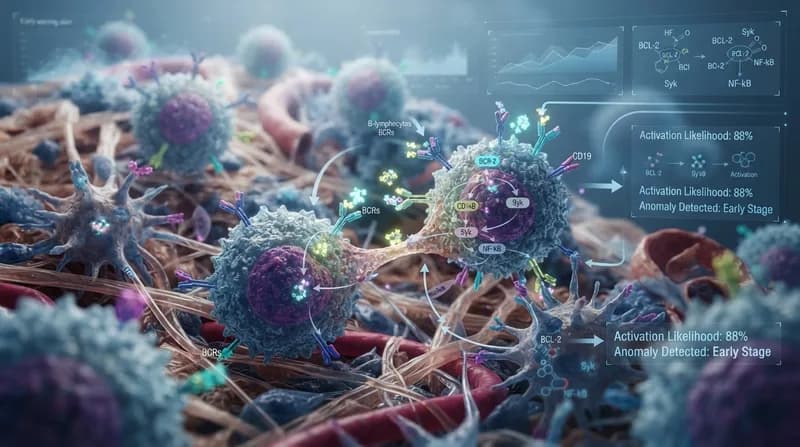
New research from MD Anderson Cancer Center suggests that B cell activity acts as a crucial early-warning system for identifying patients at risk of developing severe colitis during cancer treatment.

Could a Tiny Brain Protein Be the Master Switch for Aging?
Science

Could a Tiny Brain Protein Be the Master Switch for Aging?

Researchers have identified that declining levels of a brain protein called Menin may drive systemic aging, offering a potential new target for age-related health interventions.

Challenging Einstein: Scientists Pioneer Gravity Tests Using Exotic Muonium Atoms
Science

Challenging Einstein: Scientists Pioneer Gravity Tests Using Exotic Muonium Atoms

Researchers at ETH Zurich have developed a method to create controlled beams of muonium, potentially enabling the first-ever gravitational tests on second-generation particles.

Unlocking the Narrative: AI System Transforms Physician Notes into Actionable Medical Data
Science

Unlocking the Narrative: AI System Transforms Physician Notes into Actionable Medical Data

A groundbreaking study reveals how a new AI system can parse clinical prose at scale, converting hidden patient insights into verifiable, computer-readable data.

Caltech’s Femtosecond Breakthrough: Steering Light with Light
Science

Caltech’s Femtosecond Breakthrough: Steering Light with Light

Researchers have engineered a nanoscale silicon metasurface capable of redirecting light beams in just 74 quadrillionths of a second, shattering traditional speed barriers in photonic computing.

Beyond the Starch: Why Black and Green Rice Are Emerging as Metabolic Superfoods
Science

Beyond the Starch: Why Black and Green Rice Are Emerging as Metabolic Superfoods

New research from Hokkaido University reveals that pigmented rice varieties contain unique, beneficial fats that could revolutionize dietary approaches to blood sugar management.

Biological Breakthrough: Scientists 3D-Print a Functional Human Gut-on-a-Chip
Science

Biological Breakthrough: Scientists 3D-Print a Functional Human Gut-on-a-Chip

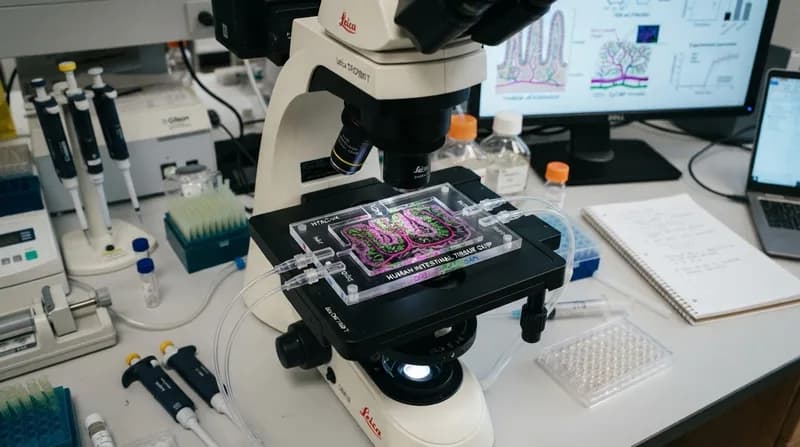
Researchers at Lawrence Livermore National Laboratory have successfully replicated the complex 3D architecture of the human small intestine on a compact, microfluidic device.