A New Era of Cosmic Exploration Dawns
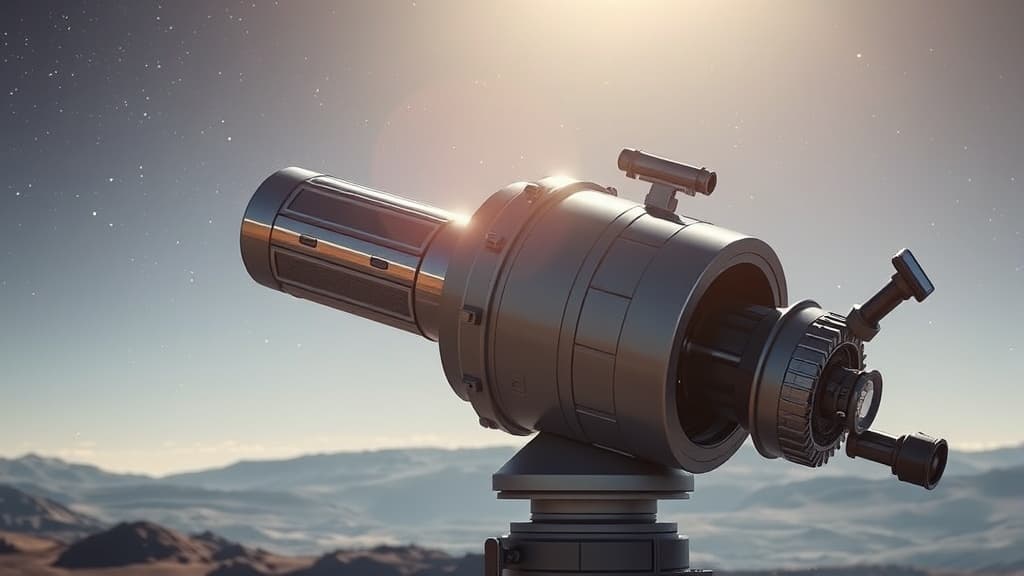
On the eve of its anticipated launch, NASA's Nancy Grace Roman Space Telescope stands ready to redefine humanity's understanding of the universe. Positioned as the agency's next flagship astrophysics mission following the revolutionary James Webb Space Telescope, Roman isn't just another eye in the sky; it's a revolutionary instrument designed to marry the exquisite detail of the Hubble Space Telescope with an expansive field of view 100 times greater. This unprecedented combination is set to unlock a new chapter in astronomical discovery, from charting vast cosmic structures to directly imaging distant exoplanets.
While Webb delves into the universe with unparalleled depth across small, focused regions, Roman is engineered for a sweeping survey of the cosmos. Both observatories are adept at detecting infrared light, allowing their observations to be seamlessly compared and combined, promising a synergistic approach that will yield insights far beyond what either could achieve alone. As science operations are slated to commence in January 2027, the astronomical community, including faculty and students from the University of Arizona, eagerly awaits its first data.
The Core of Roman's Revolutionary Design
At the heart of Roman's capabilities is its impressive hardware, featuring a 7.9-foot (2.4-meter) primary mirror – identical in diameter to Hubble's. This engineering marvel supports two critical scientific instruments:
- The Wide Field Instrument: This instrument is designed to achieve the same sensitivity as Hubble's cameras but across an area 100 times larger. Over its three decades, Hubble has observed roughly 0.1% of the night sky. Roman, by contrast, possesses the potential to survey the entire sky at comparable resolution, dramatically increasing the chances of finding rare and fleeting cosmic phenomena, from exploding stars to newly formed worlds and distant galaxy clusters. This wide-angle perspective is crucial for understanding the large-scale structure of the universe.
- The Coronagraph Instrument: A technological tour de force, this instrument employs a complex array of masks, prisms, detectors, filters, and self-flexing mirrors. Its primary function is to block and filter the overwhelming glare from host stars, enabling astronomers to directly image exoplanets and the dusty disks surrounding them. This represents a monumental leap in exoplanet science, offering a direct view of worlds typically inferred through indirect methods. The Coronagraph is expected to achieve a performance 100 to 1,000 times better than existing space-based coronagraphs, capable of detecting planets 100 million times fainter than their parent stars.
Unlocking the Universe's Deepest Secrets
Roman's scientific mission extends to some of the most profound mysteries in cosmology and planetary science:
Probing Dark Matter and Dark Energy
One of Roman’s foremost objectives is to unravel the enigmas of dark matter and dark energy – the invisible components that constitute nearly 95% of our universe. Dark matter, which exerts gravity but emits no light, and dark energy, linked to the accelerating expansion of the universe, remain poorly understood. Researchers, notably from the University of Arizona, are at the forefront of this quest. Projects like the "Kinematic Lensing with the Roman Space Telescope" are developing advanced cosmological measurement techniques to study these phenomena with unprecedented precision by combining Roman’s imagery with spectroscopic data. Another U of A team is spearheading efforts to interpret Roman's vast cosmological observations, utilizing new high-performance computing resources to translate galaxy catalogs into definitive insights about the universe's composition.
Mapping the Universe's Evolution
By identifying and characterizing galaxies across immense distances, Roman will enable astronomers to construct colossal catalogs. These will, in turn, be used with sophisticated physical models to chart the structure and evolution of the universe. This ambitious undertaking will require significant computational power, with substantial investments already made to support the data analysis that will determine the precise amounts of dark energy and dark matter in the cosmos.
Directly Imaging Distant Planets
Beyond its wide-field surveys, the Coronagraph Instrument marks a pivotal advancement in exoplanet research. Most known exoplanets have been discovered indirectly, often by observing dips in a star's brightness. Roman's ability to directly block starlight will allow astronomers to 'see' these distant worlds, providing opportunities to study their atmospheres, climates, and orbital structures. This capability is not only a scientific breakthrough in its own right but also a crucial pathfinder for future missions, such as the proposed Habitable Worlds Observatory, which aims to search for signs of life beyond our solar system.
As Roman prepares to cast its wide net across the cosmos, the data it collects will be made freely available to the global scientific community. Its launch represents not just the deployment of a new telescope, but the inauguration of a new perspective on our universe, promising discoveries that will undoubtedly reshape our cosmic narrative for decades to come.