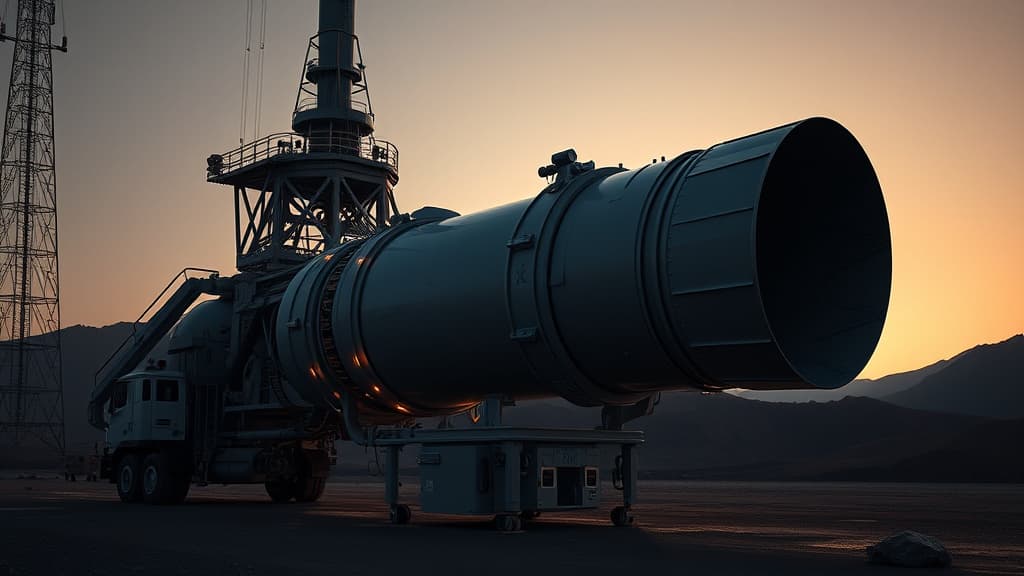
NASA's Nancy Grace Roman Space Telescope is encapsulated and ready for its upcoming launch, scheduled for August 30, 2026. It will lift off aboard a SpaceX Falcon Heavy rocket from the Kennedy Space Center. This state-of-the-art telescope is expected to significantly enhance our understanding of the universe by hunting for exoplanets and unraveling the mysteries surrounding dark matter and dark energy.
Key Points
- The Roman Space Telescope is protected within the Falcon Heavy fairing, ensuring a controlled environment throughout its journey to orbit.
- Upon launch, the mission is anticipated to discover up to 100,000 exoplanets, which would vastly exceed all previous findings combined.
- Beyond exoplanet research, Roman will also serve as a critical instrument in exploring dark matter and dark energy, two pivotal forces impacting the universe's expansion.
- Sited at the Sun-Earth Lagrange point 2 (L2), the telescope allows for continuous observation, making it ideally suited for deep-sky studies.
- The launch is set for 7:26 a.m. EDT on August 30, 2026, and SpaceX plans to recover the fairing sections post-launch for reuse.
This mission represents a significant leap forward in astronomical technology and research, aiming to bridge gaps in our knowledge of the cosmos.