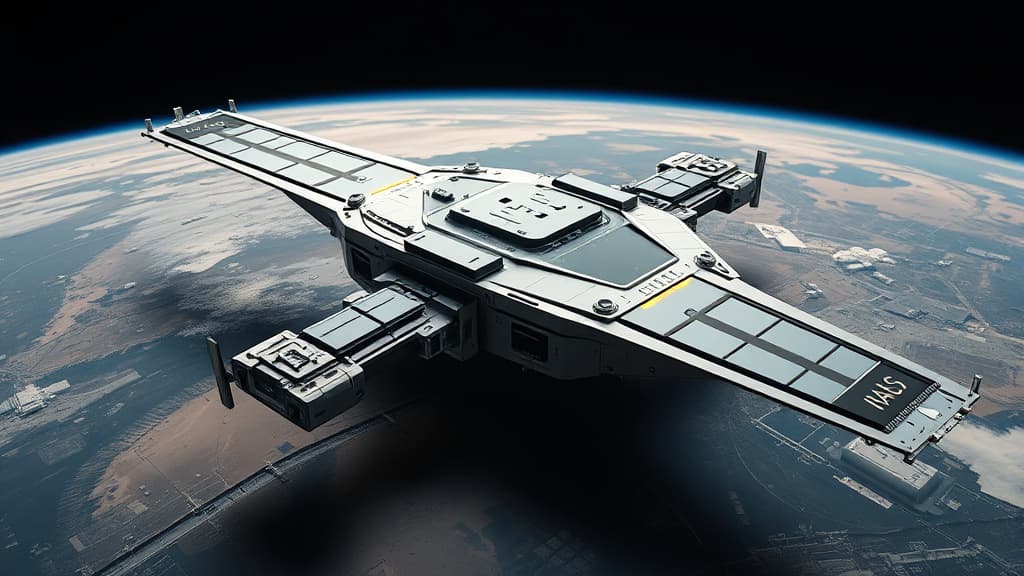
NASA has made a significant advancement in space navigation with the successful testing of its FALCON technology during the Starling mission. This innovative system enables satellites to navigate autonomously, relying on close-proximity debris and other spacecraft rather than traditional GPS inputs.
In a remarkable demonstration over a span of just three days, FALCON refined the orbital predictions for more than 200 space objects using onboard optical navigation. Utilizing star tracking cameras, the technology showcased its capability to autonomously determine positions, addressing a critical limitation of GPS in space.
Key Features of FALCON
- GPS-Free Navigation: FALCON allows for autonomous navigation by leveraging nearby space objects, which is crucial for missions beyond Earth's immediate vicinity.
- Autonomous Refinement: The technology autonomously refined the orbits of over 200 space objects, showcasing robust performance in dynamic space environments.
- Enhanced Navigation for Future Missions: This capability is particularly relevant for missions to the Moon and Mars, where GPS signals are likely to be either weak or entirely absent.
- Collision Avoidance: FALCON's accuracy aids in space traffic monitoring and collision avoidance, reducing dependence on ground-based tracking systems.
- Commercial Potential: The successful demonstration reflects a trend of translating university research into commercial applications, with EraDrive's contributions enhancing satellite navigation prospects.
This successful demonstration of FALCON indicates a pivotal shift in how future space missions may navigate, especially in environments where traditional technologies fall short. As the space economy expands, FALCON's approach could streamline operations in orbital operations, enhancing safety and efficiency in satellite navigation.
For more information, you can read the full article on Science Daily: NASA just used satellites and debris to navigate without GPS.