New findings in quantum physics reveal that 'empty' space may actually influence the behavior of light. Researchers studying the magnetar 1E 1547.0-5408 uncovered possible evidence of vacuum birefringence, a quantum effect first theorized by Werner Heisenberg nearly 90 years ago. This magnetar, with a magnetic field over 100 million times stronger than any created on Earth, serves as an ideal candidate for observing this phenomenon.
Key Findings
- The study focused on the magnetar 1E 1547.0-5408, one of the strongest magnets in the universe.
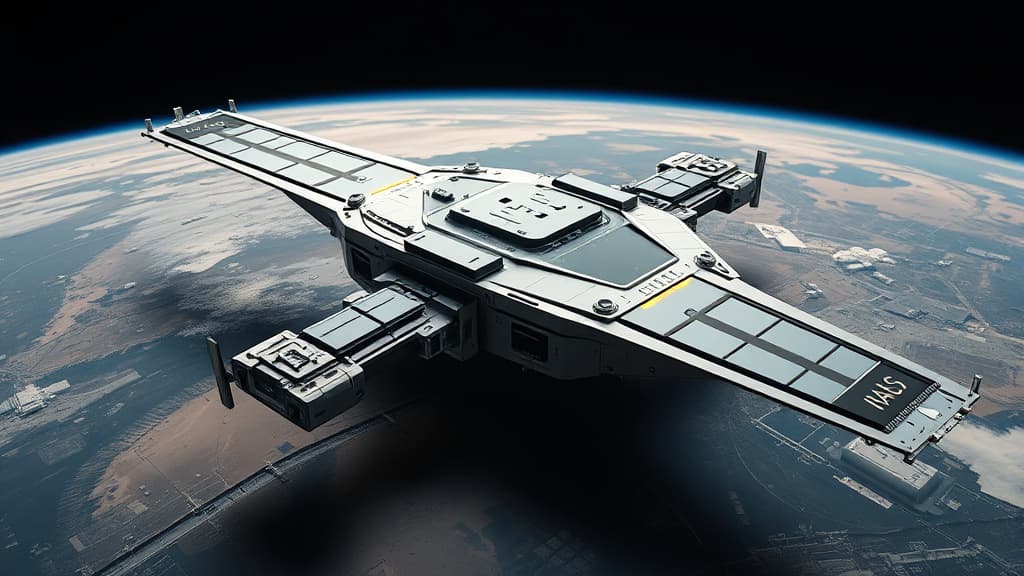
- Utilizing the CSIRO's Murriyang radio telescope, NASA's Imaging X-ray Polarimetry Explorer, and the NICER on the ISS, researchers analyzed the magnetar's emissions.
- Data showed that the polarization of light emitted was consistent with the magnetar's magnetic field, indicating the influence of Heisenberg's virtual particles.
- This marks the first empirical evidence for vacuum birefringence, reinforcing its theoretical foundation.
- Future research will require more observations and advanced simulations to confirm the findings.
The implications of this study are significant, as it opens new avenues for exploring quantum physics under extreme conditions. By understanding how 'empty' space interacts with light, scientists can deepen their comprehension of fundamental physical principles.