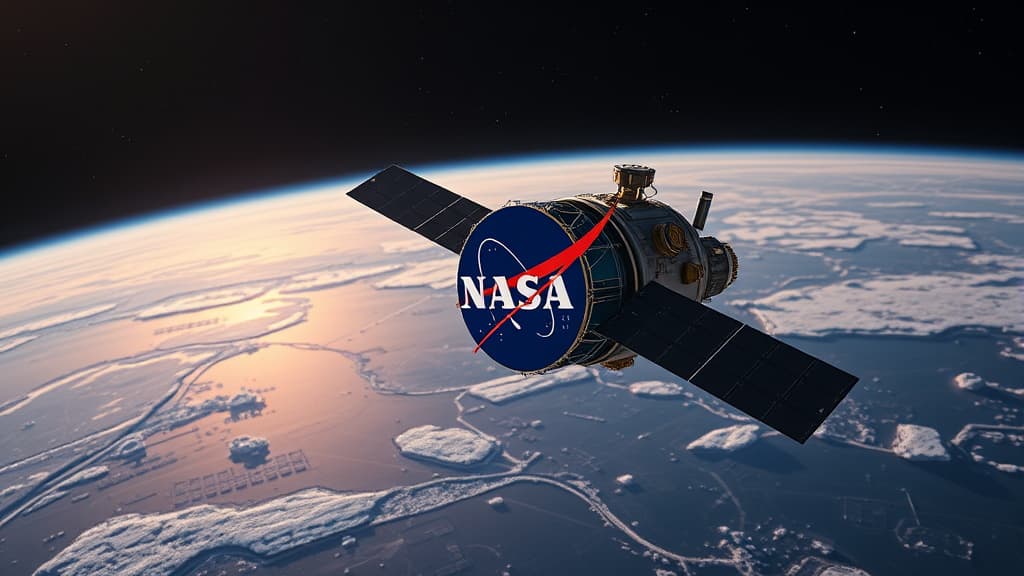
NASA has made significant strides in satellite navigation by testing the FALCON (Fast Autonomous Lost-in-space Catalog-based Optical Navigation) system. This innovative navigation technology enables satellites to determine their orbital positions autonomously, without the need for GPS, using a method based on star tracking.
Over the course of just three days, FALCON improved the orbital accuracy of more than 200 space objects, demonstrating its capability to operate effectively without ground control intervention. This achievement is part of NASA's broader Starling mission, which aims to enhance the reliability and efficiency of space exploration.
Key Features of the FALCON System
- GPS-Free Operation: Utilizes star tracking technology, crucial for deep space missions.
- Autonomous Capability: Improves orbital accuracy of space objects without the need for human intervention.
- Extensive Catalog Use: Reference to a catalog of approximately 20,000 space objects to refine positions.
- Collaboration with EraDrive: Developed in partnership to advance navigation technology.
This advancement is particularly important for future lunar and Martian missions, where the ability to navigate independently within satellite swarms will enhance mission coordination and safety. NASA's program manager, Roger Hunter, emphasized the potential of FALCON to significantly improve space traffic monitoring and collision avoidance tactics.
The implications of this successful test extend beyond immediate applications. As the demand for satellite networks increases, FALCON represents a crucial milestone in developing technologies that can support complex operations in space.