Unlocking the Speed of Nature
In a significant milestone for chemical research, a collaborative team led by the Department of Energy’s Pacific Northwest National Laboratory (PNNL) has successfully visualized one of the most efficient energy-transfer processes found in nature. By utilizing ultrafast X-ray technology at the SLAC National Accelerator Laboratory, scientists have captured the elusive, coordinated movement of electrons and protons, revealing how these particles interact with their surrounding environment during chemical reactions.
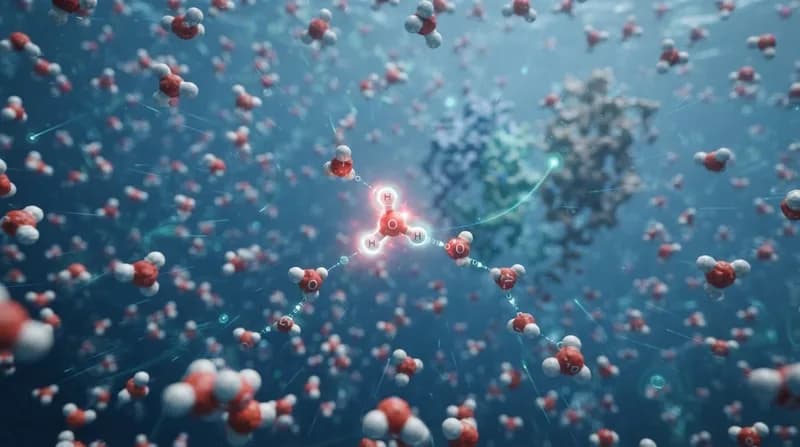
This fundamental process, known as Proton-Coupled Electron Transfer (PCET), is the bedrock of essential biological functions, including photosynthesis, which allows plants to convert sunlight into storable chemical energy. While scientists have known of PCET for decades, its inherent speed—happening on timescales so rapid they essentially blur—has made it notoriously difficult to study. By triggering the reaction with light and using high-speed X-ray spectroscopy, researchers have finally obtained a detailed look at how electronic structures rearrange while simultaneously shifting the surrounding water network.
The Power of Integrated Imaging
To achieve this breakthrough, the research team employed a dual-pronged approach. They utilized element-specific X-ray absorption spectroscopy to track the migration of electrons between molecular sites, while simultaneously deploying time-resolved X-ray scattering to observe how atoms and water molecules reorganize in real time. This experimental data was further synthesized with advanced quantum chemistry calculations and molecular dynamics simulations to construct a complete picture of the reaction.
The scientists focused their study on a specific ruthenium-based metal complex, chosen because it lacks the complex secondary rearrangements that often obscure data in other systems. This clarity allowed the team to isolate the signals corresponding to electron, proton, and solvent movement. Although the proton itself remains difficult to see directly through X-ray scattering, the team successfully inferred its movement by observing the resulting structural and electronic changes in the surrounding environment, a methodology that provides a blueprint for studying more complex systems in the future.
Why It Matters
- Catalyst Development: A deeper understanding of PCET allows for the design of superior, highly efficient catalysts for industrial and energy applications.
- Next-Gen Batteries: Insights into how molecules transfer energy could pave the way for the development of high-performance flow batteries and advanced fuel cells.
- Energy Efficiency: By learning how nature avoids energy-intensive intermediate steps in chemical reactions, engineers can develop new technologies that mirror this efficiency, minimizing energy waste.
- Fundamental Chemistry: This work offers a new, direct way to observe how a molecule’s internal electronic changes are coupled to the reorganization of its immediate solvent environment.
The implications of this research extend far beyond the laboratory. By mastering the ability to monitor these ultrafast events, researchers have opened a new door toward controlling the chemistry that underpins energy conversion. As the Linac Coherent Light Source (LCLS) undergoes further upgrades to improve signal-to-noise ratios, the team plans to apply these sophisticated methods to tackle real-world challenges in renewable energy storage and large-scale industrial catalysis.