A New Frontier in Antibiotic Discovery
The global fight against antibiotic-resistant bacteria has hit a recurring wall: many potent antimicrobial compounds are simply too toxic for human use. These candidates often damage healthy organs, such as the liver or kidneys, forcing researchers to discard them despite their high efficacy at killing pathogens. A team of researchers at the Massachusetts Institute of Technology (MIT) has now developed a groundbreaking two-part strategy that could revitalize the drug discovery pipeline by effectively neutering these safety concerns.
Led by Sangeeta Bhatia and Tahoura Samad, the study published in Nature Communications focuses on turning previously rejected drugs—specifically those already utilized in oncology—into viable systemic antibiotics. By pairing a toxic drug with a custom-engineered antidote, the researchers have demonstrated a method to target infections with surgical precision while keeping the rest of the body shielded from collateral damage.
The Twofold Delivery Mechanism
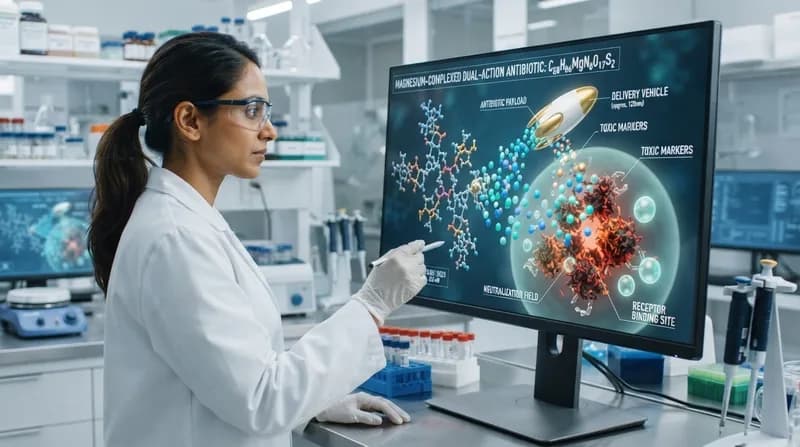
The MIT approach relies on a sophisticated molecular “security system.” First, the antibiotic is chemically tethered to an albumin-binding domain. Albumin, a protein that circulates abundantly in human blood, acts as a transport vehicle. The drug remains inactive while it hitches a ride on albumin until it encounters the specific environment of an infection site. At this location, the immune system’s neutrophil cells release an enzyme called neutrophil elastase, which cleaves the linker, releasing the active drug exactly where it is needed most.
However, simple targeted delivery is often insufficient because small amounts of the drug can still escape into systemic circulation, leading to organ toxicity. To address this, the team introduced an ingenious second layer: a custom-engineered "antidote" protein known as CalU19. This protein is designed to circulate through the bloodstream, acting as a molecular security guard. If any drug molecules break away from the targeted infection site, the antidote intercepts and neutralizes them before they can reach the liver or other sensitive organs.
Validating the Platform
The team successfully stress-tested this system using calicheamicin, a powerful compound known for its ability to damage DNA. While calicheamicin is an effective killer of both tumor cells and bacteria, its extreme toxicity had previously limited its medical application. In mouse models infected with dangerous strains like Pseudomonas aeruginosa and Staphylococcus aureus, the researchers’ drug-antidote combination cleared the infections while preventing the characteristic liver damage associated with the stand-alone compound.
Beyond pneumonia-causing bacteria, the team conducted lab-dish trials against an array of stubborn pathogens, including methicillin-resistant Staphylococcus aureus (MRSA), Escherichia coli, and Klebsiella pneumoniae. In every instance, the engineered conjugate demonstrated potent antibacterial activity. This versatility suggests that the platform is not limited to a single drug but could serve as a modular framework for re-evaluating thousands of toxic compounds currently sitting on laboratory shelves.
Why It Matters
- Expands the Pipeline: By re-engineering existing, discarded candidates, scientists can bypass years of preclinical development and safety testing.
- Dual-Protection Strategy: The combination of localized activation and systemic neutralization significantly lowers the risk of off-target toxicity.
- Broad Application: While currently focused on antibiotics, this "drug and antidote" architecture could eventually be adapted to reduce the harsh side effects of potent cancer chemotherapy drugs.
Looking ahead, the MIT team is actively identifying further antidotes for other classes of antibiotics that are currently underutilized due to their adverse effects on the kidneys or heart. By treating the patient and the drug as a cohesive system, this research promises a future where previously "too toxic" chemical agents become our most effective weapons against resistant infections.