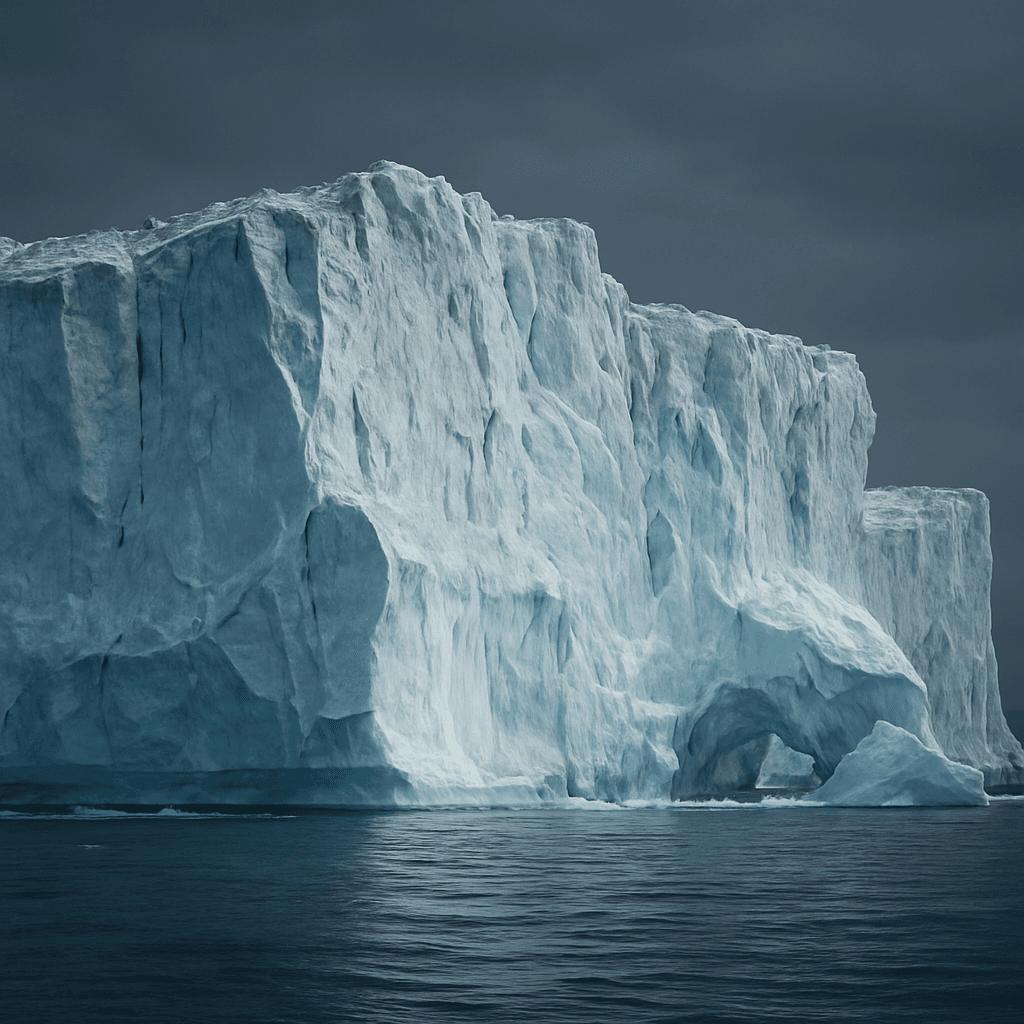
On August 4, 2026, a substantial 76.4 km² ice island detached from Greenland's Petermann Glacier. This marks the largest calving event from the glacier since 2012 and highlights ongoing changes in Arctic ice dynamics.
The newly formed iceberg is roughly the size of Manhattan and about 150 meters thick. Researchers anticipate that this event could be just the beginning; they predict two additional sections may follow, which could lead to the removal of up to 22% of the glacier's floating tongue.
Key Facts
- The iceberg is the significant Arctic event since 2020.
- Long-term satellite monitoring since 2019 has shown increasing instability in the glacier's ice tongue.
- Researchers have identified rift expansion as a precursor to major calving events.
- Estimated future detachments of 94 km² and 84 km² could further reduce the glacier’s floating tongue by about 254 km² combined.
- The drift of large ice blocks presents navigational hazards for Arctic shipping.
The detachment highlights alarming trends linked to climate change. The instability observed in Petermann Glacier could serve as a bellwether for other glaciers, as rising temperatures continue to threaten these colossal ice formations.
As the freshly calved ice island moves through the ocean, it raises concerns for maritime safety. Large ice blocks can break into smaller, hard-to-track pieces, posing significant risks to vessels operating in Arctic waters.