ScienceTechnical Deep Dive

Mapping the Future: Non-Invasive Brain Stimulation as an Epilepsy Breakthrough

Published
EElectricBuzz Editorial Team
Mapping the Future: Non-Invasive Brain Stimulation as an Epilepsy Breakthrough
3 min read512 wordsElectricBuzz Editorial Team

The Gist

“New research from Eindhoven University of Technology suggests that personalized transcranial electrical stimulation could offer a drug-free, non-surgical pathway for managing epilepsy.”

The Quest for Non-Invasive Epilepsy Management

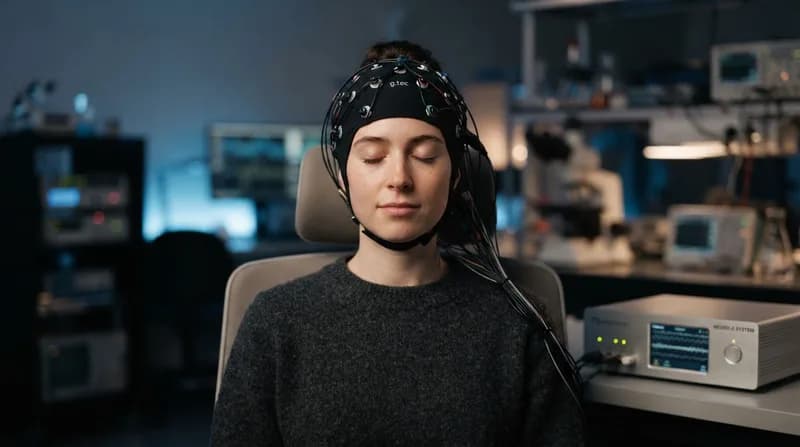
For individuals living with drug-resistant epilepsy, the medical horizon has long been dominated by two challenging paths: life-long medication regimens or invasive, high-risk surgical procedures. A groundbreaking doctoral research project from the Eindhoven University of Technology, conducted by Steven Beumer as part of the broader PerStim (Personalized NeuroStimulation) initiative, is now challenging the status quo. The research investigates whether transcranial direct current stimulation (tDCS)—a method of applying weak electrical currents via scalp electrodes—can provide a viable, non-surgical alternative to help patients regain control over their lives.

By collaborating directly with neurologists at Ghent University Hospital, Beumer’s work sought to bridge the gap between engineering and clinical neurology. The core of his thesis, "Understanding the Power of Personalized Transcranial Electric Neurostimulation," focuses on how technological intervention can improve patient outcomes without the physical trauma associated with traditional brain surgery. The goal is to move towards a future where epilepsy management is not only effective but also manageable in a home-based, non-clinical setting.

Understanding the "Nudge" Mechanism

A significant portion of the research involved unraveling the underlying mechanics of how electrical stimulation interacts with the human brain. While tDCS has been a subject of scientific interest for years, the specific pathways through which it impacts brain activity have remained somewhat opaque. Through testing on healthy volunteers, the team discovered that the therapeutic effect may not be as simple as an electrical pulse reaching the brain directly.

The study employed a creative observational metric: using the twitch of a finger as an indicator of how a signal travels through the body. By measuring motor responses before and after stimulation, the team concluded that the nerves in the scalp play a critical, perhaps previously underestimated, role in the process. Rather than acting as a simple conduit for the current to penetrate the skull, the scalp's own neural network appears to be an active participant in transmitting the "nudge" that alters brain excitability. This revelation suggests that future stimulation devices may need to be calibrated with a deeper understanding of both cortical and peripheral nerve interaction.

The Road Ahead: Bridging Engineering and Clinical Practice

The implications for this research are profound for both the tech industry and clinical medicine. By establishing that tDCS can be effectively modeled and applied without surgery, the door is open for the development of more sophisticated, personalized wearable devices. The primary challenge moving forward, as noted by Beumer, is creating a common language between engineers and medical professionals to ensure that these sophisticated technical solutions are both safe and clinically sound.

Future development will likely prioritize the refinement of stimulation patterns, moving away from generic protocols toward hyper-personalized treatments tailored to an individual’s unique neurological map. As this technology matures, it promises to shift epilepsy care from an reactive model reliant on heavy pharmacology to an active, precise form of neuro-modulation. The interdisciplinary nature of this project serves as a template for future medical tech breakthroughs, proving that deep collaboration between fields is the key to transforming complex scientific theory into a daily reality for patients.


SPONSORED
The 5 Best Over-Ear ANC Headphones of 2026, Tested & Ranked
Editor's Pick Guide
92/100
Tech & Gadgets•12 min read

The 5 Best Over-Ear ANC Headphones of 2026, Tested & Ranked

We locked five over-ear ANC picks for 2026 — Sony WH-1000XM6, Bose QuietComfort Ultra 2, Soundcore Space One, Sennheiser Momentum 5, and Apple AirPods Max 2 — then stress-tested them on lab metrics, long-term owner truth, and live street prices.

Related Stories

Semantically matched articles, ranked by topic overlap and freshness.

Genetic Deep Dive: How Tropical Trees Mastered Night-Time Breathing to Survive Drought
Science

Genetic Deep Dive: How Tropical Trees Mastered Night-Time Breathing to Survive Drought

New research into the genus Clusia reveals how ancient genome duplication paved the way for a remarkable water-saving photosynthesis strategy.

Virtual Reality and Classical Music: The New Prescription for Emergency Anxiety
Science

Virtual Reality and Classical Music: The New Prescription for Emergency Anxiety

A groundbreaking study reveals that immersive VR experiences paired with classical music can rapidly stabilize blood pressure in emergency room patients.

Cosmic Magnetism: New Evidence Reveals a Hidden Architect of the Solar System
Science

Cosmic Magnetism: New Evidence Reveals a Hidden Architect of the Solar System

Researchers at MIT have discovered that powerful magnetic fields, not just gravity, helped shape our solar system during its first 200,000 years.

Breakthrough Triple Therapy Nearly Normalizes CFTR Function in Children with Cystic Fibrosis
Science

Breakthrough Triple Therapy Nearly Normalizes CFTR Function in Children with Cystic Fibrosis

Groundbreaking research from Charité – Universitätsmedizin Berlin reveals that triple-drug therapy can restore vital molecular channels in young children with cystic fibrosis to near-normal levels.

Sky-High Survival: How Drones Could Transform Emergency Cardiac Care
Science

Sky-High Survival: How Drones Could Transform Emergency Cardiac Care

New research suggests that integrating drones into emergency response networks can drastically cut wait times for life-saving defibrillators.

Hidden Prevalence: Why Phelan-McDermid Syndrome Is More Common Than Previously Realized
Science

Hidden Prevalence: Why Phelan-McDermid Syndrome Is More Common Than Previously Realized

New research suggests a rare genetic disorder linked to autism may be significantly more widespread than earlier estimates, highlighting a critical need for expanded genetic screening.

Sexual Dimorphism in Cancer: New Findings on Metabolic Supplements and Lung Tumor Growth
Science

Sexual Dimorphism in Cancer: New Findings on Metabolic Supplements and Lung Tumor Growth

A UCLA-led study reveals that the dietary supplement calcium alpha-ketoglutarate affects lung tumor progression in diametrically opposite ways depending on biological sex.

Geological Unraveling: Scientists Witness the Death of a Subduction Zone
Science

Geological Unraveling: Scientists Witness the Death of a Subduction Zone

A groundbreaking study has captured the rare, real-time breakdown of the Cascadia subduction zone, revealing that tectonic systems die through a slow, piece-by-piece process.