Strategic Foresight Drives Growth
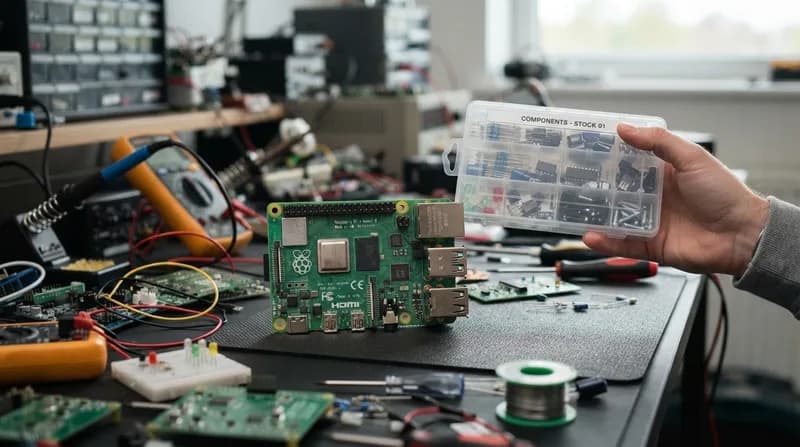
In a masterclass of supply chain management, Raspberry Pi has reported a stellar first half for 2026, driven largely by a prescient decision to hoard memory components before the market surged. While many hardware manufacturers struggled to secure essential RAM during the recent industry crunch, the Cambridge-based pioneer leveraged a significant strategic stockpile to keep its production lines humming, resulting in revenue of $256.9 million—a staggering 90 percent increase over the previous year.
This inventory strategy allowed the company to sidestep the worst of the recent price volatility. By utilizing memory purchased at 2025 rates, Raspberry Pi saw its gross profit per unit climb significantly, from $8 to $12.20. This financial cushion not only buoyed profitability but also ensured that popular models like the Raspberry Pi 4 and Pi 5 remained available for both hobbyists and enterprise customers at a time when competitors were grappling with severe allocation issues.
Market Dynamics and Future Outlook
Despite the cooling of the "exceptional unit economics" that defined the first half of the year as cheaper stockpiled inventory was consumed, the company shows no signs of slowing down its logistics operations. Raspberry Pi continues to prioritize inventory management, reporting that the average cost of memory in its holdings rose to $13.30 per GB by mid-year. Nevertheless, the firm maintains a robust pipeline, with over 8 million GB of LPDDR4 memory in reserve as of late August, ensuring production targets remain well-supported through the end of 2026 and into the next fiscal year.
Why It Matters
- Resilience through Planning: The ability to secure critical components ahead of market spikes differentiates top-tier hardware manufacturers from those reliant on just-in-time delivery.
- Enterprise Growth: Increased demand from the smart home, aerospace, and defense sectors underscores the shift of Raspberry Pi boards from simple educational tools to industrial-grade compute modules.
- Managing Congestion: Even with strong overall growth, the company faced a 9 percent decline in Pi Zero sales due to component packaging constraints, highlighting that even well-prepared companies remain vulnerable to upstream supply chain bottlenecks.
Looking ahead, Raspberry Pi remains optimistic. With an order backlog of 2.6 million units and a clear strategy for inventory acquisition, the company is positioning itself to ship more units in the second half of 2026 than it did in the first. The transition from a cottage-industry favorite to a serious enterprise hardware supplier is now fully realized, with high-end, 8GB RAM variants of their flagship boards seeing sustained, enthusiastic adoption.