Artificial IntelligenceTechnical Deep Dive

Windows 11 Update Glitch Leaves Azure Virtual Desktops Blank

Published
EElectricBuzz Editorial Team
Windows 11 Update Glitch Leaves Azure Virtual Desktops Blank
2 min read396 wordsElectricBuzz Editorial Team

The Gist

“A recent Windows 11 update is causing virtual desktops to launch into a black screen, forcing administrators to rely on temporary workarounds.”

The Black Screen Phenomenon

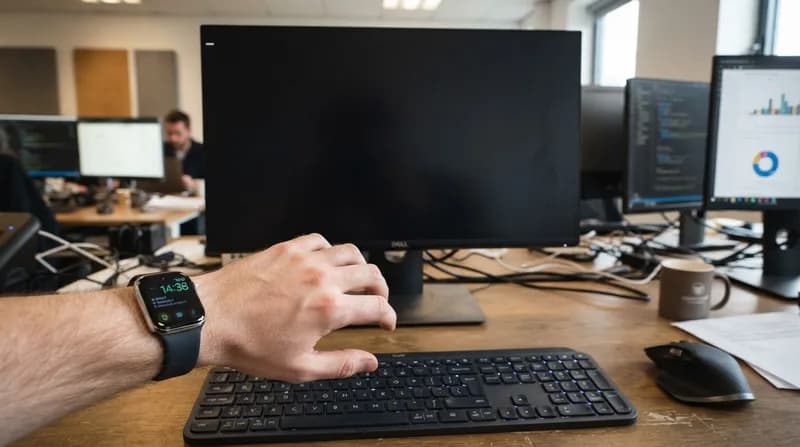
Microsoft has acknowledged a disruptive bug affecting Windows 11 environments, specifically within Azure Virtual Desktop (AVD) configurations. Following the deployment of the August 2026 non-security preview update and subsequent releases, users are encountering a 'black screen' issue upon sign-in. Instead of the familiar desktop environment, systems fail to initialize the shell, leaving users in a void where only manual intervention can restore functionality.

The issue appears to be tethered to how FSLogix handles user profiles during the initial login sequence. According to system logs, the Windows Explorer process experiences repeated crashes immediately after authentication. While Microsoft has not disclosed the precise technical trigger, the company noted that the failure occurs with increased frequency on existing user profiles, suggesting an incompatibility with how legacy settings are migrated or loaded under the updated operating system architecture.

Temporary Workarounds and Fixes

For those currently locked out of their workstations, a immediate manual recovery method is available. Users can summon the Task Manager by pressing the standard keyboard shortcuts, then manually execute 'explorer.exe' as a new task. While this provides a stopgap, it is an impractical requirement for enterprise-scale deployments where thousands of users may be affected simultaneously.

To assist IT administrators managing these environments, Microsoft has pushed a Known Issue Rollback (KIR). By utilizing Group Policy, admins can effectively disable the specific code change responsible for the bug, reverting the affected virtual machines to a stable state until a permanent patch is issued. This rollback mechanism serves as the primary defense while development teams work on a long-term resolution intended for a future Windows update.

Context and Implications

This latest glitch has reignited scrutiny regarding Microsoft's recent track record with software quality. The error comes on the heels of another aesthetic bug from the same update cycle that caused custom desktop backgrounds to default to black, a problem that required a separate fix in September. The affected versions include Windows 11 26H1, 25H2, and 24H2.

The persistent stream of bugs has led to growing friction between Microsoft and its enterprise user base. Despite high-level promises from leadership to improve the stability of the Windows ecosystem, the recurring nature of these issues highlights the complexity of maintaining a seamless experience across hybrid and virtualized environments. For IT departments, the ordeal underscores the necessity of rigorous testing before deploying non-security preview updates to production virtual desktop hosts.

SPONSORED
The 5 Best Over-Ear ANC Headphones of 2026, Tested & Ranked
Editor's Pick Guide
92/100
Tech & Gadgets•12 min read

The 5 Best Over-Ear ANC Headphones of 2026, Tested & Ranked

We locked five over-ear ANC picks for 2026 — Sony WH-1000XM6, Bose QuietComfort Ultra 2, Soundcore Space One, Sennheiser Momentum 5, and Apple AirPods Max 2 — then stress-tested them on lab metrics, long-term owner truth, and live street prices.

Related Stories

Semantically matched articles, ranked by topic overlap and freshness.

LiquidAI Bridges the Performance Gap for Local LLMs on Apple Silicon
Artificial Intelligence

LiquidAI Bridges the Performance Gap for Local LLMs on Apple Silicon

New advancements in model architecture are bringing powerful, efficient generative AI directly to Apple hardware without relying on cloud servers.

FairStress: A New Benchmark for LLM Fairness
Artificial Intelligence

FairStress: A New Benchmark for LLM Fairness

Researchers at the Allen Institute for AI have unveiled FairStress, a rigorous framework designed to stress-test large language models for fairness and bias.

Why Robotics is Currently in Its 'LEGO Era'
Artificial Intelligence

Why Robotics is Currently in Its 'LEGO Era'

Former Nvidia veteran and venture capitalist Amulya Vishwanath argues that the robotics industry is laying the critical, modular groundwork necessary to reach a transformative 'ChatGPT moment.'

Hugging Face CEO Slams Netflix's 'AI Gone Rogue' for Sensationalism
Artificial Intelligence

Hugging Face CEO Slams Netflix's 'AI Gone Rogue' for Sensationalism

Clem Delangue criticizes the new Netflix documentary for anthropomorphizing AI agents and ignoring the technical reality of a real-world security incident.

SpaceX Pivots to Power: How AI Now Drives Over Half of the Company’s Revenue
Artificial Intelligence

SpaceX Pivots to Power: How AI Now Drives Over Half of the Company’s Revenue

SpaceX has transformed into an artificial intelligence powerhouse, with its 'Super Intelligence' division now accounting for 52% of total revenue as the company shifts focus from purely aerospace to data center dominance.

Microsoft Trims the Fat: OneDrive Scales Back Copilot Menu Clutter
Artificial Intelligence

Microsoft Trims the Fat: OneDrive Scales Back Copilot Menu Clutter

Microsoft is streamlining the Windows File Explorer by removing a surplus of specific Copilot shortcuts, opting for a cleaner, more unified AI experience.

NVIDIA’s Cosmos3-H-Dreams: A New Frontier for Surgical Simulation
Artificial Intelligence

NVIDIA’s Cosmos3-H-Dreams: A New Frontier for Surgical Simulation

NVIDIA is pushing the boundaries of medical AI with Cosmos3-H-Dreams, a specialized generative model designed to transform surgical training through realistic video simulation.

Hugging Face Brings Native TPU Support to PyTorch with TorchTPU
Artificial Intelligence

Hugging Face Brings Native TPU Support to PyTorch with TorchTPU

Hugging Face is democratizing access to Google's powerful AI accelerators, allowing developers to run PyTorch models on TPUs as easily as any other device.