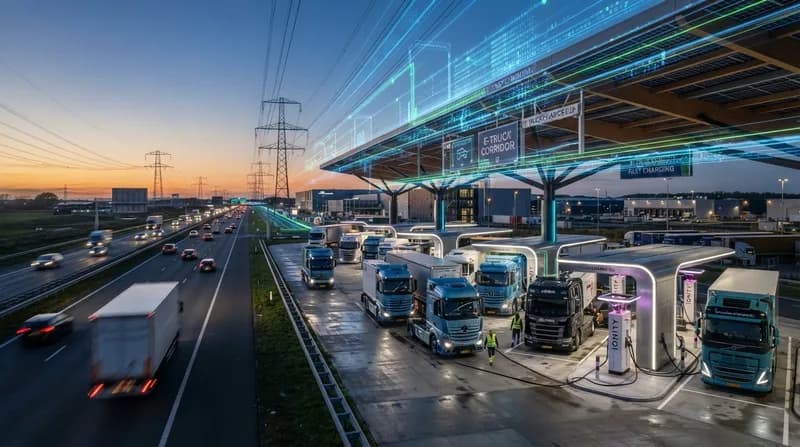
The Scale of the Electrification Challenge
The transition to battery-electric freight transport in Europe is set to exert massive pressure on power grids, according to a landmark study by the Fraunhofer Institute for Systems and Innovation Research (ISI) and the International Council on Clean Transportation (ICCT). By leveraging their sophisticated VESUVIO modeling tool, which analyzes energy needs across a 17-by-20-kilometer grid in 15-minute intervals, the researchers estimate that annual electricity demand for electric trucks will reach 100 TWh by 2035. This figure is expected to double to approximately 200 TWh by 2045, assuming current trends in electric vehicle adoption and policy support continue.
This massive influx of energy demand is not evenly distributed. The study, which encompasses all 27 EU member states alongside the UK, Norway, and Switzerland, highlights that the most significant surges will occur in major transit hubs. Countries with heavy industrial and freight volumes—including Germany, France, Italy, Spain, and the UK—will face the most substantial challenges in managing these peak electrical loads, which are predicted to hit between 20 and 50 MW at individual logistics hotspots.
The Critical Role of Depot Charging
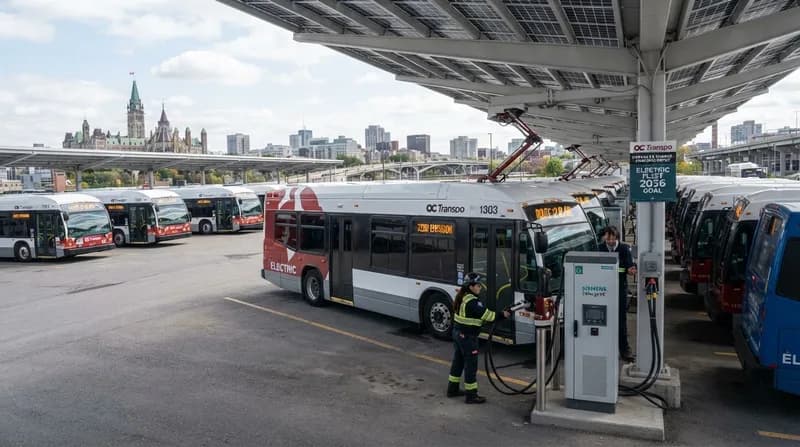
While public infrastructure often captures the most media attention, the report underscores that depot charging will remain the backbone of the heavy-duty electric transition. In most regions and operational scenarios, between 70 and 80 percent of all charging demand will take place at private depots where vehicles are stationed overnight or during loading operations. This reality makes early engagement with utility providers a critical step for fleet operators looking to decarbonize.
However, public charging remains the essential linchpin for long-haul transport. In smaller transit-heavy countries, the study suggests that public infrastructure will need to account for as much as 30 to 50 percent of total energy delivery. These facilities serve as the lifeline for cross-border freight, necessitating a strategic rollout of Megawatt Charging Systems (MCS) and high-power CCS chargers along major TEN-T corridors to mirror the current convenience of diesel refueling.
Hyper-Concentrated Hotspots
Perhaps the most challenging finding for grid planners is the extreme spatial concentration of demand. The research indicates that just ten percent of all charging locations could account for as much as 90 percent of the total power load. This concentration is largely tied to major motorway intersections, urban logistics centers, and key industrial clusters.
Because these sites demand such high instantaneous power, local grids may reach capacity limits quickly. Policymakers and grid operators are encouraged to transition from blanket infrastructure planning to a localized, surgical approach that prioritizes high-capacity grid connections at these critical bottlenecks. By identifying these hotspots now, governments can avoid the costly and time-consuming process of retrofitting energy networks after the demand has already materialized.
Industry and Government Response
The reality of this future load is already influencing regional planning. In Germany, for instance, the federal government is pre-emptively calculating grid capacity needs for its national truck charging network, with some sites specifically allocated for connections exceeding 20 MVA. Major industry players like Milence are also taking action, building out charging corridors and integrating stationary battery storage to shave peak demand and provide the high-voltage throughput necessary to make electric long-haul logistics commercially viable.