The Shift Toward Economic Reality
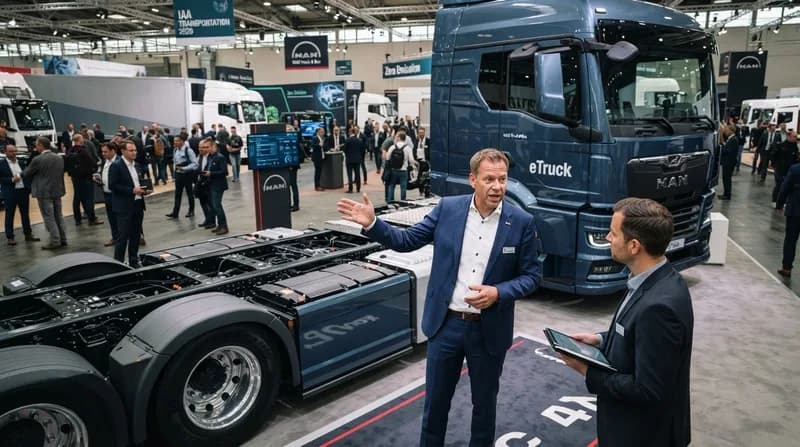
In the high-stakes arena of electric commercial vehicles, the conversation has long been dominated by the pursuit of headline-grabbing range figures. However, Dr. Frederik Zohm, Executive Board Member for Research & Development at MAN, is steering the narrative toward a more pragmatic destination. During this year’s IAA Transportation, Zohm emphasized that while technical milestones—such as the new eTGX’s impressive 720 km range—are vital for advancement, they are not the sole arbiters of market success. For logistics operators, the primary driver remains the Total Cost of Ownership (TCO).
MAN’s latest engineering efforts demonstrate a nuanced approach to this goal. By refining aerodynamics and optimizing cell chemistry, the company has managed to squeeze more performance out of its battery systems without relying solely on larger, heavier, and more expensive packs. According to Zohm, aerodynamic improvements alone contribute about three percent to range efficiency, while advancements in cell chemistry provide an additional ten percent. These incremental gains are part of a broader strategy to refine the vehicle's efficiency rather than simply throwing more battery capacity at the problem.
The Modular Efficiency Strategy
The core of MAN’s strategy is the abandonment of a one-size-fits-all battery philosophy. Zohm argues that every kilowatt-hour added to a truck increases its upfront cost and weight, which can be counterproductive for shorter, high-volume logistics routes. By offering a highly modular battery architecture, MAN enables fleet operators to right-size their equipment. For a company running 100 to 200-kilometer routes, opting for a lower-floor configuration with fewer battery modules results in a more cost-effective vehicle that hits a break-even point on TCO much faster than a long-range equivalent would.
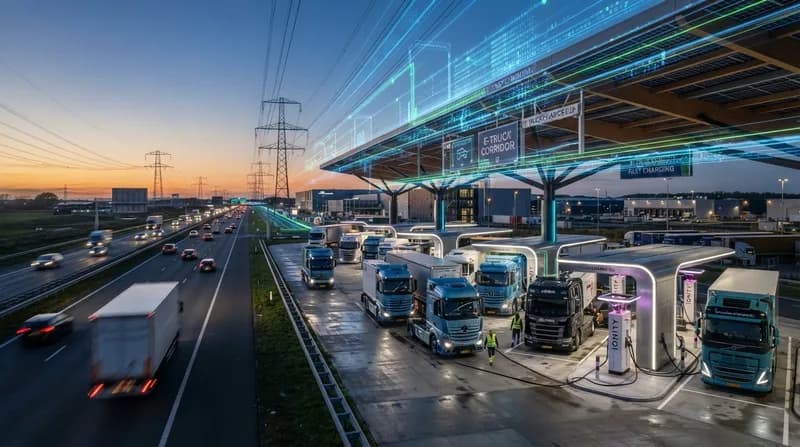
This philosophy extends to the integration of Megawatt Charging System (MCS) technology. By rolling out series-production electric trucks equipped for MCS, MAN is providing operators with the flexibility to choose the charging power that fits their specific duty cycle. Whether a client requires 350 kW or 750 kW, the ability to balance charging infrastructure investment with vehicle capability is where the real economic value is captured. For time-sensitive industries, such as swap-body transport, this flexibility is far more valuable than simply having a massive battery that takes longer to replenish.
The Roadmap to Commercial Viability
Looking toward the end of the decade, Zohm identifies a triad of prerequisites necessary for the mass electrification of heavy-duty transport: access to affordable, green energy; the rapid expansion of a dedicated charging infrastructure; and the continued evolution of battery chemistry. He views these as parallel tracks that must be scaled in lockstep. The goal is to move beyond the "prestige" of maximum specifications and toward a future where electric trucks are not just technologically impressive, but operationally superior to their diesel predecessors.
Ultimately, the "best" electric truck is defined by its performance within a specific ecosystem—considering the unique depot constraints, driving profiles, and transport tasks of the individual customer. Zohm’s stance is a clear signal that as the electric truck market matures, the competitive advantage will shift away from engineering superlatives and toward the ability to drive down operating costs. By focusing on the intersection of chemistry, packaging density, and energy consumption, MAN aims to make the transition to electric logistics not just an environmental imperative, but a sound financial decision for every business operator.