E-BUZZ ME Logo
ScienceTechnical Deep Dive

Magnetic Shields: Why Jupiter Boasts More Giant Moons Than Saturn

Published
Magnetic Shields: Why Jupiter Boasts More Giant Moons Than Saturn
1 min read153 words

The Gist

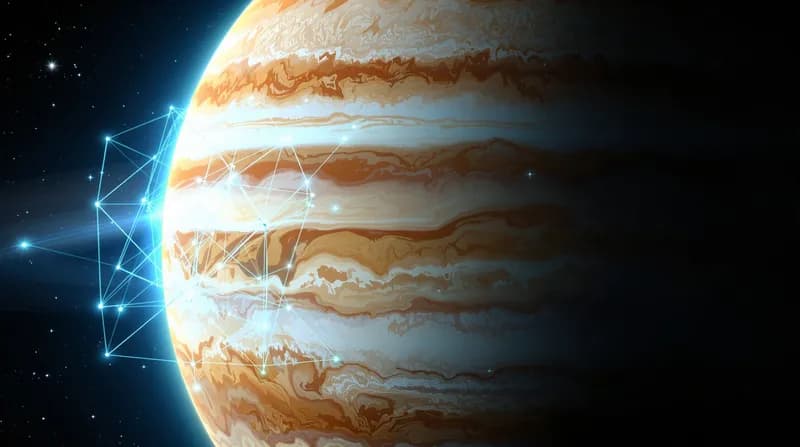
New research suggests Jupiter's powerful magnetic field acted as a protective barrier for its large moons, a feature Saturn lacked during its formation.

Astronomers have long wondered why Jupiter possesses four massive Galilean moons while Saturn, despite its size, is dominated by only one giant moon, Titan. A new study suggests the answer lies in the early magnetic environments of these gas giants.

The Magnetic Safe Zone

During the solar system's infancy, Jupiter possessed a significantly more powerful magnetic field than its neighbor. This magnetic force likely created a 'safe zone' within its circumplanetary disk, preventing the inward migration of large moons. Without this protection, newly formed moons would have spiraled into the planet's atmosphere due to gas drag.

Saturn’s Missing Shield

In contrast, Saturn lacked a magnetic field strong enough to halt this destructive migration. Researchers believe that while Saturn may have once hosted multiple large moons, most were likely swallowed by the planet. Titan remains the sole survivor of this process, standing as a solitary giant among a collection of much smaller icy satellites.


Related Stories

Semantically matched articles, ranked by topic overlap and freshness.

Optical Science Preserves the Legacy of the Bayeux Tapestry
Science

Optical Science Preserves the Legacy of the Bayeux Tapestry

Advanced optical techniques are playing a critical role in the digitization, restoration, and long-term protection of the historic Bayeux Tapestry.

Iron Age Skeletons Reveal Early Instances of Flat Head Syndrome
Science

Iron Age Skeletons Reveal Early Instances of Flat Head Syndrome

New analysis of 9th-century BC skulls from Italy suggests that 'flat head syndrome' is not merely a modern phenomenon, but one that affected ancient infants as well.

NASA Astronaut Chris Williams Returns to Earth After 241-Day Mission
Science

NASA Astronaut Chris Williams Returns to Earth After 241-Day Mission

Following a marathon stay aboard the International Space Station, NASA astronaut Chris Williams and two Roscosmos colleagues have successfully landed.

Molecular 'Basket' Breakthrough Unlocks Rare-Earth Chemical Potential
Science

Molecular 'Basket' Breakthrough Unlocks Rare-Earth Chemical Potential

Rice University chemists have successfully engineered a molecular structure that enables rare-earth metals to interact with oxygen in previously unlikely ways.

Grocery Store Audit Reveals 80% of Toddler Foods are Ultra-Processed
Science

Grocery Store Audit Reveals 80% of Toddler Foods are Ultra-Processed

A new study of nearly 2,800 products marketed for toddlers found that the vast majority are ultra-processed and many fail to meet international nutritional standards.

Questioning the Foundation: Why Cosmology's Central Law May Be Broken
Science

Questioning the Foundation: Why Cosmology's Central Law May Be Broken

The cosmological principle has long been the bedrock of our understanding of the universe, but new observations suggest this fundamental assumption might be flawed.

Breakthrough Targeted Therapy for Guillain-Barré Syndrome Shows Promise
Science

Breakthrough Targeted Therapy for Guillain-Barré Syndrome Shows Promise

A first-of-its-kind drug that selectively deactivates the overactive portion of the immune system could become the first approved targeted therapy for Guillain-Barré syndrome.

Japan’s Kikai Supervolcano Shows Signs of Magma Recharge
Science

Japan’s Kikai Supervolcano Shows Signs of Magma Recharge

Seismic surveys beneath the submerged Kikai caldera reveal a growing magma reservoir, indicating the site of Earth's largest Holocene eruption is active once more.