Electric VehiclesTechnical Deep Dive

Lucid’s Gravity Robotaxi Enters Critical Driverless Testing Phase

Published
EElectricBuzz Editorial Team
Lucid’s Gravity Robotaxi Enters Critical Driverless Testing Phase
3 min read501 wordsElectricBuzz Editorial Team

The Gist

“Lucid Motors has officially initiated driverless testing of its Gravity SUV in California, marking a pivotal milestone for its upcoming autonomous ride-hailing venture.”

The Path to Autonomous Mobility

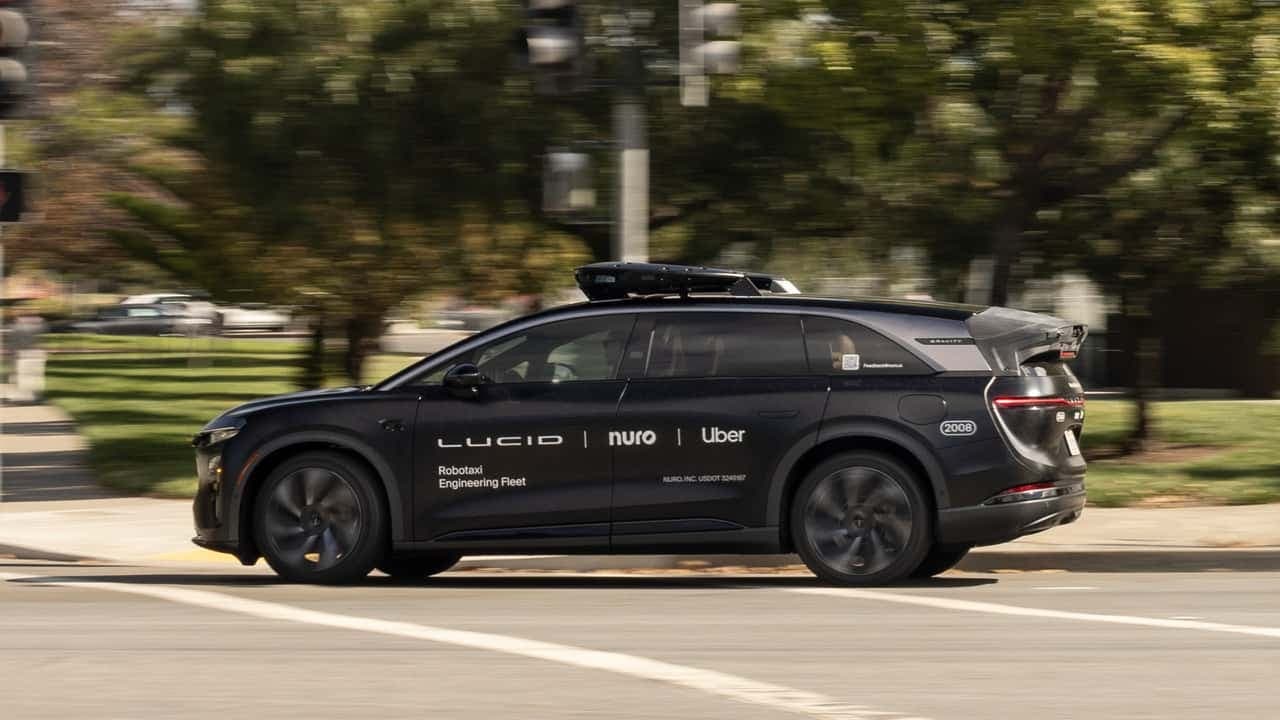
Lucid Motors has reached a significant turning point in its mission to conquer the autonomous ride-hailing sector. In collaboration with partners Uber and Nuro, the California-based EV manufacturer has officially commenced driverless testing of its Gravity SUV on public roads in the San Francisco Bay Area. This transition from supervised testing to fully autonomous operation represents a massive leap forward for the luxury automaker, which is looking to diversify its revenue streams beyond traditional direct-to-consumer vehicle sales.

While more than 100 Gravity units have been navigating streets in San Francisco and Houston since early 2024, those efforts consistently required a human safety operator behind the wheel. The current phase, now underway in cities including Palo Alto, Mountain View, Los Altos, and Sunnyvale, removes the human element entirely. This move is a strategic precursor to a broader commercial launch, with the companies aiming to offer paid autonomous rides to the public starting in the first quarter of 2027.

The Tech Behind the Gravity Robotaxi

The Gravity platform brings a formidable set of specifications to the robotaxi market, potentially offering an edge over incumbent competitors. Known for class-leading efficiency, the Gravity boasts an impressive estimated range of up to 450 miles on a single charge. For a commercial ride-hailing fleet, this range is a critical asset, as it minimizes the time vehicles spend off the road at charging stations.

Furthermore, the vehicle utilizes an advanced 400-kilowatt electrical architecture, which is capable of adding approximately 200 miles of range in just 11 minutes of charging. This rapid turnover capability is essential for operators looking to maximize utilization rates and profitability. While the base passenger version of the Gravity carries a premium starting price of $81,750, the integration of Nuro’s proprietary autonomous hardware and software suite transforms the luxury SUV into a highly specialized tool for high-traffic, urban mobility.

Why It Matters

  • Strategic Pivot: Lucid is aggressively moving to scale its operations by entering the robotaxi space, aiming to deploy tens of thousands of units across the U.S. and Europe to improve its financial position.
  • Uber Integration: Unlike Tesla or Waymo, which lean heavily on their own proprietary apps, Lucid is leveraging Uber’s massive, established user base, which could accelerate consumer adoption.
  • Fleet Durability: The combination of high-speed charging and long-range capability gives the Gravity a unique advantage in operational uptime, keeping it on the road longer than many current-generation autonomous taxis.

Future Outlook

Lucid’s strategy extends well beyond the current Gravity platform. The company has already indicated that its future midsize vehicle architecture will be designed to support robotaxi applications, suggesting a multi-tiered approach to the autonomous market. By positioning its high-performance, long-range EVs as the backbone of tomorrow's transit infrastructure, Lucid is attempting to transform itself from a boutique luxury manufacturer into a key player in the global mobility-as-a-service industry. As testing expands to more Bay Area cities throughout next year, the data gathered will be instrumental in refining the software stack for the projected 2027 commercial rollout.

SPONSORED
The 5 Best Over-Ear ANC Headphones of 2026, Tested & Ranked
Editor's Pick Guide
92/100
Tech & Gadgets•12 min read

The 5 Best Over-Ear ANC Headphones of 2026, Tested & Ranked

We locked five over-ear ANC picks for 2026 — Sony WH-1000XM6, Bose QuietComfort Ultra 2, Soundcore Space One, Sennheiser Momentum 5, and Apple AirPods Max 2 — then stress-tested them on lab metrics, long-term owner truth, and live street prices.

Related Stories

Semantically matched articles, ranked by topic overlap and freshness.

Infineon Targets Heavy-Duty Electrification with New SiC Power Module
Electric Vehicles

Infineon Targets Heavy-Duty Electrification with New SiC Power Module

Infineon's latest HybridPACK HD module leverages silicon carbide to set a new durability standard for the electric trucking industry.

Ghost in the Garage: Huawei-Powered EVs Clock 868 Parking Maneuvers in Bizarre Autonomy Glitch
Electric Vehicles

Ghost in the Garage: Huawei-Powered EVs Clock 868 Parking Maneuvers in Bizarre Autonomy Glitch

A viral video reveals a fleet of Huawei-equipped electric vehicles performing hundreds of autonomous parking maneuvers overnight, sparking theories about a high-stakes competition.

Switzerland Accelerates Heavy-Duty EV Transition with Massive Charging Network Tender
Electric Vehicles

Switzerland Accelerates Heavy-Duty EV Transition with Massive Charging Network Tender

Switzerland has officially awarded contracts for 82 new electric truck charging stations across 32 locations, marking a major milestone for European freight decarbonization.

Fortum Achieves Milestone in Battery-Grade Material Recycling
Electric Vehicles

Fortum Achieves Milestone in Battery-Grade Material Recycling

Fortum has successfully produced high-purity recycled battery materials in Finland, marking a significant advancement for the European circular economy.

Chery Group Accelerates Thailand EV Strategy with Local Lepas L6 Assembly
Electric Vehicles

Chery Group Accelerates Thailand EV Strategy with Local Lepas L6 Assembly

As Thailand prepares for a significant EV tax hike, Chery Group has officially kicked off local assembly for its new Lepas brand to maintain market competitiveness.

Exicom Moves to Divest Tritium Following Two-Year Strategic Turnaround
Electric Vehicles

Exicom Moves to Divest Tritium Following Two-Year Strategic Turnaround

Just under two years after acquiring the insolvent Tritium, Indian charging infrastructure leader Exicom plans to sell the brand to sharpen its focus on domestic expansion.

New York Legislates Against the 'Subscriptionification' of Your Car
Electric Vehicles

New York Legislates Against the 'Subscriptionification' of Your Car

A landmark law in New York aims to prevent automakers from gating hardware-based features behind recurring subscription fees, drawing a firm line on what services can truly be monetized.

Inside the Ford 'Abuse Lab': How Engineers Are Stress-Testing Future EV Batteries
Electric Vehicles

Inside the Ford 'Abuse Lab': How Engineers Are Stress-Testing Future EV Batteries

Ford is taking a granular approach to battery safety by embedding a dedicated failure-analysis team directly into the development and manufacturing process of its newest LFP battery packs.