Mastering Navigation Through Simulation
NVIDIA has officially unveiled a high-fidelity workflow aimed at solving one of the most persistent hurdles in robotics: reliable obstacle avoidance. By leveraging the power of Isaac Lab and the physics-rich environment of Newton, developers now have access to a robust Sim2Real pipeline. This advancement allows roboticists to train intelligent agents in a virtual sandbox before deploying them onto physical hardware with unprecedented confidence.
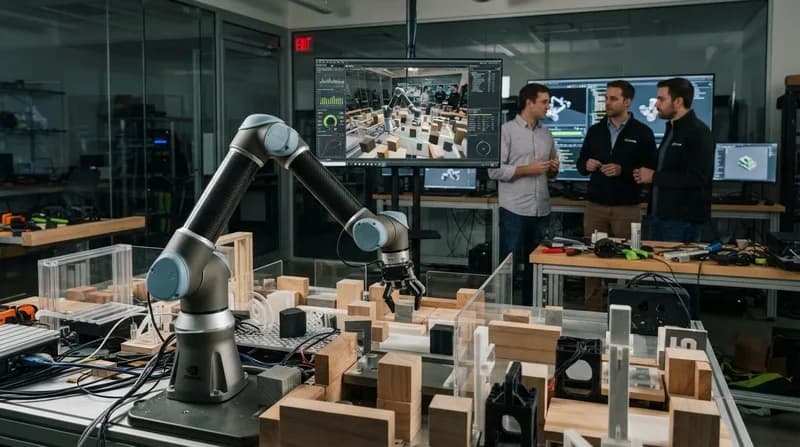
The workflow focuses on the 'Microduck' platform, a specialized robotics unit designed to demonstrate precise movement in complex, cluttered environments. Instead of relying solely on labor-intensive real-world testing, the platform uses synthetic training data generated by NVIDIA’s simulation stack to teach agents how to perceive and react to dynamic obstacles in real-time. This methodology drastically reduces the cost and risk associated with hardware-based training cycles.
Why It Matters
- Reduced Development Cycles: By closing the gap between virtual simulation and physical reality, teams can iterate on complex navigation algorithms in hours rather than weeks.
- Enhanced Safety: Simulating edge cases—such as sudden movement or lighting shifts—ensures that robots remain operational in unpredictable real-world scenarios.
- Scalability: The utilization of Isaac Lab allows for parallelized training, meaning multiple robot models can be stress-tested simultaneously within the cloud.
The integration of the Newton physics engine ensures that the interactions between the robot and its environment follow strict physical laws, preventing the 'hallucination' of physics often found in simpler simulations. This level of accuracy is critical for industrial automation and autonomous delivery systems, where precise avoidance is not just a feature, but a baseline requirement for safety and efficiency. As NVIDIA continues to expand its SimReady asset library, this workflow sets a new industry standard for how autonomous hardware is conceived, tested, and eventually deployed into our physical workspaces.