The Shift to Agentic Commerce
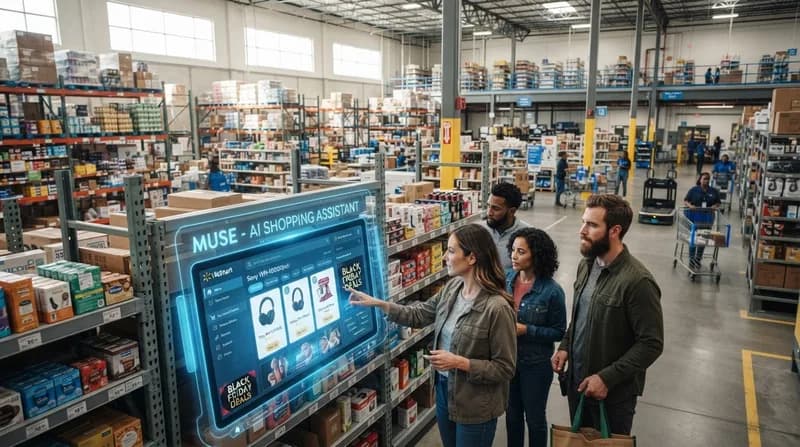
Shopping during the chaotic Black Friday season is getting a significant technological upgrade. In a strategic pivot toward agentic commerce, Walmart has announced a partnership with Meta that integrates its massive retail inventory into Muse, Meta's sophisticated AI assistant. This move marks a departure from traditional e-commerce, allowing consumers to bypass standard web browsing in favor of a conversational interface that scouts for deals, compares products, and constructs shopping carts on the user’s behalf.
While other retail giants have taken a defensive stance against automated purchasing tools, Walmart is actively leaning into the ecosystem. By leveraging its newly launched Agent Gateway—a secure infrastructure that allows third-party AI assistants to interact with its store—the retailer is positioning itself as a platform-agnostic destination where any capable AI can facilitate a transaction.
How the Muse Integration Works
To begin shopping via Muse, users simply authenticate their Walmart account within the assistant’s interface. Once connected, the AI agent acts as a personal shopper, scouring Black Friday promotions based on natural language queries. Whether a user is looking for specific tech gadgets or household essentials, Muse queries the Walmart Agent Gateway to return live inventory data, helping users build a shopping cart without ever visiting the primary Walmart website or app.
Privacy remains a core component of this integration. According to the company, Muse does not gain access to a user’s historical shopping data or deeper personal profile information. To maintain control over the automated experience, Walmart has implemented robust safety guardrails. Users can establish specific spending limits, mandate manual approval for every transaction, and review orders before they are finalized. For those who prioritize total data autonomy, the ability to purge the agent’s profile is available at any time.
Why It Matters
- Platform Expansion: By opening its Agent Gateway, Walmart is signaling that Muse is likely the first of many AI assistants that will eventually have direct access to its inventory, moving away from closed-garden digital storefronts.
- Retail Differentiation: This partnership highlights a stark divide in industry strategy, with Walmart welcoming third-party AI agents while competitors move to block automated shopping tools.
- Holistic AI Strategy: Beyond the Meta partnership, Walmart continues to innovate in-store via its proprietary "Sparky" assistant, which features advanced capabilities like handwritten list digitization and augmented reality-style "Flash Price Tags" to help shoppers navigate physical aisles.
The Outlook for AI Shopping
The integration with Muse represents a broader trend in retail technology where the interface between the shopper and the store becomes invisible. As Walmart continues to iterate on both its internal Sparky tools and external API partnerships, the boundary between physical retail and AI-driven automation is thinning. By enabling voice-activated inventory searches and real-time aisle navigation, Walmart is betting that the future of retail is not just about cheaper prices, but about removing every possible friction point in the customer journey.