The Great Power Bottleneck
The explosive rise of artificial intelligence has introduced an unexpected, physical reality to the tech sector: data centers require an astronomical amount of electricity. As AI models become more complex, the demand for power has surged, putting significant strain on existing electrical grids. Brook Porter, a partner at G2 Venture Partners (G2VP), warns that while the focus in AI is often on software bits, the real constraint for the next decade will be energy atoms. The current grid expansion, which has transitioned from near-zero growth to multi-gigawatt annual increases, is struggling to keep pace with the hyper-accelerated infrastructure requirements of hyperscalers.
While many companies have resorted to renting or buying natural gas power plants to bridge this gap, Porter argues this is a short-sighted strategy. The logistics of natural gas are limited by supply chain scaling issues and strict permitting regulations. In contrast, Porter suggests that the industry should look to the massive, proven scale of solar power and the emerging advancements in long-duration energy storage. By applying Wright’s Law—the principle that costs drop as production scales—the energy sector can replicate the efficiency gains seen in solar for energy storage systems.
The Case for Going Off-Grid
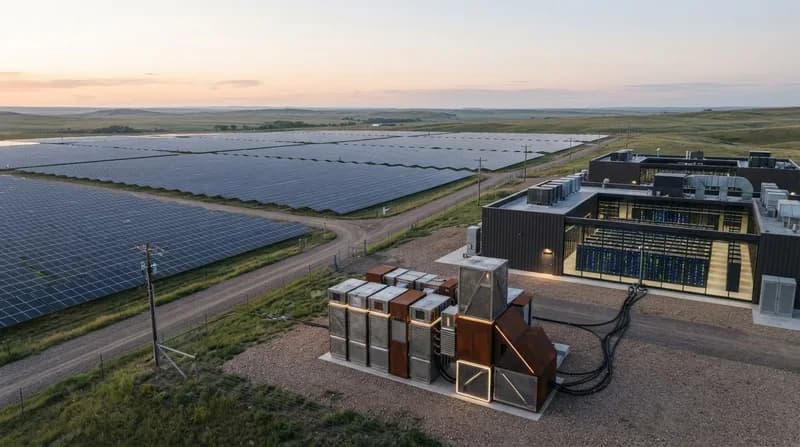
A central tenet of the G2VP analysis is the strategic shift toward off-grid data centers. By building standalone facilities powered by dedicated solar arrays and next-generation storage, companies can bypass the bottlenecks of current grid infrastructure and regional permitting delays. This transition effectively allows data center developers to reclaim control over their own power destiny, significantly shortening the path from construction to operation.
This approach moves beyond the limitations of traditional lithium-ion batteries, which have historically been too costly for the round-the-clock reliability required by data centers. Emerging technologies, such as the long-duration thermal storage developed by Antora Energy or the systems produced by Form Energy, are actively driving down the cost per megawatt-hour. These modular, scalable hardware solutions are now reaching a maturity level where they can provide a credible alternative to fossil fuel baseload power.
Why It Matters
- Scalability: Solar power currently boasts a global capacity exceeding one terawatt, vastly outpacing the 60-70 gigawatts offered by natural gas, allowing for faster deployment at scale.
- Economic Efficiency: Leveraging modular energy hardware allows manufacturers to optimize production costs, following the same trajectory that turned solar into the world’s cheapest electricity source.
- Regulatory Agility: Moving data centers off-grid mitigates the friction of electrical grid interconnection queues and local air-quality permitting hurdles.
A Future-Proof Strategy
G2VP, which previously backed Crusoe, a firm deeply entrenched in the data center evolution, views the next $4 trillion in data center investment as a pivotal moment. The firm predicts a bifurcated landscape: some facilities will continue to rely on traditional grid connectivity, while the most ambitious hyperscalers will transition toward independent, renewable-powered microgrids. For developers and investors, the message is clear: those who wait for the existing grid to catch up to AI demand may find themselves left behind by the speed of the market.
Surfing this wave requires a shift in mindset from traditional utility procurement to the adoption of advanced, industrial-grade storage hardware. While these technologies are still in their adoption phase, the rapid decline in costs and the clear, urgent necessity of the AI energy crisis suggest that these solutions will soon be the standard, rather than the outlier, in the tech infrastructure landscape.