The Rise of the Autonomous Pod
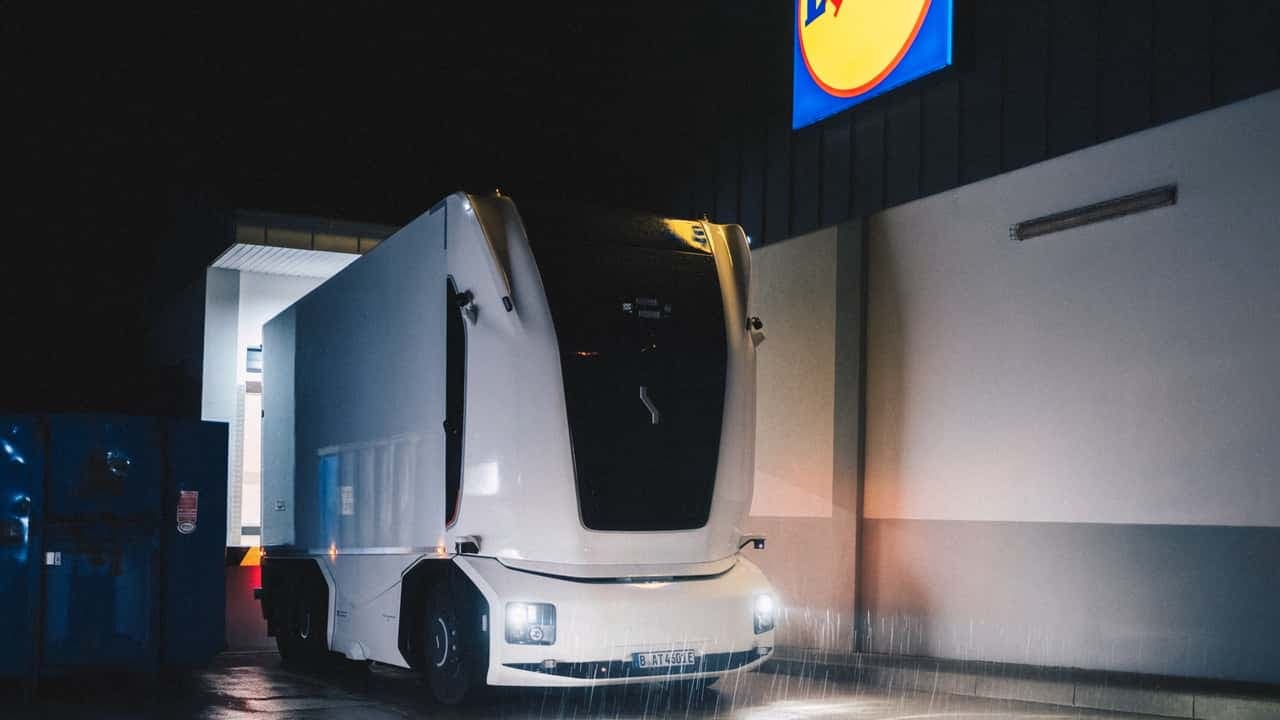
The landscape of logistics in Germany has shifted dramatically as supermarket giant Lidl, in collaboration with Swedish tech firm Einride, has officially deployed a cab-less, SAE Level 4 autonomous electric truck. This achievement is not merely a pilot program but a daily, functional operation on public roads. The truck, which lacks a traditional driver’s cabin entirely, represents a significant milestone in autonomous transport, having cleared the exceptionally stringent safety and regulatory hurdles set by Germany's Federal Motor Transport Authority (KBA).
For Einride, this permit is a major validation of their engineering approach. The company has spent years refining its autonomous logistics platform, which serves major international corporations. By securing approval in one of the most rigorous regulatory environments globally, Einride has signaled that its driverless technology is ready to transition from controlled testing environments to the complexities of real-world infrastructure.
Technology and Operational Scope
The vehicle currently operates a consistent shuttle route between a Lidl logistics center and a retail store in Edermunde. While the initial route is relatively short—serving as a proof-of-concept for high-frequency, short-haul logistics—the truck handles roughly 45 pallets per shift, five days a week. Plans are already in motion to expand this to a more complex “milkrun” model, which will involve multiple stops to further integrate the technology into the retailer's supply chain.
The truck’s navigation and safety systems are robust, relying on a sophisticated array of hardware. The vehicle is equipped with nine high-definition outdoor cameras, six radar sensors, and four Lidar units. This multi-modal sensor suite allows the truck to map its surroundings in real-time, identifying obstacles and reacting to traffic conditions without human intervention. While the vehicle is fully autonomous, it is tethered to a remote human operator. This operator does not actively steer the truck during transit but acts as a supervisor, capable of intervening for low-speed maneuvers—capped at 4 mph—to manage docking and edge-case scenarios.
Why It Matters
- Solving Labor Shortages: Autonomous logistics platforms provide a scalable solution to the ongoing, critical shortage of commercial truck drivers in Europe.
- Regulatory Precedent: Securing Level 4 approval from Germany’s KBA is a massive "badge of honor" that establishes a global benchmark for autonomous safety and reliability.
- Sustainable Logistics: By pairing autonomous technology with electric powertrains, companies like Lidl can drastically reduce the carbon footprint of their "last-mile" warehouse-to-store operations.
Implications for the Future of Retail
The collaboration between Lidl and Einride could serve as a blueprint for the future of large-scale retail distribution. The parent company, Schwarz Group, is reportedly already in discussions to expand the deployment of these autonomous units. As these trucks prove their safety and efficiency, the industry may see a rapid shift toward automated short-haul distribution networks.
Beyond the immediate efficiency gains, this move highlights the growing maturity of the "pod" design for freight. By removing the cabin, the trucks maximize cargo space and eliminate the traditional ergonomic limitations of long-haul driving. While full-scale autonomous highway transport remains a complex future goal, the success of this local, driverless delivery system demonstrates that the technology is already capable of handling high-volume, repetitive commercial tasks with precision.