The Hydrogen Alliance Strategy
At the recent IAA Transportation event in Hanover, a powerhouse coalition consisting of Daimler Truck, the Volvo Group, Toyota, Bosch, Air Liquide, TotalEnergies, TEAL Mobility, and MB Energy officially introduced their collaborative plan to establish a comprehensive hydrogen-based freight ecosystem in Europe. The goal is ambitious: to overcome the current hurdles preventing the widespread deployment of hydrogen-powered heavy-duty vehicles by the end of the decade.
While the group leans heavily on political backing—attracting the attention of German Federal Transport Minister Steffen Bilger—the roadmap remains broad. The alliance aims to create a cohesive value chain that spans from hydrogen production and supply to specialized refueling infrastructure and vehicle manufacturing. This initiative arrives at a critical juncture where battery-electric trucks are becoming increasingly capable, prompting industry analysts to scrutinize whether hydrogen infrastructure remains a necessary pillar for future long-haul logistics.
Key Industry Players and Their Commitments
Daimler Truck continues to lead the hardware charge, focusing on its Mercedes-Benz NextGenH2 tractor unit. The manufacturer is set to deploy a pilot fleet of 100 units by the end of 2026, supported by 226 million euros in federal and state funding. Simultaneously, the company is accelerating development on hydrogen combustion engines, signaling a dual-track strategy to diversify its powertrain portfolio. Volvo Group is working in lockstep, funneling massive investments into both fuel cell and hydrogen combustion technologies to ensure market readiness by 2030.
Toyota’s role is that of a seasoned technical architect. Having joined the Cellcentric joint venture alongside Daimler and Volvo, the Japanese automaker is leveraging three decades of fuel cell research to refine the alliance’s powertrain architecture. Bosch is providing the necessary hardware support, supplying critical components for both liquid and gaseous hydrogen systems, as well as the advanced refueling nozzle technologies required to handle high-pressure fueling.
Scaling Infrastructure
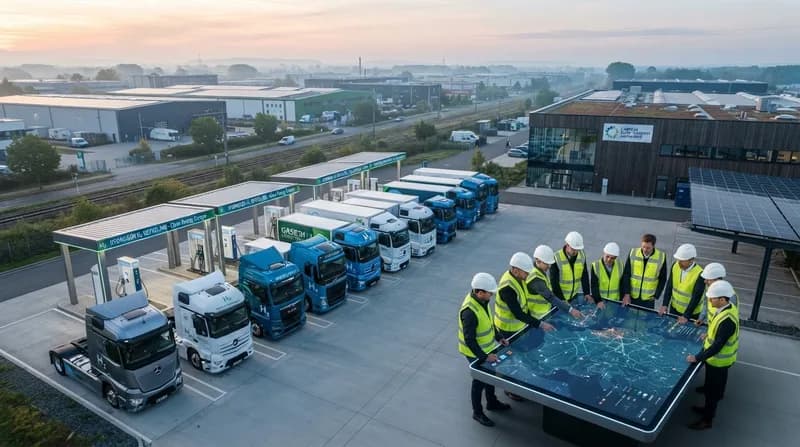
A pivotal component of the alliance involves building out the refueling network. Energy giants including Air Liquide, TotalEnergies, and MB Energy are pooling resources through entities like TEAL Mobility to ensure that hydrogen is not just available, but scalable. The infrastructure goal is to develop high-capacity refueling stations capable of servicing up to 100 trucks per day, a threshold considered essential for commercial viability in busy logistics hubs.
The alliance is further bolstered by the European Union’s Alternative Fuels Infrastructure Regulation (AFIR), which provides a legal mandate for hydrogen stations along primary transport routes. Recent German funding calls for this initiative were significantly oversubscribed, with over 500 applications for vehicle fleets and infrastructure projects. This overwhelming market response suggests that despite the technical and economic hurdles, there is a tangible commercial appetite within the logistics sector to transition away from traditional diesel powertrains in favor of hydrogen alternatives.