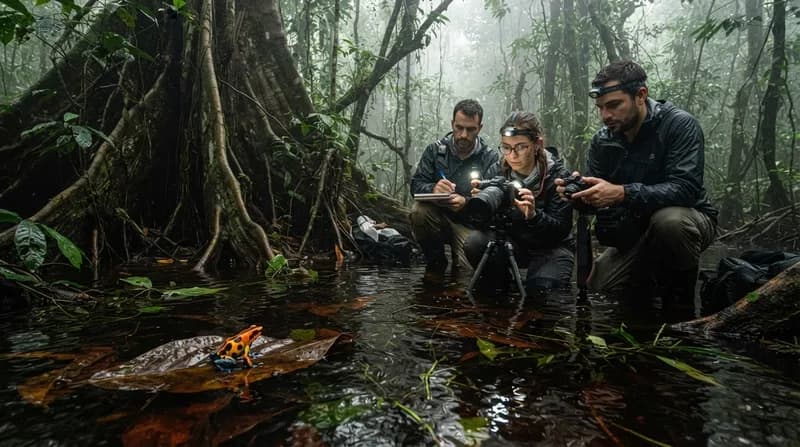
A Master of Disguise in the Floodplain
In the vast, interconnected ecosystem of the western Amazon, scientists have uncovered a biological secret that has remained hidden in plain sight. A newly described frog species, Adenomera varcena, has been formally identified after researchers conducted extensive field surveys in the flooded forests near the Moa and Crôa rivers in the Upper Juruá region. This discovery is a testament to the phenomenon of cryptic diversity, where distinct species share such striking physical similarities that they remain overlooked by the untrained eye for generations.
The identification process was a rigorous, multidisciplinary effort. Because Adenomera varcena looks nearly identical to its close relatives, the research team—led by experts from São Paulo State University and the Federal University of Minas Gerais—had to look beyond external appearances. By cross-referencing DNA sequencing, unique acoustic signatures of the frogs' mating calls, and subtle morphological traits, such as the absence of a distinct dark spot on the forearm, the team confirmed that they had found a species entirely new to science.
Expanding Our Understanding of Amazonian Ecology
The name varcena is a nod to its unique environment: the várzea, or seasonally flooded forests of the Amazon. While most members of the Adenomera genus are typically found in dryland habitats, this specific species has adapted to survive in areas that are submerged for significant portions of the year. This discovery challenges existing assumptions about the habitat preferences of the genus and suggests that the Amazon’s biodiversity is far more nuanced than previously documented.
However, the existence of this frog in a highly specialized, water-dependent ecosystem brings significant concerns regarding the stability of its habitat. As climate change alters seasonal rainfall and flooding patterns, the specific ecological triggers required for the reproduction of Adenomera varcena may be threatened. Scientists admit that because the species has only just been described, its precise ecological requirements remain a mystery, making it difficult to gauge its exact vulnerability to shifting climate conditions.
The Critical Role of Taxonomic Research
The discovery of Adenomera varcena serves as a clarion call for the importance of formal species cataloging. In the current environmental climate, habitat destruction is occurring at a rate that threatens to push species into extinction before they are even recognized by the scientific community. When a species is not formally described, it is often excluded from conservation strategies, environmental policy, and threatened species lists, leaving it effectively invisible to legal protections.
- Scientific Significance: Highlights the extent of 'cryptic diversity' in tropical ecosystems.
- Methodology: Used a combination of DNA sequencing, acoustic analysis of mating calls, and morphological examination.
- Conservation Context: Demonstrates that formal classification is a prerequisite for effective biodiversity protection.
- Environmental Urgency: Emphasizes that ecosystem destruction often outpaces taxonomic cataloging, potentially erasing species before they are documented.
Ultimately, the work of the team at the Center for Research on Biodiversity Dynamics and Climate Change (CBioClima) highlights a race against time. For researchers, documenting every frog, insect, and plant in the Amazon is not merely an academic exercise; it is an essential pillar of global conservation efforts designed to preserve the biological heritage of the planet before the window for protection closes.