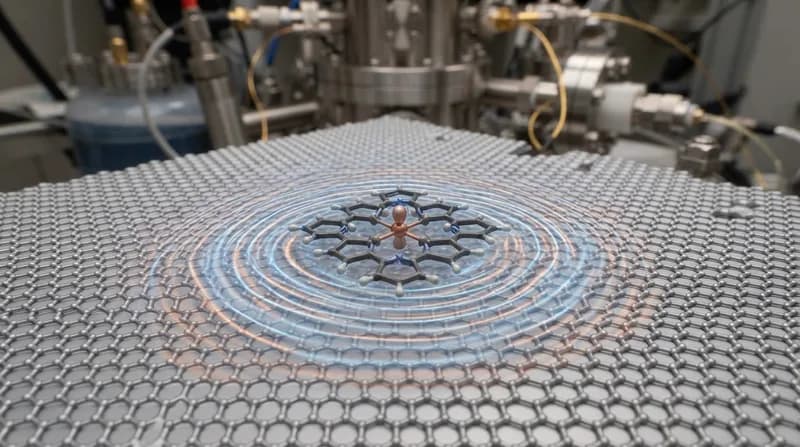
Physicists at Heidelberg University have achieved a significant breakthrough by uniting two historically opposing quantum theories. This new unified framework addresses how impurities behave within many-particle systems, a complex problem that has remained unresolved for decades.
Bridging Rival Models
The research successfully bridges two rival models that previously offered different explanations for the interactions of particles in quantum environments. By creating a cohesive theoretical structure, the team has provided a more comprehensive understanding of how individual impurities influence the collective behavior of a larger system.
Impact on Future Technology
These findings are expected to have a profound impact on several fields of physics and material science. Specifically, the new theory could reshape future experiments involving ultracold atoms, semiconductors, and other exotic forms of quantum matter. This theoretical advancement provides a clearer roadmap for controlling quantum states, which is essential for the development of next-generation electronics and quantum computing technologies.