Water remains one of the most anomalous substances in nature, exhibiting behavior that becomes increasingly dramatic when cooled below its freezing point without turning into ice. For years, scientists have struggled to reconcile various mathematical models used to describe its microscopic structure. Now, researchers at Osaka University have leveraged artificial intelligence to bring clarity to this longstanding mystery.
Evaluating Structural Descriptors
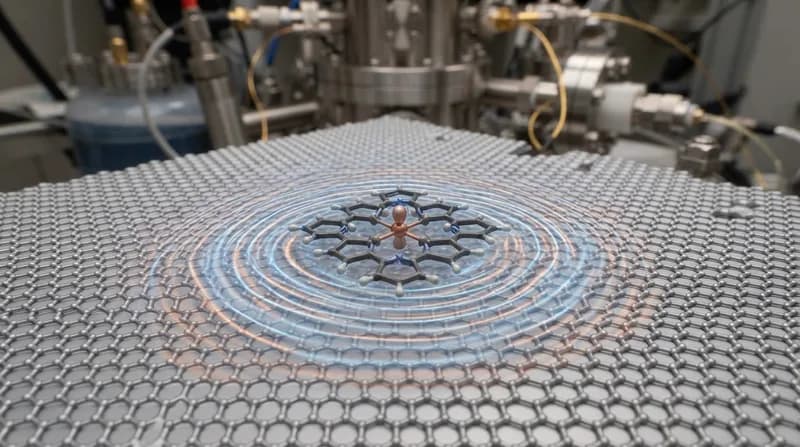
The study focused on 'supercooled' water, a state where the liquid's dual nature becomes most apparent. To understand how water molecules organize themselves, the team utilized an AI model trained on extensive computer simulations. The AI was tasked with evaluating 16 different 'structural descriptors'—different ways of measuring and describing the arrangement of molecules.
A Unified Framework
The AI system successfully identified the most effective methods for distinguishing between water's two competing liquid states. By narrowing down the most accurate descriptors, the researchers have provided a more robust framework for studying water's molecular transitions. This breakthrough offers a clearer path forward for scientists attempting to understand the fundamental physics of the world's most essential liquid.