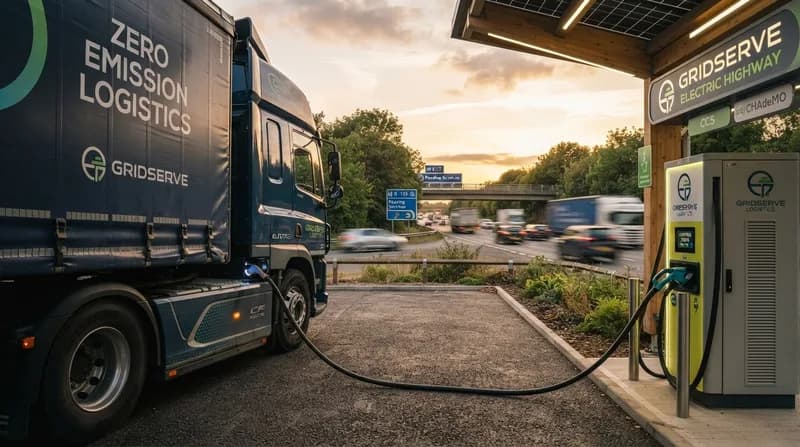
Expanding the Electric Freight Corridor
In a significant move for the decarbonization of the UK logistics sector, Gridserve has announced a strategic partnership expansion with electric haulier Voltloader. This agreement marks a critical evolution in how commercial freight operators access public charging infrastructure, effectively bridging the gap between private, depot-based charging and the demands of long-haul logistics.
Voltloader will integrate Gridserve’s established 'Electric Freightway' network into its national routing operations. Originally born from the UK’s Zero Emission HGV and Infrastructure Demonstrator (ZEHID) program, the Electric Freightway network is designed to provide high-capacity, ultra-rapid charging specifically tailored to the dimensional and power requirements of heavy goods vehicles. By securing preferential rates, Voltloader is positioning its fleet to operate more efficiently across the country’s primary transport arteries.
Strategic Infrastructure Deployment
The partnership leverages several existing, high-profile charging hubs. Currently, eHGV-capable infrastructure is operational at key logistics points, including the Extra Baldock and Moto Exeter and Tamworth service stations, alongside Gridserve’s specialized Electric Forecourts in Markham Vale and Stevenage. These locations serve as vital waypoints for electric trucks that require high-output charging during long-distance transits where depot return is not feasible.
Looking ahead, the infrastructure map is set to grow significantly. Both companies confirmed plans for the deployment of six additional dedicated eHGV charging hubs, scheduled for completion by the first quarter of 2027. This expansion is designed to ensure that the physical hardware is waiting at the right locations before the total volume of electric heavy haulage reaches critical mass on the road.
Why It Matters
- Real-World Data: The collaboration functions as a live laboratory, providing Gridserve with invaluable operational insights into how public charging load impacts grid stability and fleet scheduling.
- Commercial Viability: By optimizing for preferential rates, the partnership makes the transition to electric fleets financially palatable for independent hauliers, who must carefully balance operational overhead against the cost of electricity.
- Sustainability Benchmarking: Data sourced from the ZEHID program suggests that a single electric HGV can offset approximately 1,000 tonnes of carbon emissions by 2034, underscoring the massive environmental potential of decarbonizing the heavy transport sector.
Future Outlook
The success of this partnership hinges on the ability to scale public charging without compromising the tight schedules of logistics operators. As Gridserve continues to refine its charging technology and Voltloader expands its electric fleet, the synergy between infrastructure providers and logistics firms will become the template for the future of road freight. This project not only addresses the immediate need for power along the highway but also provides the necessary proof-of-concept required to attract further investment into the UK’s sustainable transport backbone.