E-BUZZ ME Logo
ScienceTechnical Deep Dive

From Theory to Reality: How Quantum Mechanics is Reshaping the Modern World

Published
From Theory to Reality: How Quantum Mechanics is Reshaping the Modern World
1 min read191 words

The Gist

Once considered a controversial scientific concept, quantum mechanics has evolved into the cornerstone of modern technology and future innovation.

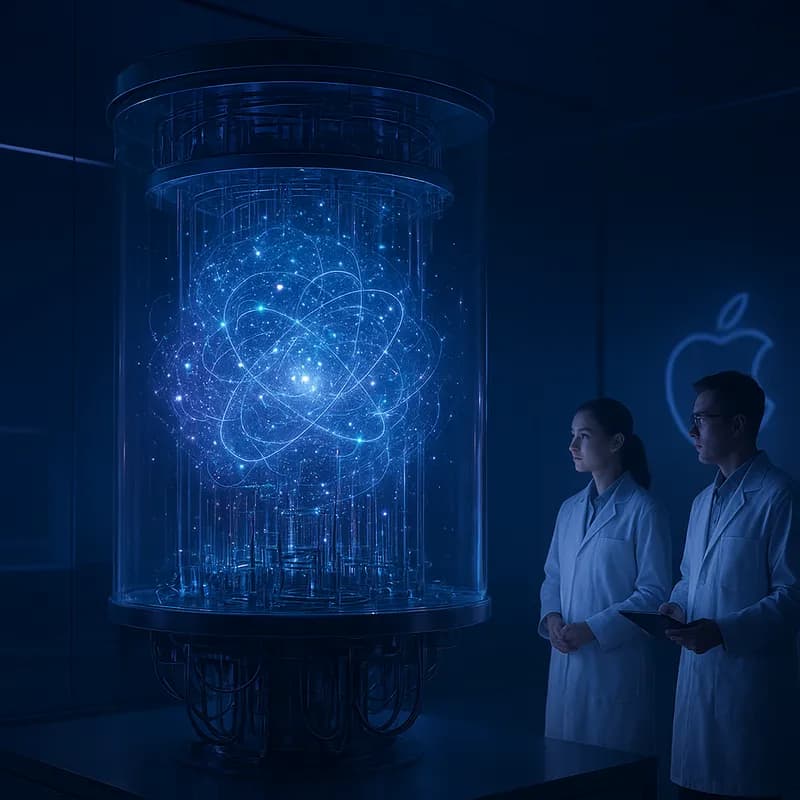
Quantum mechanics, a field that once baffled the world’s most brilliant scientific minds, has successfully transitioned from a collection of strange theories to the foundation of humanity’s most sophisticated technological achievements. What began as a controversial shift in our understanding of the subatomic world is now driving a new era of industrial and scientific progress.

The Next Frontier of Quantum Innovation

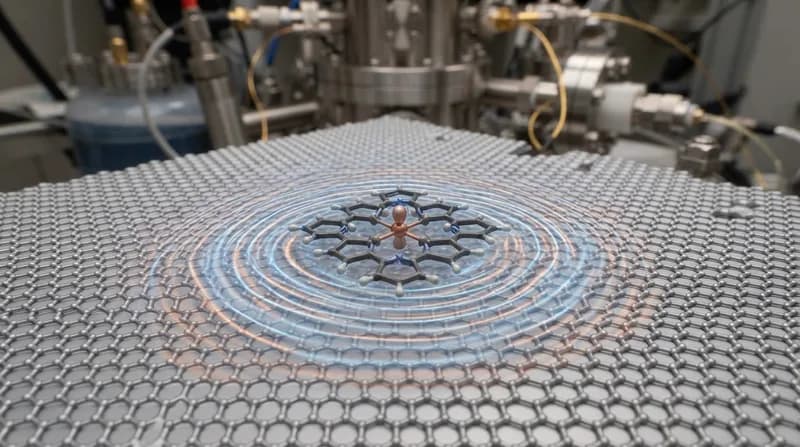
Researchers are currently pushing the boundaries of quantum physics further than ever before. By leveraging the unique properties of quantum states, scientists are targeting significant breakthroughs across multiple critical sectors. In the realm of energy, quantum materials could lead to more efficient power grids, while in medicine, quantum simulations are opening doors to personalized drug discovery and advanced imaging techniques.

Global Impact of the Quantum Shift

The implications of this research extend far beyond the laboratory. Quantum computing promises to solve complex problems that are currently beyond the reach of classical supercomputers, potentially revolutionizing everything from logistics to cryptography. As we deepen our understanding of these quantum phenomena, we are not only developing new tools but also gaining a more profound insight into the fundamental nature of the universe itself.


Related Stories

Semantically matched articles, ranked by topic overlap and freshness.

Quarks and Qubits: The Quantum Computing Revolution in Particle Physics
Science73%

Quarks and Qubits: The Quantum Computing Revolution in Particle Physics

New research explores how the intersection of quantum information and general relativity could redefine our understanding of subatomic particles.

Fields Medal 2026: Mathematicians Honored for Unifying Physics Laws
Science66%

Fields Medal 2026: Mathematicians Honored for Unifying Physics Laws

The prestigious Fields Medal has been awarded to mathematicians whose groundbreaking work bridges the gap between geometry and the fundamental laws of physics.

Unlocking New Conductivity Pathways in Mott Insulators
Science66%

Unlocking New Conductivity Pathways in Mott Insulators

Recent research into laser-driven feedback effects in Mott insulators reveals groundbreaking methods for engineering conductivity in strongly interacting systems.

Simple AI Prompt Resolves Decades-Old Mathematical Conjecture
Science66%

Simple AI Prompt Resolves Decades-Old Mathematical Conjecture

For the second time in a week, artificial intelligence has disproved a long-standing mathematical conjecture using surprisingly basic prompts.

Predictable Antarctic Ice Loss Offers Decades for Sea Level Preparation
Science66%

Predictable Antarctic Ice Loss Offers Decades for Sea Level Preparation

New research suggests that Antarctic ice retreat may remain predictable through 2050, giving governments a critical window to implement coastal defenses.

Breakthrough Fluoride-Free Gel Could Regrow Damaged Tooth Enamel
Science65%

Breakthrough Fluoride-Free Gel Could Regrow Damaged Tooth Enamel

Researchers have developed a protein-inspired gel that mimics natural tooth formation to repair microscopic cracks and rebuild enamel.

The Future of Medical Imaging: Insights from Simon R. Cherry
Science65%

The Future of Medical Imaging: Insights from Simon R. Cherry

Former PMB editor-in-chief Simon R. Cherry discusses the evolving landscape of molecular imaging and non-invasive technologies in medical physics.

NASA to Conduct Orbital Rehearsals with SpaceX and Blue Origin Landers
Science65%

NASA to Conduct Orbital Rehearsals with SpaceX and Blue Origin Landers

NASA astronauts will perform critical docking tests with prototype lunar landers from SpaceX and Blue Origin during the Artemis III mission in 2027.